01
Consultation
Technical needs assessment




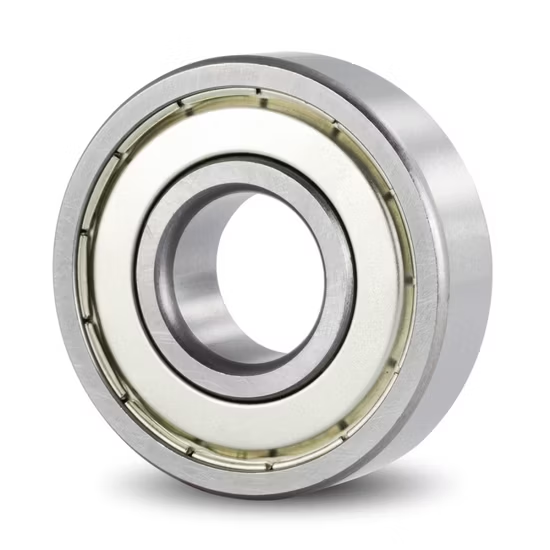
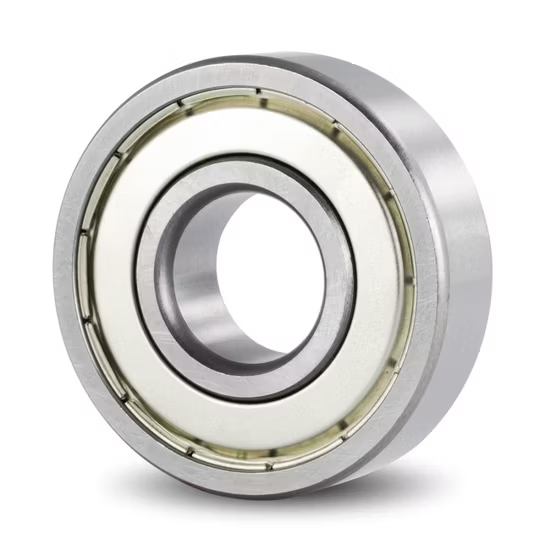
608zz Deep Groove Ball Bearing 8×22×7 mm — double shielded (ZZ) for effective dust exclusion in medium-speed applications.
Confirm batch authenticity instantly via the manufacturer's official app QR verification channel.
Traceable batch origins — Every 608zz unit ships with manufacturer lot documentation and QR codes for direct verification.
| Parameter | Value |
|---|---|
| Designation | 608zz |
| Bearing Type | Deep Groove Ball Bearing |
| Bore Diameter (d) | 8 mm |
| Outside Diameter (D) | 22 mm |
| Width (B) | 7 mm |
| Number of Rows | Single Row |
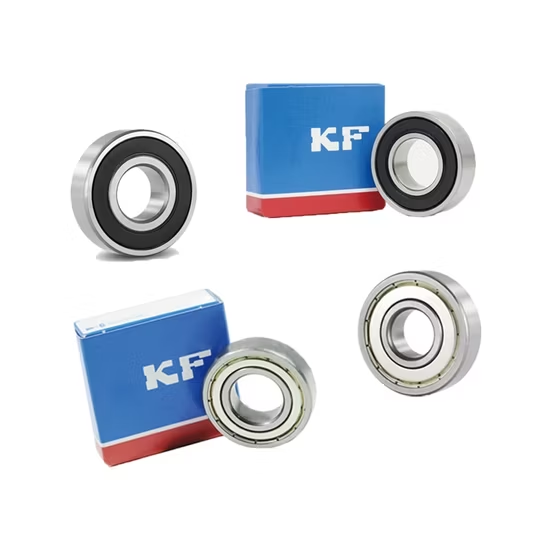
| Seal or Shield Type | ZZ (Double shielded) / 2RS (Double contact seal) |
| Material | GCr15 (Chrome Steel) |
| Precision Class | P0, P6, P5, P4, P2 |
| Origin | Shanghai |
| Industry | Typical Applications |
|---|---|
| Electric Motors | Rotor shaft support in fractional horsepower motors |
| Industrial Gearboxes | Low-speed stage bearing arrangements |
| General MRO | Replacement units for household appliances and conveyors |
Shielding keeps out large debris, but microscopic dust requires contact seals to prevent lubricant starvation.
Working in the Pearl River Delta manufacturing hub, I have inspected countless burnt-out electric motors where the root cause was a simple sealing mismatch. Operators often install metal-shielded units in high-dust environments, assuming the shields offer sufficient protection. Over time, fine particulate matter bypasses the non-contact gap, contaminating the grease until it solidifies. This causes the inner ring to seize, leading to catastrophic motor failure . Recognizing the boundary between dust exclusion and moisture sealing is critical for equipment survival.
Selecting the correct shielding configuration for a 608zz deep groove ball bearing determines its operational lifespan in contaminated spaces. While the ZZ metal shields provide excellent low-friction performance for clean, high-speed applications, they cannot block fine airborne dust or moisture. For harsh conditions, transitioning to the 2RS contact seal variant ensures the rubber lips maintain constant pressure against the inner ring, effectively locking out destructive impurities and preserving the internal grease charge.
Electric motor applications impose strict demands on small-format bearings, combining continuous radial loads with high rotational speeds. At these velocities, friction generated by contact seals can elevate internal temperatures, potentially degrading standard lubricants. Engineers must evaluate the thermal expansion of the shaft and housing to determine if standard clearance is sufficient, or if a C3 clearance is required to prevent thermal binding during sustained operation .
The GCr15 chrome steel construction delivers the necessary hardness and wear resistance for demanding rotational tasks. However, the precision class dictates the actual performance ceiling. While P0 grade is adequate for general household appliances or basic conveyors, precision spindle applications or high-end electric motors demand P4 or P2 tolerances to minimize vibration and acoustic noise. Understanding these suffix and grade distinctions prevents the installation of standard components in high-precision machinery.
Ignoring the difference between a non-contact shield and a contact seal frequently results in unplanned downtime and premature failure. When a standard shielded unit is forced into a wet or heavily contaminated MRO application, the lubricant breaks down rapidly, causing scoring on the raceways. This violates the operational parameters outlined in ISO 281, voiding equipment warranties and forcing maintenance teams into costly, reactive replacement cycles rather than planned servicing .
Sourcing genuine components requires more than just matching the base number; it demands rigorous verification of the sealing and precision suffixes. We specialize in cross-referencing mixed-brand requirements, ensuring that a replacement unit matches the exact clearance and seal type of the original equipment. Our inventory provides full batch traceability, allowing procurement teams to verify the origin of every unit through official manufacturer applications, completely eliminating the risk of installing counterfeit parts with compromised inner rings.
To ensure optimal performance, please provide your specific radial and axial load profiles, operating speeds, and ambient temperature ranges. Sharing these operational parameters allows our engineering team to conduct a thorough L10 life calculation and recommend the appropriate clearance and seal configuration. If you are replacing an existing component, supplying the OEM equipment number enables precise cross-reference verification.
Q: When should I choose the 2RS seal over the ZZ shield for this model?
A: The ZZ metal shields are ideal for clean, high-speed environments where low friction is paramount. However, if the motor operates in high-dust, high-humidity, or washdown conditions, the 2RS rubber contact seal is mandatory. The rubber lips physically block microscopic contaminants and moisture from degrading the internal grease, preventing the inner ring seizure commonly seen in harsh industrial applications.
Q: Why is matching the precision suffix critical during cross-referencing?
A: Base numbers often match while internal tolerances differ vastly. Installing a standard P0 grade unit in a high-speed precision spindle causes excessive vibration, heat generation, and rapid raceway wear. We verify the exact precision class, clearance, and seal type against your OEM specifications to ensure the replacement component handles the specific runout and speed requirements of your machinery without causing thermal binding.
Q: How does your batch traceability protect against counterfeit bearings?
A: Counterfeit units often feature soft inner rings and cloned visual markings that pass casual inspections but fail under load. Every unit we supply includes manufacturer lot documentation and a unique QR code. Procurement engineers can scan this code using the brand's official application to verify the exact production batch, ensuring the metallurgical integrity and dimensional accuracy required for safe operation.
Our 5-step process ensures every order is engineered, validated, and supported for optimal performance.
Technical needs assessment
Custom specifications
Free samples for $50k+
Pre-shipment inspection
On-site & predictive
Our certified engineers respond within 24 hours with detailed technical specifications, pricing, and lead time information.