01
Consultation
Technical needs assessment

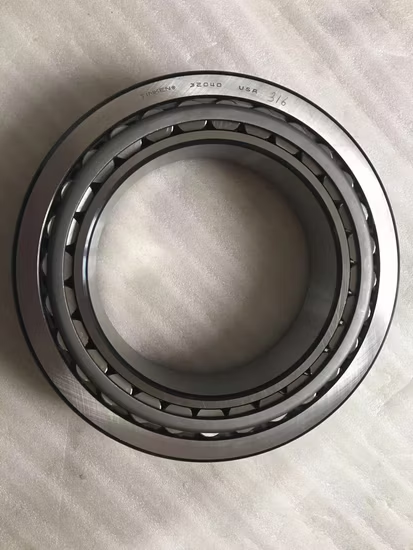
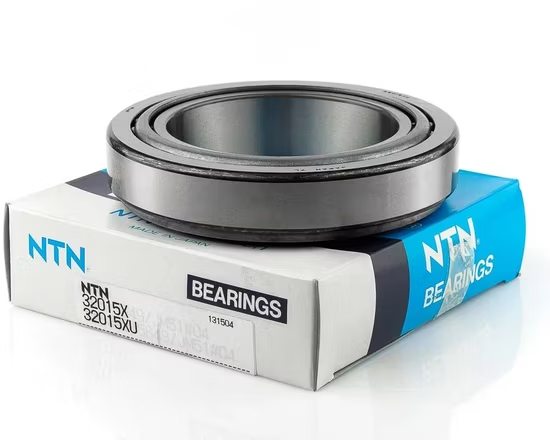
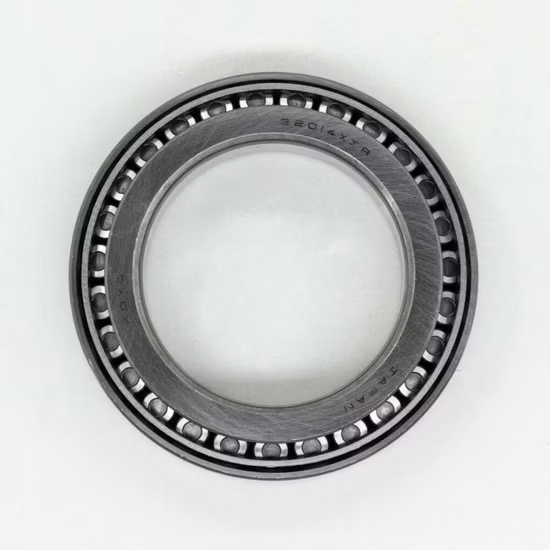
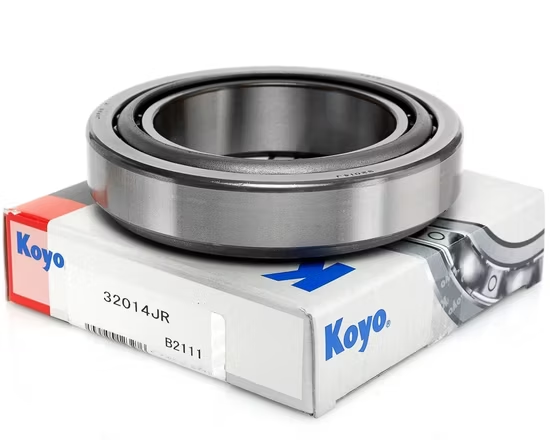


32016X Tapered Roller Bearing P4 — single row tapered roller bearing manufactured from GCr15 bearing steel. P4 precision class delivers tighter dimensional and running accuracy for applications requiring improved rotational stability under combined radial and axial loads.
Each shipment includes material test reports and dimensional inspection records aligned with P4 specifications.
Full Batch Traceability — Every 32016X tapered roller bearing shipped includes manufacturer lot documentation to verify metallurgical origin and production date.
| Parameter | Value |
|---|---|
| Designation | 32016X |
| Bearing Type | Single Row Tapered Roller Bearing |
| Precision Class | P4 |
| Cage Material | Available in nylon, brass, or iron variants |
| Material | GCr15 bearing steel |
| Origin | Sourced from Germany, Japan, Sweden, Malaysia, or China based on brand selection |
The "X" suffix is an unverified designation requiring manufacturer catalog confirmation for exact internal geometry modifications.
| Industry | Typical Applications |
|---|---|
| Automotive & Heavy Vehicles | Wheel hub assemblies, differential pinion shafts |
| Industrial Power Transmission | Heavy-duty gearboxes, reducer output shafts |
| Construction & Mining | Crusher drive shafts, vibrating screen exciters |
Matching the 32016 base number without verifying the X suffix and cage material is a primary cause of thermal binding.
In heavy-duty gearboxes and wheel hubs, a standard P0 grade or incorrect internal geometry leads to rapid heat generation under combined loads. I have seen standard 32016 units seize completely in Latin American mining sites because the internal design did not account for the specific axial thrust and thermal expansion of the application . Procurement teams often focus on the basic dimension, ignoring that the 32016X tapered roller bearing requires exact alignment of precision and internal contact angles to survive continuous operation.
Single row tapered roller bearings are engineered to handle simultaneous radial and axial forces, but the specific internal geometry dictates the load distribution. When sourcing a 32016X tapered roller bearing, we verify the exact cup and cone contact angles against your OEM equipment requirements. This ensures the bearing can sustain the heavy shock loads typical in crusher drives or the continuous combined loads in differential assemblies, preventing premature spalling on the raceways.
Operating temperatures in industrial gearboxes frequently exceed the thermal limits of standard clearance bearings. If a standard CN clearance is installed where a C3 or specific internal geometry is required, the thermal expansion of the shaft and housing will eliminate the internal play, leading to catastrophic seizure. Proper lubrication intervals and selecting the correct cage material—whether nylon for lower friction or brass for high-vibration environments—are critical to managing heat generation and preventing lubricant breakdown .
The P4 precision class provides noticeably tighter dimensional and running accuracy compared to standard grades, which is essential for minimizing vibration in high-speed pinion shafts. The GCr15 bearing steel offers excellent wear resistance and fatigue life under heavy loads. Depending on the specific operating environment, the bearing is available with nylon, brass, or iron cages. Brass cages are typically preferred for high-vibration mining equipment, while nylon cages reduce friction in high-speed automotive hubs.
Installing a bearing where the internal design or precision suffix does not match the OEM specification results in unplanned downtime and catastrophic damage to adjacent components. When a tapered roller bearing fails prematurely due to incorrect internal geometry, it often destroys the gearbox housing or the wheel hub spindle. These secondary damages lead to massive repair costs and void equipment warranties, far exceeding the initial savings of buying an incorrectly specified replacement .
We do not just match the base 32016 number; we verify the X suffix, cage material, and precision class against your exact application parameters. Our authorized channel procurement ensures that whether you need an SKF, FAG, or NSK equivalent, the cross-reference aligns perfectly with the internal design requirements. We provide full batch traceability and dimensional inspection reports, ensuring the P4 precision claim is verified before the bearing leaves our facility, eliminating the risk of receiving counterfeit or mislabeled inventory.
To ensure the selected bearing meets your exact operational demands, please provide your radial and axial load profiles, operating speeds, and typical temperature ranges. Sharing the OEM equipment number allows our engineering team to perform a precise cross-reference check and verify the internal geometry requirements. This technical review ensures the L10 life calculation aligns with your maintenance schedules and prevents premature field failures.
Q: What does the X suffix mean in 32016X and how does it affect interchangeability?
A: The X suffix typically denotes an optimized internal design or modified contact angle, though it requires specific manufacturer catalog confirmation. It critically affects interchangeability because substituting a standard 32016 without the X suffix may result in incorrect load distribution and thermal binding under heavy combined loads.
Q: Why is matching just the base number 32016 not enough for replacement?
A: Matching only the base dimensions ignores crucial internal geometry, cage material, and precision suffixes. A standard 32016 might have a different contact angle or standard P0 precision, which will fail prematurely in an application specifically engineered for the optimized design and P4 accuracy of the 32016X variant.
Q: How does P4 precision compare to standard grades in tapered roller applications?
A: P4 precision offers noticeably tighter dimensional and running accuracy than standard P0 or P6 grades. In high-speed or high-load applications like gearboxes, this reduced runout minimizes vibration, lowers operating temperatures, and significantly extends the fatigue life of both the bearing and the surrounding machinery.
Q: When should I choose brass over nylon cages for this bearing?
A: Brass cages are generally preferred for heavy-duty, high-vibration environments like mining crushers or construction equipment due to their superior structural strength. Nylon cages are better suited for high-speed, lower-vibration applications like automotive hubs where minimizing friction and weight is the primary objective.
Q: How can I verify the origin and authenticity of multi-origin bearing batches?
A: Every bearing we supply includes original manufacturer lot traceability and a Certificate of Conformity. You can verify authenticity by scanning the official brand QR codes via their respective mobile apps, ensuring the metallurgical origin and production date match the supplied documentation.
Our 5-step process ensures every order is engineered, validated, and supported for optimal performance.
Technical needs assessment
Custom specifications
Free samples for $50k+
Pre-shipment inspection
On-site & predictive
Our certified engineers respond within 24 hours with detailed technical specifications, pricing, and lead time information.