01
Consultation
Technical needs assessment



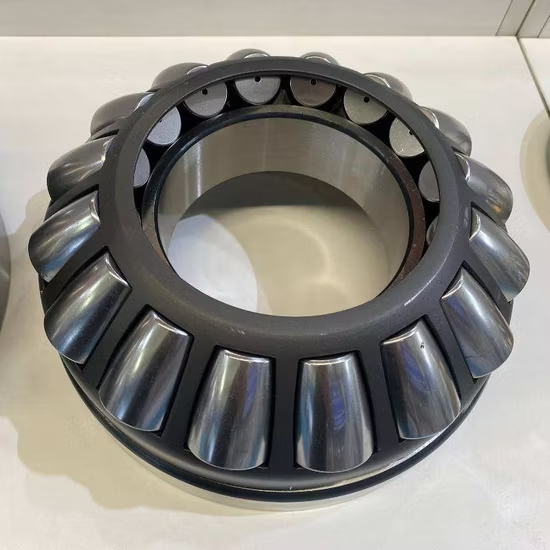
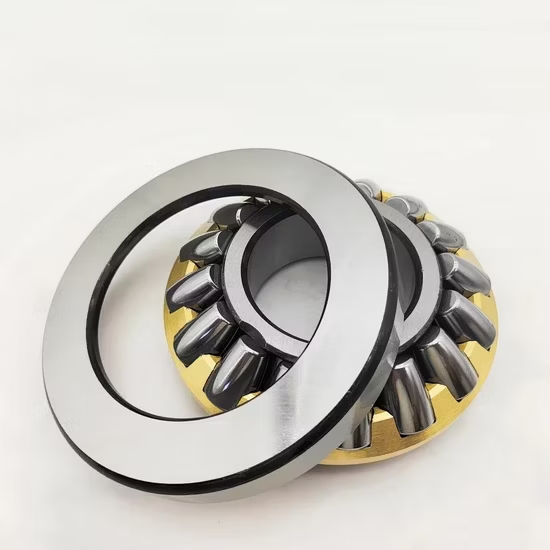
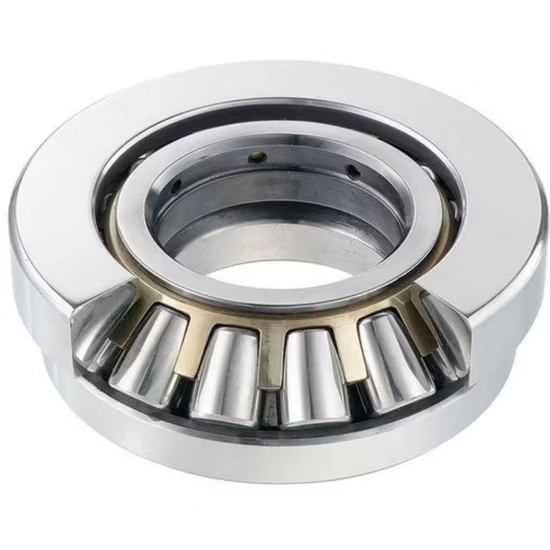
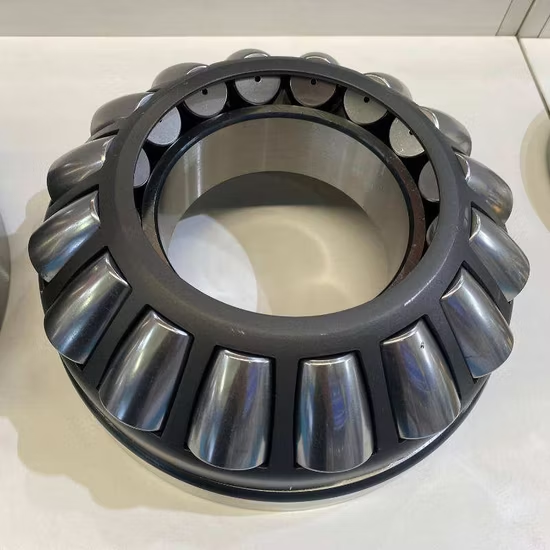
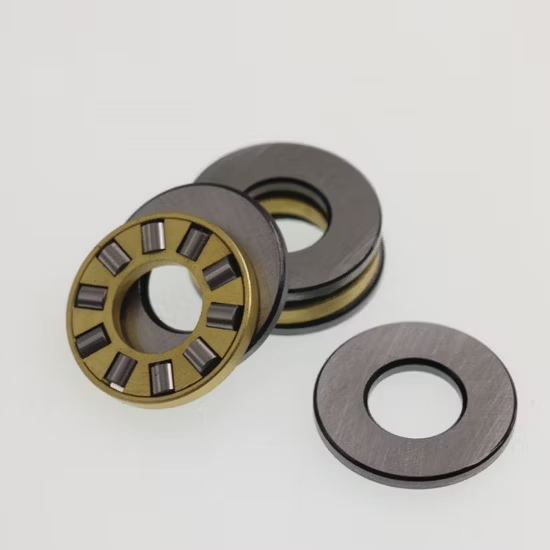
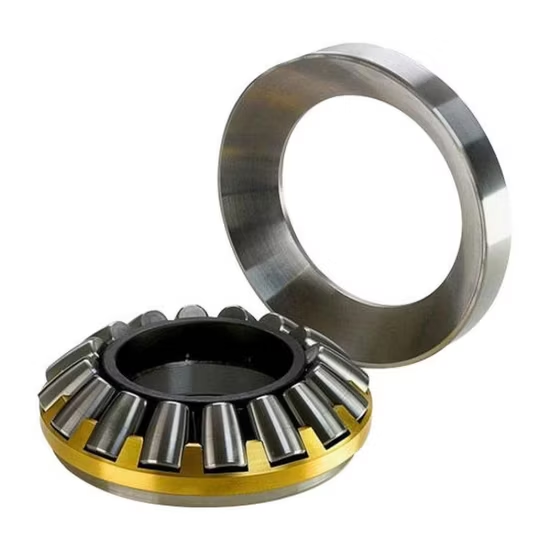
29240 Spherical Thrust Roller Bearing — engineered to handle extreme axial loads and moderate radial forces while accommodating shaft misalignment through its self-aligning raceway design.
Full Batch Traceability — Every 29240 unit ships with manufacturer lot documentation verifying its exact production origin and material heat number.
| Parameter | Value |
|---|---|
| Designation | 29240 |
| Product Type | Spherical Thrust Roller Bearing |
| Vibration Level | Z1V1 / Z2V2 / Z3V3 options available |
| Bearing Type | Spherical Thrust Roller |
| Customization | Cross-brand interchange and application-specific internal design review |
| Industry | Typical Applications |
|---|---|
| Mining and Crushing | Gyratory crusher main shaft thrust support, vibrating screen exciter mechanisms |
| Industrial Gearboxes | Extruder gearbox thrust reaction collars, marine propulsion thrust blocks |
| Steel and Metallurgy | Continuous caster segment roll axial positioning, rolling mill screw-down systems |
| Material Handling | Bucket elevator heavy-duty drive shafts, stacker reclaimer slewing platforms |
Internal geometry dictates survival, not just the stamped designation.
Sourcing teams often approve replacements based solely on the base number, overlooking critical internal design variations. In heavy axial load environments, a 29240 spherical thrust roller bearing with an incorrect roller profile or mismatched cage material will suffer rapid edge stress. I have personally examined the metal fatigue fracture surfaces of cages that failed prematurely because the internal clearance and roller contour were not optimized for the specific thrust application . When the internal geometry does not match the operational demands, the equipment faces catastrophic downtime long before the expected service interval.
Selecting the correct 29240 spherical thrust roller bearing requires looking past the basic designation to evaluate how the internal components handle extreme axial forces. We review the specific load vectors and operational speeds of your machinery to ensure the roller profile and cage design align with your actual working conditions. This application-based selection process prevents the subtle mismatches that cause early fatigue in heavy-duty rotating platforms.
Equipment in steel mills and mining crushers operates under severe shock loading and significant thermal gradients. The axial forces generated during material crushing require a bearing capable of accommodating heavy thrust while tolerating shaft deflection. Elevated operating temperatures necessitate careful consideration of internal clearance to prevent thermal binding when the shaft expands . Furthermore, heavy contamination in these environments demands robust sealing solutions or external lubrication strategies that protect the rolling elements without generating excessive friction heat.
The availability of Z1V1, Z2V2, and Z3V3 vibration levels allows procurement engineers to specify the exact running smoothness required for sensitive gearboxes versus rugged crushers. When executing a cross-brand interchange, matching the base number is merely the starting point. The internal cage design, roller length, and raceway curvature must be strictly aligned across different manufacturers to maintain the original equipment manufacturer's performance criteria. Ignoring these hidden design parameters during substitution is a primary cause of unexpected thrust collar failures.
Installing a substitute bearing that shares the base designation but lacks the correct internal geometry leads directly to unplanned downtime and severe secondary damage. According to failure analysis frameworks like ISO 15243, improper load distribution caused by mismatched roller profiles accelerates surface fatigue and spalling . This premature failure not only destroys the bearing but can compromise the entire gearbox housing or crusher main shaft, resulting in massive repair costs and voided equipment warranties.
Our authorization across major international brands ensures that your mixed-brand requirements are fulfilled from a single, verified source without compromising on authenticity. We execute cross-reference matching that strictly aligns internal cage designs and roller contours, eliminating the guesswork that leads to field failures. Every shipment is backed by application-based selection reviews that account for your specific thrust loads, rotational speeds, and thermal conditions. This comprehensive technical oversight ensures the bearing you receive is engineered to survive your exact operating environment.
To ensure the selected bearing meets your operational demands, please provide detailed radial and axial load figures, operating speeds, and expected thermal ranges. Sharing the specific OEM equipment number allows our engineering team to perform a precise cross-reference review and verify internal design compatibility. This data enables us to conduct a thorough L10 life calculation and recommend the optimal vibration grade and internal geometry for your application.
Q: How can I verify the authenticity and batch traceability of the received units?
A: Every unit includes official documentation linking it to its production batch and material heat number. You can verify authenticity instantly by scanning the provided QR code using the manufacturer's official mobile application, which confirms the bearing is genuine and traces its origin directly back to the authorized production facility.
Q: What internal parameters must align when substituting this designation across different brands?
A: Beyond the base number, you must strictly align the internal cage material, roller profile contour, and raceway curvature. Failing to match these hidden design elements alters the load distribution within the bearing, leading to concentrated edge stresses and premature cage fatigue under heavy axial thrust conditions.
Q: How do the Z1V1, Z2V2, and Z3V3 vibration levels impact heavy equipment selection?
A: These grades define the running smoothness and noise limits of the bearing. Lower vibration levels are critical for high-speed industrial gearboxes where vibration transfers to sensitive gearing, while standard grades are typically sufficient for rugged, low-speed mining crushers where structural damping absorbs minor operational vibrations.
Q: What are the critical mounting tolerances for the shaft and housing washers?
A: The shaft washer requires a tight interference fit to prevent creep under heavy axial loads, while the housing washer needs a slight clearance fit to allow for minor self-alignment. Incorrect fits will either restrict the self-aligning capability or cause the washers to spin, rapidly destroying the mounting surfaces.
Q: How should lubrication intervals be adjusted for extreme shock loading in mining applications?
A: Severe shock loads and heavy contamination require shortened re-lubrication intervals to flush out debris and maintain a protective elastohydrodynamic film between the roller ends and the cage pockets. We recommend consulting the specific machinery manual and adjusting grease purging frequency based on actual operational dust ingress and thermal cycles.
Our 5-step process ensures every order is engineered, validated, and supported for optimal performance.
Technical needs assessment
Custom specifications
Free samples for $50k+
Pre-shipment inspection
On-site & predictive
Our certified engineers respond within 24 hours with detailed technical specifications, pricing, and lead time information.