01
Consultation
Technical needs assessment

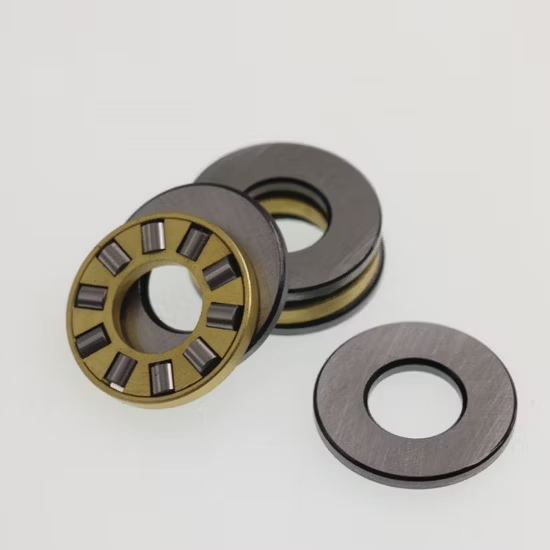
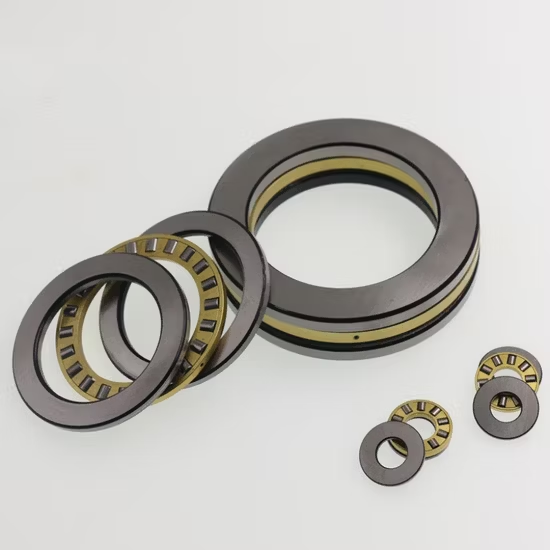
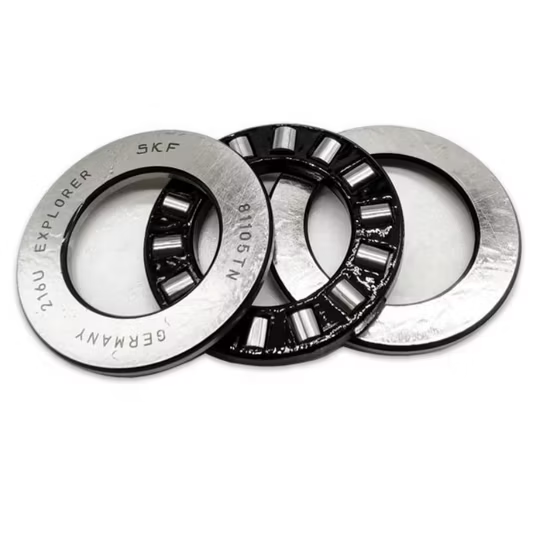

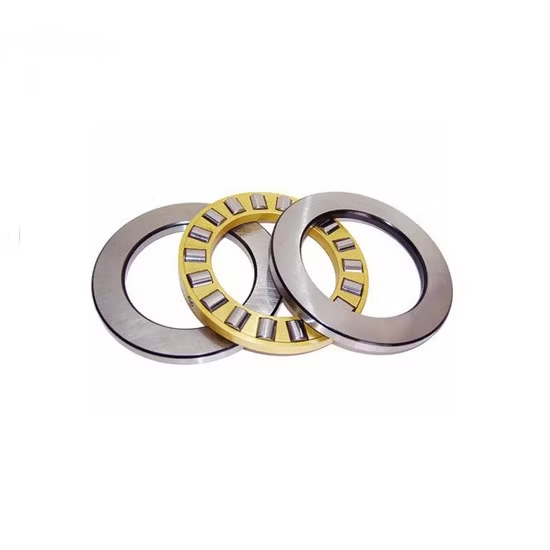
81217 81214 81215 8126 Cylindrical Roller Thrust Bearings P5 P4 — P4 and P5 precision classes ensure strict dimensional and running accuracy for machine tool spindles and heavy-duty gearboxes under high axial loads.
Batch Traceability — Every 81217 81214 81215 8126 cylindrical roller thrust bearing ships with manufacturer lot records for full supply chain visibility.
| Parameter | Value |
|---|---|
| Designation | 81217 81214 81215 8126 |
| Bearing Type | Cylindrical Roller Thrust Bearing |
| Precision Class | P2, P4, P5, P6 |
| Vibration Level | Z1V1, Z2V2, Z3V3 |
| Origin | Germany, Japan, Sweden, Malaysia, China |
| HS Code | 8482500090 |
| Industry | Typical Applications |
|---|---|
| Industrial Gearboxes | Extruder screw thrust support, heavy mixer vertical shafts |
| Machine Tool Spindles | Vertical boring mill rotary tables, precision indexing heads |
| Mining and Crushing | Jaw crusher toggle plate pivots, cone crusher main shaft support |
| Material Handling | Port crane slewing mechanism, heavy-duty stacker reclaimers |
Matching the basic designation is never enough to prevent axial drift in heavy machinery. A 81217 81214 81215 8126 cylindrical roller thrust bearing installed with incorrect precision or internal clearance will rapidly destroy adjacent mating surfaces under thermal load . I once inspected an injection molding machine in the Pearl River Delta where a standard clearance thrust bearing was forced into a high-temperature zone. The resulting axial play ground a deep groove into the thrust collar, causing weeks of unplanned downtime.
Procurement teams often focus solely on the base number, ignoring the critical suffix combinations that dictate field performance. We review your specific axial loads and thermal profiles to ensure the selected 81217 81214 81215 8126 cylindrical roller thrust bearing features the exact precision class and vibration rating required. This application-based selection prevents the costly mismatch of installing a P6 grade component where a P4 is mandatory for spindle stability.
Thrust bearings in heavy gearboxes and crushing equipment endure massive unidirectional axial loads combined with significant heat generation. As operating temperatures climb, internal clearance must accommodate thermal expansion without allowing the roller assembly to skew or bind. Selecting the wrong clearance class leads to excessive friction, rapid cage wear, and eventual seizure . Proper lubrication flow and precise geometric tolerances are essential to maintain the oil film thickness under these extreme pressure conditions.
The transition from P6 to P2 precision drastically reduces axial runout, which is non-negotiable for vertical boring mills and precision indexing heads. High-precision classes ensure the roller and raceway contact geometry remains flawless under load, preventing edge stress concentrations. Furthermore, specifying Z2V2 or Z3V3 vibration levels guarantees that the cylindrical rollers are manufactured with strict profile modifications, minimizing noise and structural resonance in high-speed machine tool spindles.
Relying on superficial cross-references that ignore internal design differences leads to catastrophic damage and voided equipment warranties. When a replacement thrust bearing lacks the precise roller profile or cage material of the original, it triggers premature failure and secondary damage to the housing . The resulting unplanned downtime and emergency freight costs heavily outweigh the initial savings of an improperly specified component.
We secure authorized inventory across multiple global origins, ensuring your mixed-brand orders are fulfilled from a single, verified source. Our cross-reference protocol strictly aligns precision suffixes and internal geometries, eliminating the risk of receiving a base-match substitute that fails under load. Every batch includes comprehensive traceability, and our engineering team provides mounting guidance to ensure the thrust bearing achieves its calculated L10 life in your specific application.
To ensure accurate selection and cross-referencing, please provide your specific axial load profiles, operating speeds, and thermal conditions. If you are replacing an existing unit, share the OEM equipment number and the exact suffix codes printed on the current bearing. This data allows our engineering team to verify the L10 life calculations and recommend the optimal precision and clearance configuration for your machinery.
Q: What is the core difference between this series and spherical thrust roller bearings?
A: Cylindrical variants like the 81217 81214 81215 8126 handle massive pure axial loads with high rigidity, making them ideal for heavy gearboxes. Spherical types accommodate misalignment and combined loads but offer lower axial stiffness. Choosing between them depends entirely on whether your housing allows for perfect alignment under extreme thrust.
Q: How do you ensure cross-reference accuracy for precision suffixes?
A: We never rely solely on the base designation. Our technical team verifies the exact precision class, such as P4 or P5, and the internal cage design against the OEM specifications. This guarantees the replacement 81217 81214 81215 8126 cylindrical roller thrust bearing matches the original thermal and runout requirements perfectly.
Q: How should I select the right precision class for high-temperature applications?
A: High temperatures cause thermal expansion that alters internal clearances and raceway geometry. For applications like extruder screws, a higher precision class like P4 ensures the bearing maintains its geometric integrity and load distribution even when thermal gradients distort the surrounding housing and shaft components.
Q: How can I verify the authenticity of the delivered bearings?
A: Every shipment includes batch traceability documents and a Certificate of Conformity. You can scan the QR codes on the packaging using the manufacturer's official mobile application to instantly verify the origin, production date, and authenticity of the specific thrust bearing set.
Q: What are the critical mounting checks for these thrust bearings?
A: The housing and shaft support surfaces must be machined to strict squareness tolerances to prevent uneven load distribution across the cylindrical rollers. Additionally, the mounting process must avoid shocking the cage assembly, and the correct axial preload or clearance must be established during the final locknut tightening sequence.
Our 5-step process ensures every order is engineered, validated, and supported for optimal performance.
Technical needs assessment
Custom specifications
Free samples for $50k+
Pre-shipment inspection
On-site & predictive
Our certified engineers respond within 24 hours with detailed technical specifications, pricing, and lead time information.