01
Consultation
Technical needs assessment

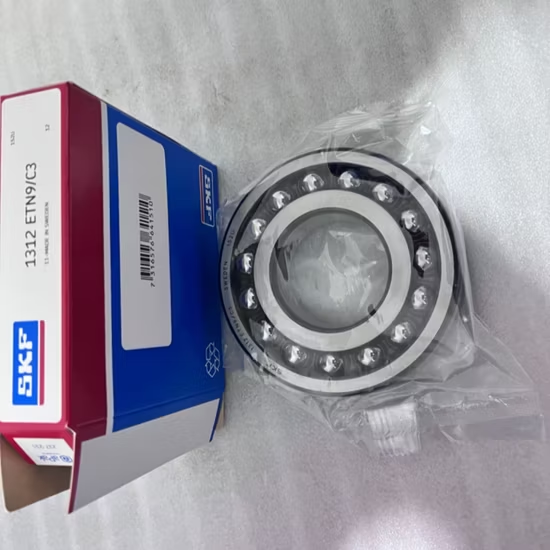
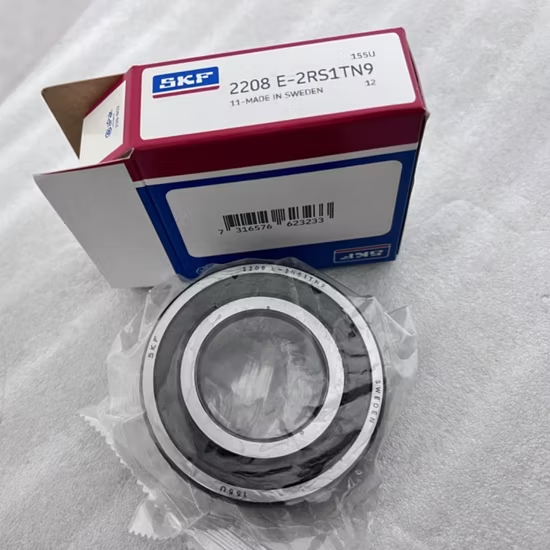
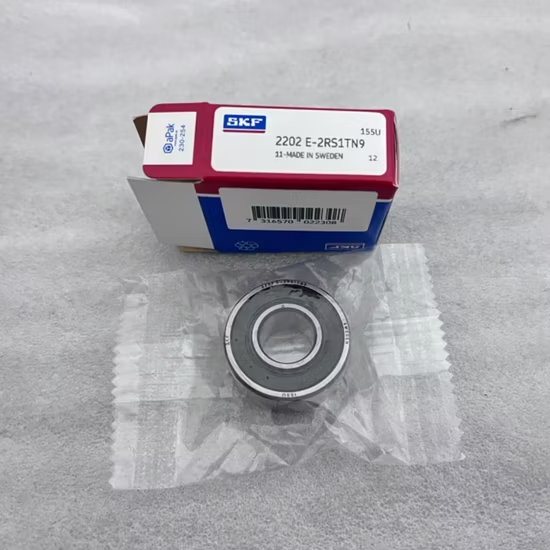
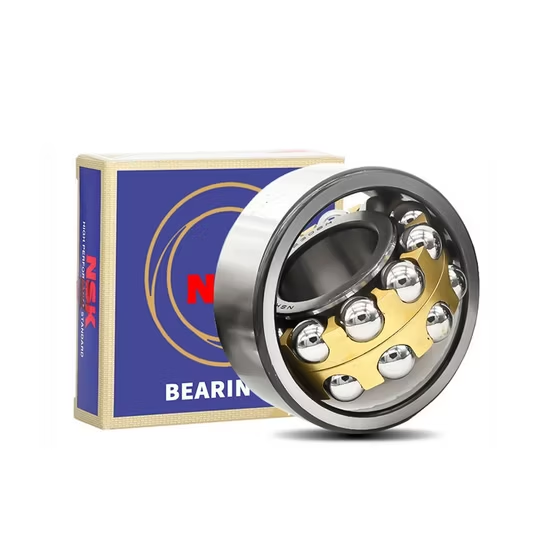
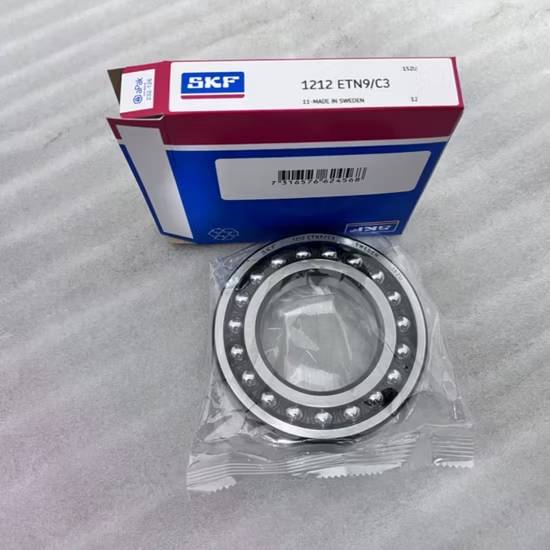
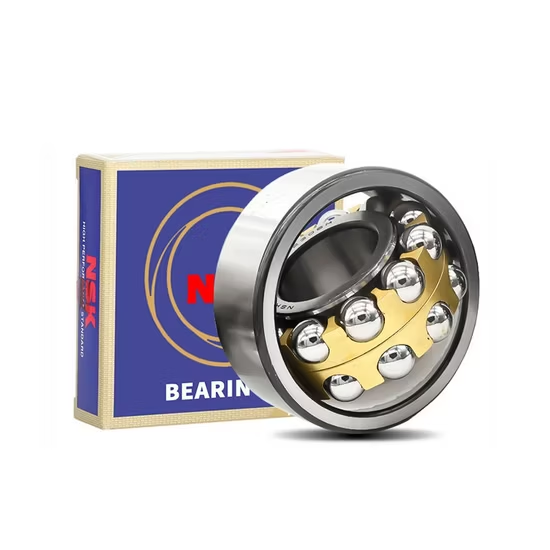
1200 1210 Self-Aligning Ball Bearing — open type configuration requires external lubrication, while standard CN clearance handles normal thermal expansion. The spherical outer raceway compensates for shaft misalignment in agricultural and textile machinery.
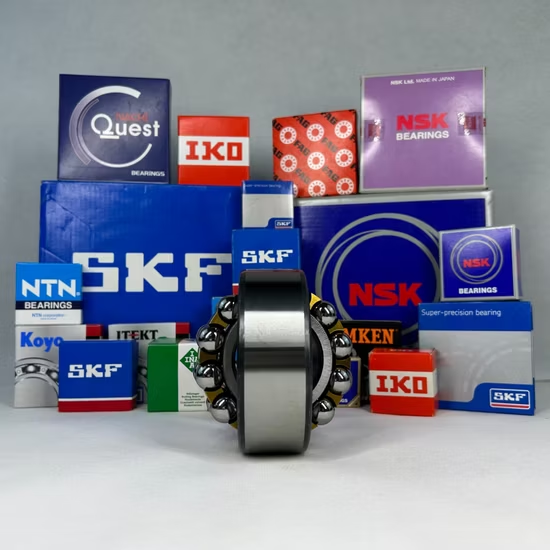
Multi-Brand Authorized Sourcing — Procure genuine 1200 1210 self-aligning ball bearing units across major international manufacturers in a single consolidated order, eliminating multi-vendor coordination.
| Parameter | Value |
|---|---|
| Designation | 1200 1210 |
| Product Type | Self-Aligning Ball Bearing |
| Bearing Style | Open, Rubber Seals, Iron Seals |
| Bearing Type | Self-Aligning Ball |
| Seal or Shield Type | Open (Standard), Rubber Seals, Iron Seals |
| Clearance Class | CN (Standard), C3 (Available) |
| Precision Class | P0 (Standard) |
| Bore Type | Cylindrical |
| Origin | Germany, Japan, Sweden, Malaysia, China |
| HS Code | 848210 |
| Industry | Typical Applications |
|---|---|
| Agricultural Machinery | Harvester rotor shafts, planter metering drives, sprayer boom pivots |
| Material Handling | Conveyor idler rolls, bucket elevator tail pulleys, transfer belt drives |
| Textile Machinery | Loom warp beams, spinning frame drafting rollers, yarn guide shafts |
| General Industrial | Fan shafts with frame deflection, pump drives with base settlement |
Assuming a base number match guarantees field survival is a costly procurement error.
During a motorcycle assembly project in Dubai, ignoring minor suffix variations led to rapid cage disintegration under extreme heat and sand ingress. When sourcing a 1200 1210 self-aligning ball bearing for agricultural or material handling equipment, overlooking internal clearance and seal configurations causes thermal binding or abrasive contamination . A basic designation cross-reference often misses the C3 clearance required for thermal expansion in high-temperature zones, or the specific iron shield needed to block fine particulate matter without introducing excessive friction.
The primary advantage of this 1200 1210 self-aligning ball bearing lies in its spherical outer ring raceway, allowing the inner ring and ball assembly to swivel freely. This design compensates for initial mounting misalignments and operational shaft deflections common in long conveyor systems or agricultural drivetrains. By accommodating these angular errors, the bearing prevents localized edge loading on the raceways, ensuring smooth rotation and extending service intervals in demanding industrial setups.
Shaft misalignment is only part of the challenge; environmental factors dictate the actual service life. In high-dust agricultural settings, open bearings require frequent relubrication to purge contaminants, whereas rubber-sealed variants retain grease but introduce higher rotational friction. Elevated ambient temperatures in Middle Eastern or heavy industrial contexts cause inner ring expansion, making standard CN clearance insufficient and necessitating C3 clearance to prevent internal preload. Selecting the correct seal type and clearance class is critical to balancing friction, heat generation, and contamination exclusion .
The standard 1200 and 1210 designations imply an open design with normal internal clearance (CN) and standard precision (P0). The inner ring features two deep raceway grooves, while the outer ring has a single spherical raceway. For applications involving significant thermal gradients, such as kiln-adjacent conveyors, specifying a C3 clearance variant provides the necessary internal space to accommodate differential thermal expansion between the shaft and housing. The cage, typically pressed steel for standard versions, maintains ball spacing and reduces friction, while alternative polyamide or brass cages can be specified for higher speed or vibration-intensive applications. Understanding these internal variables ensures the bearing performs reliably under specific operational loads rather than just fitting the physical envelope.
Relying solely on dimensional equivalence without verifying internal geometry leads to premature operational failure. Installing a standard clearance bearing in a high-heat environment causes thermal expansion to eliminate internal clearance, resulting in excessive friction, overheating, and eventual cage failure. According to ISO 281 frameworks, such misapplications drastically reduce the calculated rating life, triggering unplanned downtime and catastrophic damage to adjacent shaft components. Warranty voidance inevitably follows when failure analysis reveals that the specified clearance or sealing arrangement did not match the actual operating conditions .
Our distribution model focuses on precise technical alignment rather than simple part swapping. We verify that cross-referenced equivalents match not just the bore and outside diameter, but also the exact cage material and internal clearance required for your specific machinery. Every shipment includes batch traceability to the manufacturer, ensuring you receive genuine components rather than counterfeit parts with soft inner rings. Our engineering team reviews application parameters to confirm that the selected seal type and precision class will withstand your operational environment, eliminating the guesswork from critical spare parts procurement.
To ensure optimal performance, provide our engineering team with your specific radial and axial loads, operational speeds, and ambient temperature ranges. Supplying the exact OEM equipment number allows us to perform a comprehensive cross-reference check, verifying that the internal clearance and sealing arrangements perfectly match the original design intent. This technical review guarantees that the selected components will deliver reliable service life under your unique operational stresses.
Q: Why is C3 clearance often necessary for these bearings in hot environments?
A: Standard CN clearance may disappear when the inner ring expands due to high shaft temperatures, causing internal binding and rapid failure. A C3 clearance provides additional internal space to accommodate this thermal expansion, ensuring the rolling elements continue to operate smoothly without excessive friction or heat generation in demanding industrial applications.
Q: How do I choose between rubber seals and iron shields for dusty conditions?
A: Rubber seals offer superior exclusion of fine dust and moisture but generate higher friction, limiting maximum speeds. Iron shields provide a non-contact barrier that keeps out larger debris while allowing higher rotational speeds, though they are less effective against fine particulate ingress. The choice depends on balancing your contamination level with speed requirements.
Q: Why did my cross-referenced bearing fail despite matching the base number?
A: Base numbers only define physical dimensions. If the replacement lacked the correct internal clearance, cage material, or seal type specified for your exact application, it would fail under operational stress. True interchangeability requires matching all suffixes and internal design parameters to the original equipment manufacturer's specifications.
Q: How can I verify the authenticity of the bearings before installation?
A: Each bearing features a unique QR code that can be scanned using the manufacturer's official mobile application. This digital verification confirms the production batch, origin, and authenticity, effectively filtering out counterfeit products that utilize cloned labels and substandard metallurgy, which often exhibit soft inner rings.
Q: What mounting precautions are required for the cylindrical bore design?
A: Avoid direct hammer blows on the rings, as this damages the spherical raceway and compromises the self-aligning capability. Utilize an induction heater to expand the inner ring evenly for a slip fit onto the shaft, and ensure the mounting force is applied strictly to the inner ring to prevent brinelling the raceways.
Our 5-step process ensures every order is engineered, validated, and supported for optimal performance.
Technical needs assessment
Custom specifications
Free samples for $50k+
Pre-shipment inspection
On-site & predictive
Our certified engineers respond within 24 hours with detailed technical specifications, pricing, and lead time information.