01
Consultation
Technical needs assessment

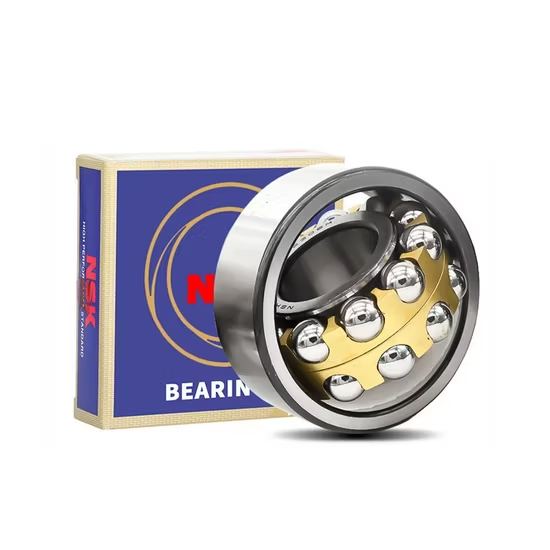
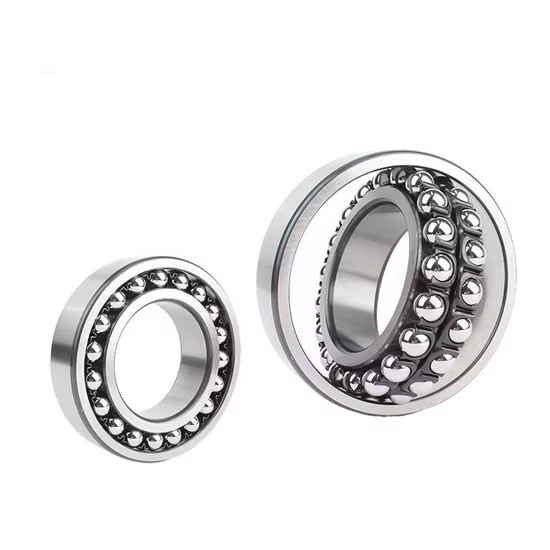


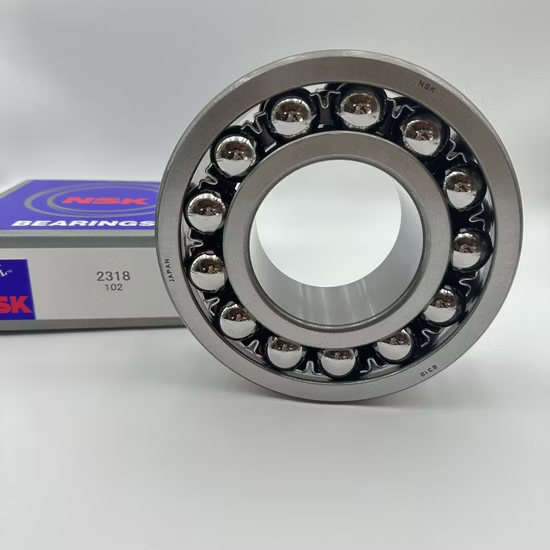
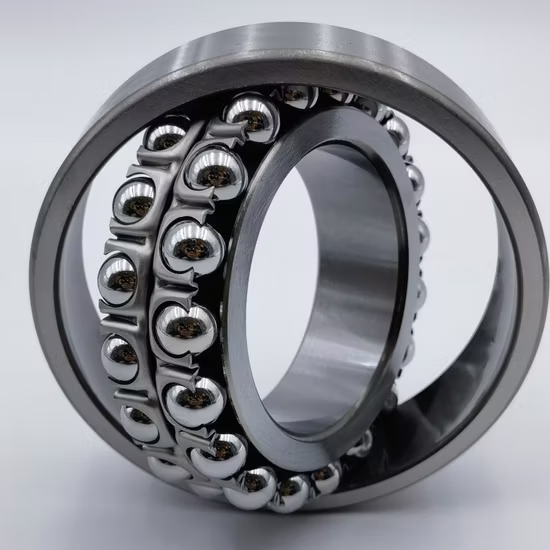
1307 1308 1309 1310 1311 1312 1313 Self-Aligning Ball Bearings — chrome steel construction compensates for shaft misalignment to reduce edge stress.
Full Brand Authorization — Procure SKF, FAG, and NSK variants for the 1307 1308 1309 1310 1311 1312 1313 self-aligning ball bearing series within a single consolidated shipment.
| Parameter | Value |
|---|---|
| Designation | 1307 1308 1309 1310 1311 1312 1313 |
| Product Type | Self-Aligning Ball Bearing |
| Material Options | Chrome steel, with stainless steel variants available |
| Bearing Style | Open, rubber seals, iron seals |
| Clearance Class | Normal (CN) as base, C3/C4 available |
| Precision Class | Standard (P0), higher grades available |
| Cage Material Options | Pressed steel, machined brass, polyamide |
| Origin Options | Germany, Japan, Sweden, Malaysia, China |
| Certification | ISO 9001 compliant manufacturing |
| Industry | Typical Applications |
|---|---|
| Material Handling | Conveyor belt idler pulleys and return rollers |
| Agriculture | Harvester threshing drum shafts and auger drives |
| Textile Manufacturing | Spinning frame drafting rollers and yarn guides |
| General MRO | Electric motor fan-end shafts and pump drive assemblies |
The outer ring sphered raceway prevents edge-loading when shaft deflection occurs.
In my early quality control days in the Pearl River Delta, I inspected a batch of conveyor bearings that failed prematurely. The basic dimension matched, but the internal clearance and cage material were entirely wrong for the high-vibration environment. This specific failure mode is common when sourcing the 1307 1308 1309 1310 1311 1312 1313 self-aligning ball bearing for heavy-duty material handling. Buyers often focus solely on the bore and outer diameter, ignoring how thermal expansion alters internal geometry during continuous operation . When the wrong clearance class is installed, the rolling elements bind, generating excessive friction heat and leading to rapid cage disintegration.
Selecting the correct cage design is critical for the 1307 1308 1309 1310 1311 1312 1313 self-aligning ball bearing. Pressed steel cages offer low friction and are ideal for standard electric motor applications. However, in agricultural machinery or vibrating screens where shock loads are prevalent, a machined brass cage provides the necessary structural rigidity to prevent early fracture. Polyamide cages offer a quiet operation but have strict thermal limits. We review your specific vibration and load data to recommend the optimal cage material, ensuring the bearing survives the actual operating environment rather than just the theoretical catalog conditions.
Shaft deflection and housing misalignment introduce complex load vectors. While the sphered outer raceway accommodates static misalignment, dynamic shaft bending requires precise internal clearance management. If the equipment operates at elevated temperatures, a standard CN clearance will disappear as the inner ring expands, causing the bearing to seize. Furthermore, in dusty textile or agricultural settings, open bearings require robust external sealing designs, whereas integrated rubber seals provide better contamination exclusion but introduce rotational friction . Balancing these thermal and environmental factors dictates whether an open, rubber-sealed, or iron-shielded configuration is appropriate.
The base designations 1307 through 1313 inherently specify an open bearing with normal internal clearance and standard precision. This means the bearing relies on the housing design for contamination protection and requires external relubrication. The normal clearance assumes standard operating temperatures and typical interference fits. If your application involves high-speed electric motors or hot-running gearbox shafts, relying on the base designation without specifying a C3 clearance or a specialized cage material will result in premature failure. Understanding these default parameters is the first step in preventing cross-reference errors during procurement.
Ignoring suffix details leads to catastrophic equipment damage. Installing a standard clearance bearing in a high-temperature conveyor drive causes thermal binding, which rapidly destroys the raceway and can snap the shaft. According to failure analysis frameworks, a significant share of premature bearing failures stems from incorrect internal clearance selection rather than material fatigue . This results in unplanned downtime, voided equipment warranties, and costly secondary damage to adjacent housing components and seals.
We differentiate our supply chain by focusing on technical alignment rather than just part number matching. When you request the 1307 1308 1309 1310 1311 1312 1313 self-aligning ball bearing, we verify the internal clearance and cage design against your specific load profile, preventing the common trap of receiving a base model that fails under thermal stress. Our multi-brand authorization allows us to consolidate SKF, FAG, and NSK requirements into one shipment, eliminating the logistical friction of managing multiple vendors. Furthermore, every batch is backed by manufacturer traceability, ensuring you receive genuine components with verified metallurgical properties, completely bypassing the risk of counterfeit soft inner rings prevalent in the gray market.
To ensure optimal performance, provide our engineering team with your specific radial and axial load profiles, operating speeds, and ambient temperature ranges. This data allows us to perform an L10 life calculation and recommend the precise clearance class and cage material for your application. If you are replacing an existing component, share the OEM equipment number or the exact suffix markings from the failed unit. We will conduct a comprehensive cross-reference review to guarantee the replacement matches the original design intent, preventing recurring failure cycles.
Q: What is the permissible misalignment angle for the 1307 to 1313 series?
A: The sphered outer raceway typically allows for a static misalignment of a few degrees, accommodating housing machining errors and shaft deflection. However, dynamic misalignment under heavy loads requires careful evaluation of the internal clearance and cage strength to prevent edge stressing and premature fatigue.
Q: How do I choose between rubber seals and iron shields for this series?
A: Rubber contact seals provide superior exclusion of dust and moisture, making them ideal for agricultural or textile environments, but they generate higher friction and limit maximum speed. Iron shields offer non-contact protection against large debris with minimal friction, suiting higher-speed electric motor applications where heat generation must be minimized.
Q: Why is C3 clearance often required instead of the standard CN for these bearings?
A: Standard CN clearance assumes normal operating temperatures and standard shaft fits. In applications with high ambient heat, significant thermal gradients, or heavy interference fits, the inner ring expands and reduces internal clearance. Specifying C3 provides the necessary thermal expansion allowance to prevent the bearing from binding and seizing during operation.
Q: How can I verify the authenticity of the bearings upon delivery?
A: Every genuine bearing from major brands features specific packaging markers and traceability codes. You can use the manufacturer's official mobile application to scan the QR code on the box, instantly verifying the production batch, origin, and authenticity, effectively eliminating the risk of installing counterfeit components with substandard metallurgy.
Our 5-step process ensures every order is engineered, validated, and supported for optimal performance.
Technical needs assessment
Custom specifications
Free samples for $50k+
Pre-shipment inspection
On-site & predictive
Our certified engineers respond within 24 hours with detailed technical specifications, pricing, and lead time information.