01
Consultation
Technical needs assessment


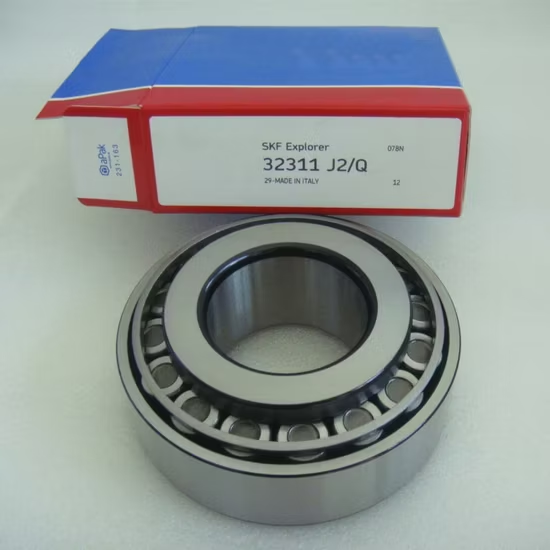


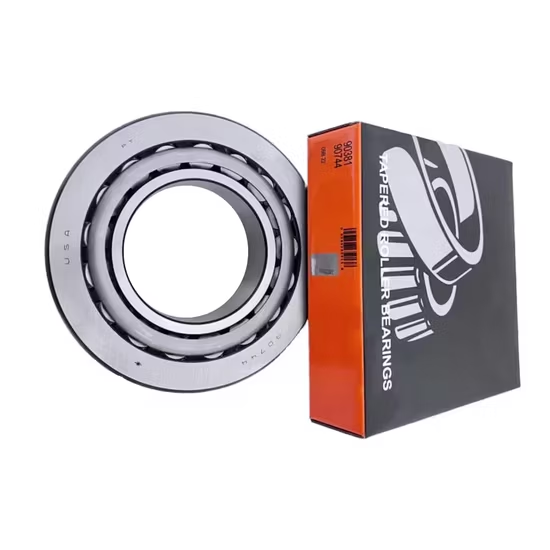
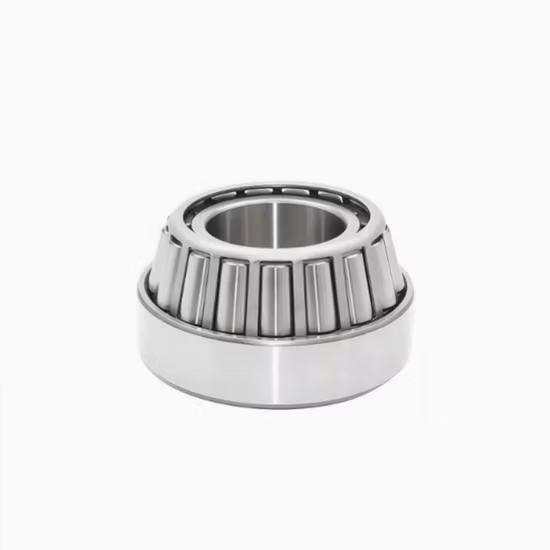
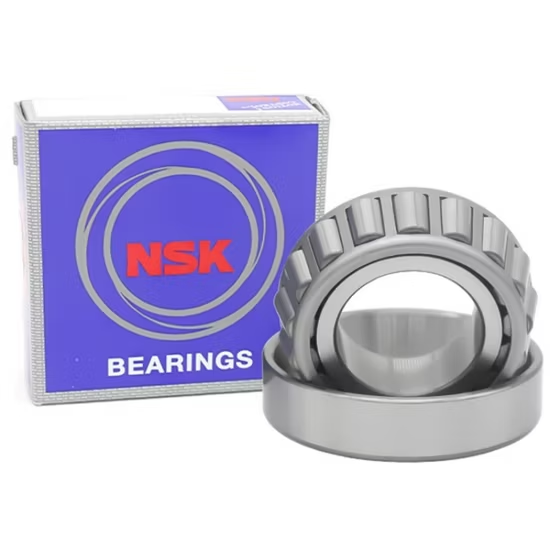
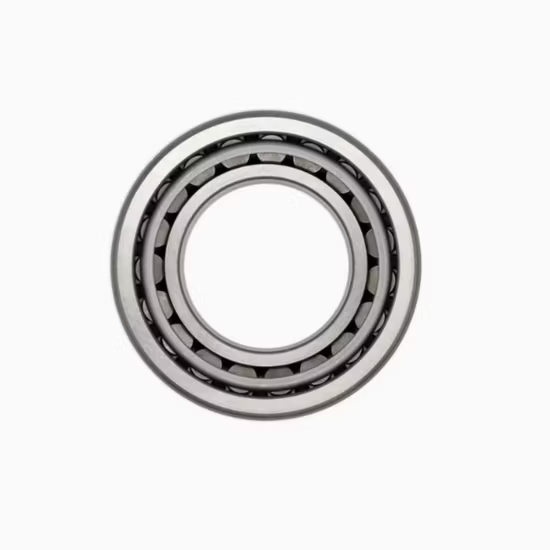
30201 30202 Tapered Roller Bearing P4 — Single-row design machined from GCr15 high-carbon chromium steel for optimal core toughness in automotive wheel hubs and industrial gearboxes.
Three-way cross-reference alignment — matching base number, cage material, and P4 precision to prevent thermal binding in wheel hubs.
| Parameter | Value |
|---|---|
| Designation | 30201 30202 |
| Bearing Type | Tapered Roller Bearing |
| Number of Rows | Single Row |
| Precision Class | P4 |
| Material | GCr15 Bearing Steel |
| Cage Material Options | Nylon, Brass, or Iron |
| Origin | Shanghai |
| Customization | Available |
| Industry | Typical Applications |
|---|---|
| Automotive Repair | Passenger vehicle wheel hubs and steering knuckles |
| Heavy Vehicles | Light truck axles and differential pinion shafts |
| Industrial Power Transmission | High-speed reduction gearboxes and conveyor drives |
A matching designation does not guarantee operational survival if internal clearances and cage materials are ignored during replacement. Early in my career transitioning from quality inspection to technical sales in Shenzhen, I investigated a catastrophic field failure where a distributor supplied standard deep groove ball bearings for an automotive wheel hub application simply because the base numbers aligned. The lack of proper internal geometry and thermal expansion tolerance caused the cages to shatter under high-speed cornering loads. That incident cemented my absolute insistence on verifying every dimensional and material detail. When sourcing a 30201 30202 tapered roller bearing, overlooking the required P4 precision or selecting an incompatible cage material for the specific lubrication environment will inevitably lead to premature seizure .
Automotive wheel hubs and industrial gearboxes demand components that handle complex combined loads without generating excessive heat. The 30201 30202 tapered roller bearing is engineered specifically for these environments, utilizing a single-row configuration that efficiently resolves both radial and axial forces. By strictly adhering to OEM equipment specifications during the cross-reference process, we ensure the selected unit integrates flawlessly into the existing housing, maintaining the precise alignment required for high-speed rotational stability.
Wheel hub assemblies operate in highly contaminated environments while enduring significant temperature fluctuations from braking friction. These conditions demand a careful balance between sealing effectiveness and rotational friction. If the internal clearance is too tight, thermal expansion during heavy braking will eliminate the operational gap, causing the rollers to bind against the raceways. Conversely, excessive clearance introduces vibration that accelerates surface fatigue . Selecting the correct cage material is equally critical, as it must withstand the specific lubrication regime and operating temperatures without degrading or reacting with the grease additives.
The 30201 and 30202 designations belong to the metric light series, indicating a specific cross-sectional profile optimized for compact housing designs where space is at a premium but load capacity remains substantial. Upgrading to P4 precision provides noticeably tighter dimensional and running accuracy compared to standard commercial grades, which is essential for minimizing vibration and noise in high-speed gearbox applications. The GCr15 high-carbon chromium steel offers the necessary core toughness and surface hardness to resist spalling under heavy contact stresses. Furthermore, the availability of nylon, brass, or iron cages allows engineers to tailor the component to the exact speed and lubrication requirements of the assembly; for instance, polymer cages reduce friction and weight, while machined brass cages offer superior stability under heavy loads and marginal lubrication conditions.
Installing a component that meets the base dimensional requirements but fails to match the internal design or precision grade often results in unplanned downtime and catastrophic damage to adjacent drivetrain components. A slight deviation in running accuracy can amplify vibration, leading to rapid degradation of the gear teeth in a transmission or premature wear of the wheel hub seals. According to industry failure analysis frameworks, a significant share of premature failures stems directly from these subtle specification mismatches rather than inherent material defects .
Our procurement process prioritizes technical validation over simple part number lookup. We verify that the cross-reference alignment covers the exact cage material and internal geometry required by your specific OEM equipment, preventing the common error of substituting a standard unit where a specialized design is mandated. Every batch is subjected to rigorous dimensional and running accuracy inspections to confirm P4 compliance before dispatch. We provide comprehensive cross-brand interchange expertise, ensuring that if an original manufacturer part is unavailable, the replacement matches the load, speed, and temperature parameters of the application. Additionally, our technical team reviews application parameters to validate the selection, offering mounting and failure analysis support to guarantee long-term reliability.
To facilitate an accurate technical review and L10 life calculation, please provide the specific radial and axial loads, operational speeds, and expected temperature ranges for your application. If you are replacing an existing component, sharing the exact OEM equipment number or the dimensions of the housing and shaft will allow our engineering team to verify the cross-reference and confirm the optimal cage material selection.
Q: How do I verify the authenticity and batch traceability of these P4 precision units?
A: Every shipment includes a Certificate of Conformity and batch traceability documentation. You can verify the authenticity by scanning the QR codes on the packaging through the manufacturer's official mobile application, which confirms the production origin and rules out counterfeits with soft inner rings or cloned labels.
Q: Why must clearance and cage material be matched during cross-brand interchange?
A: Base designations often hide critical internal differences. If a replacement unit has standard clearance instead of the required thermal expansion gap, or an iron cage instead of the specified high-speed nylon variant, it will generate excessive heat and fail prematurely. We align all three parameters to ensure exact operational compatibility.
Q: What are the selection boundaries between nylon, brass, and iron cages?
A: Nylon cages offer lower friction and weight, making them ideal for high-speed, well-lubricated environments. Machined brass cages provide exceptional stability and durability under heavy loads or marginal lubrication. Iron cages are typically used in standard, cost-sensitive applications where extreme speeds or heavy shock loads are not present.
Q: How do I interpret standard metric designations like 30201 and 30202?
A: These numbers indicate a single-row metric light series configuration. The prefix defines the bearing type and contact angle profile, while the subsequent digits specify the bore diameter and outer dimensional series. This standardized naming ensures the physical envelope fits the housing, though internal precision and cage options must still be verified.
Our 5-step process ensures every order is engineered, validated, and supported for optimal performance.
Technical needs assessment
Custom specifications
Free samples for $50k+
Pre-shipment inspection
On-site & predictive
Our certified engineers respond within 24 hours with detailed technical specifications, pricing, and lead time information.