01
Consultation
Technical needs assessment


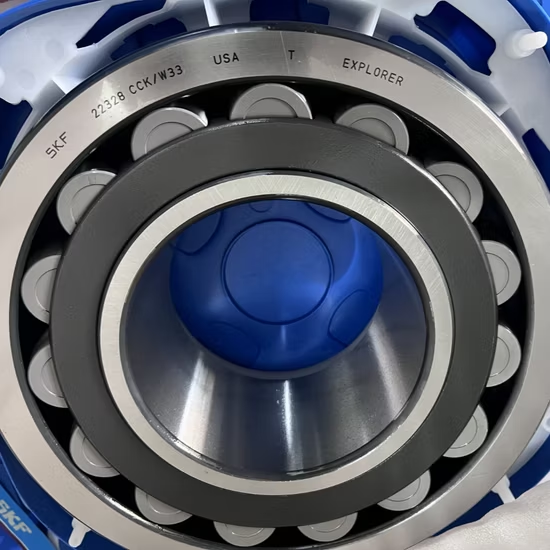
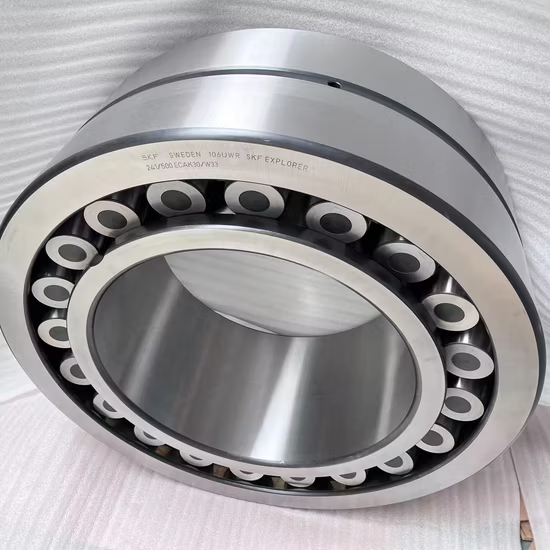
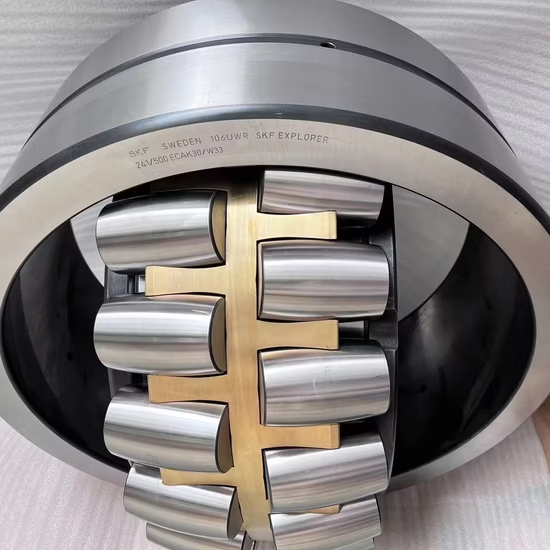
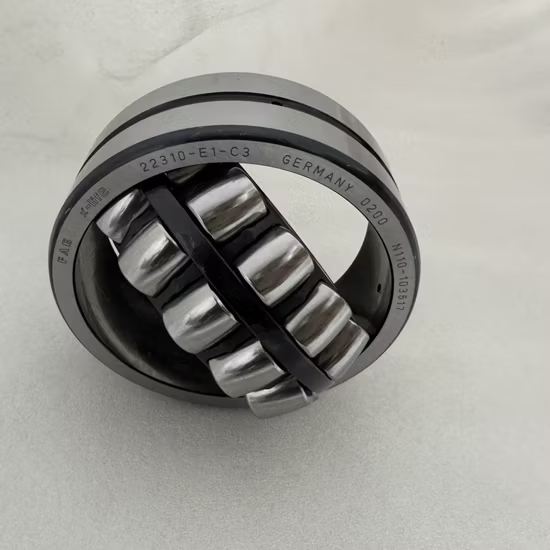
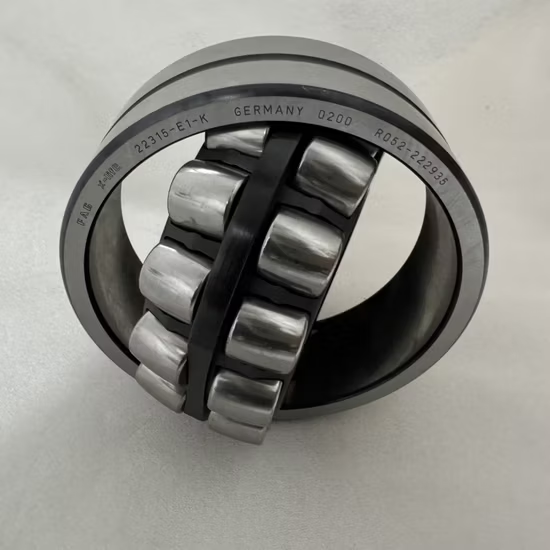
23024 Spherical Roller Bearing — W33 design integrates outer ring lubrication grooves and holes for efficient relubrication, while the K variant provides a 1:12 tapered bore for precise clearance adjustment.
Full Manufacturer Batch Traceability — Every 23024 spherical roller bearing we dispatch includes verifiable lot documentation linked directly to the original production run, eliminating the guesswork in heavy machinery maintenance.
| Parameter | Value |
|---|---|
| Designation | 23024 |
| Product Type | Spherical Roller Bearing |
| Bore Type | Cylindrical or 1:12 Tapered (K) |
| Cage Material | Machined Brass (CA) or Pressed Steel (CC/CCK) |
| Lubrication Feature | Outer Ring Groove and Holes (W33) |
| Adapter Sleeve Compatibility | H3024 (for tapered bore variants) |
| Origin | Germany / Japan / Sweden / Malaysia / China |
| HS Code | 8482500090 |
| Customization | Available |
Note: Specific suffix combinations such as CC, CA, CCK, and H3024 denote internal design variants and adapter sleeves that require manufacturer catalog confirmation for exact dimensional interchangeability.
| Industry | Typical Applications |
|---|---|
| Mining and Crushing | Vibrating screen exciter mechanisms, jaw crusher toggle plate joints |
| Steel and Metallurgy | Continuous caster segment rolls, rolling mill gearbox intermediate shafts |
| Material Handling | Bucket elevator head pulley shafts, heavy-duty conveyor drive rollers |
| Pulp and Paper | Paper machine dryer cylinder journals, press section felt guide rolls |
A matching base designation guarantees absolutely nothing about internal clearance or cage survivability under thermal load.
Seeing a vibrating screen shut down because a standard clearance bearing was forced into a high-heat environment is a preventable disaster. When procurement focuses solely on the base number, the missing suffix data leads to thermal binding, cage disintegration, and massive unplanned downtime . The internal geometry and thermal expansion compensation must align perfectly with the operational reality of the equipment.
Selecting the correct 23024 spherical roller bearing goes far beyond matching the bore and outside diameter. We evaluate the specific shock loads and misalignment angles of your application to recommend the optimal cage design and internal clearance. Our cross-brand interchange process ensures that the replacement unit matches the original equipment manufacturer's exact internal profile, preventing premature fatigue.
Equipment operating in mining and steel mills faces brutal conditions that rapidly degrade standard components. High ambient temperatures combined with friction heat demand expanded internal clearances to prevent the rollers from skidding and binding. Meanwhile, heavy particulate contamination requires reliable relubrication pathways to flush out debris, while extreme shock loads necessitate cage materials that resist fracture under sudden impact .
The W33 feature provides a lubrication groove and three holes in the outer ring, allowing fresh grease to penetrate directly into the roller paths, which is vital for flushing out abrasive dust in crusher applications. The K suffix indicates a 1:12 tapered bore, enabling precise radial clearance adjustment during mounting on an H3024 adapter sleeve. Furthermore, the choice between a machined brass cage (CA) and a pressed steel cage (CC/CCK) dictates how well the bearing absorbs severe vibrations without suffering cage pocket wear.
Installing a component with the wrong internal design leads to a cascade of mechanical failures. According to ISO 15243 frameworks, inadequate clearance compensation results in excessive friction heat, rapidly degrading the lubricant and causing surface smearing . This forces emergency shutdowns, voids equipment warranties, and causes catastrophic damage to adjacent shafts and housings, turning a simple replacement into a massive rebuild project.
Our technical review process specifically targets the high-risk suffix variations inherent in this series. We verify that the cross-reference matches not just the base number, but the exact cage material and clearance class required for your thermal profile. By supplying authorized inventory with full batch traceability, we eliminate the risk of receiving counterfeit units with soft inner rings that fail under heavy radial loads.
To ensure optimal service life, provide our engineering team with your specific radial and axial load profiles, operating speeds, and ambient temperature ranges. Sharing the original equipment manufacturer part numbers allows us to execute a rigorous cross-reference check, verifying that all internal design variants align perfectly with your machinery's operational demands.
Q: Why does a base number match still result in early bearing failure?
A: A base number only defines the outer dimensions. If the internal clearance or cage material suffix is incorrect, the bearing cannot compensate for thermal expansion or withstand specific vibration frequencies, leading to rapid thermal binding or cage fracture under load.
Q: How do clearance classes affect performance in vibrating screens?
A: Standard clearance often leads to thermal binding in high-heat or high-vibration environments. Expanded clearance classes provide the necessary internal space to accommodate shaft expansion and maintain a proper lubricant film, preventing the rollers from skidding and generating excessive friction heat.
Q: What is the difference between machined brass and pressed steel cages here?
A: Machined brass cages offer superior resistance to severe shock loads and high vibrations, making them ideal for crushers. Pressed steel cages are lighter and highly efficient for standard industrial gearboxes where extreme shock loading is not a primary operational factor.
Q: How should the tapered bore and adapter sleeve be installed correctly?
A: The bearing must be driven up the tapered sleeve by a precise calculated distance. Over-tightening eliminates the internal clearance, causing immediate thermal seizure, while under-tightening allows the inner ring to spin on the shaft, destroying the journal surface.
Q: What maintenance is required for the outer ring lubrication feature?
A: The outer ring groove and holes allow grease to enter directly between the roller rows. In dusty environments, regular relubrication through these ports is essential to purge abrasive contaminants from the raceways and maintain a protective film on the rolling surfaces.
Our 5-step process ensures every order is engineered, validated, and supported for optimal performance.
Technical needs assessment
Custom specifications
Free samples for $50k+
Pre-shipment inspection
On-site & predictive
Our certified engineers respond within 24 hours with detailed technical specifications, pricing, and lead time information.


