01
Consultation
Technical needs assessment




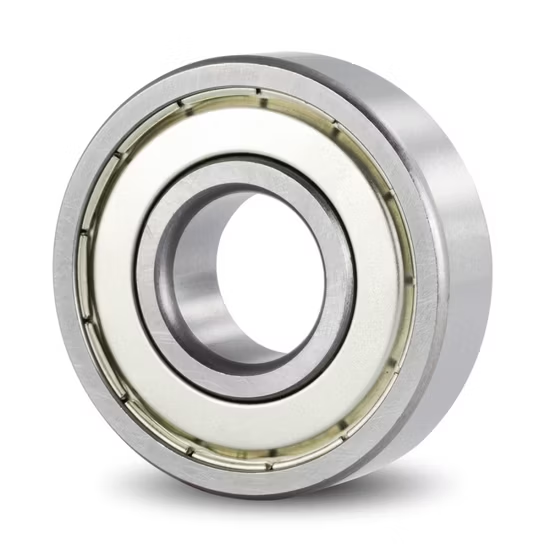
Small Deep Groove Ball Bearing for Precision Motors and Appliances — engineered for reliable operation in sensitive equipment.
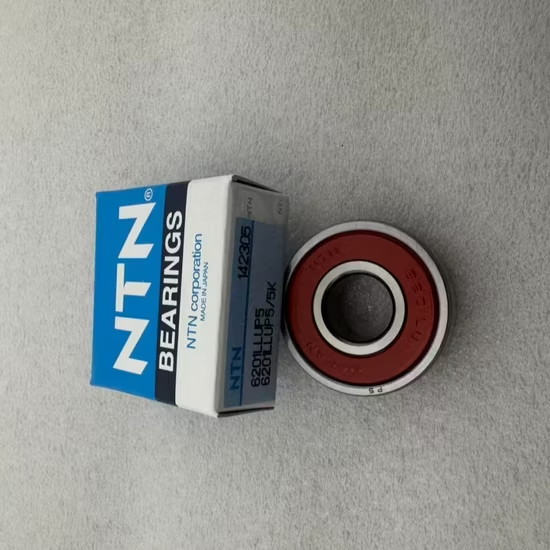
Multi-brand authorized coverage — Source NTN, NSK, and NACHI small deep groove ball bearings in a single consolidated shipment without juggling multiple vendors.
| Parameter | Value |
|---|---|
| Product Type | Deep Groove Ball Bearing |
| Seal or Shield Type | Open, Rubber Seals, Iron Seals |
| Vibration and Noise Level | Z1V1, Z2V2, Z3V3, Z4V4 |
| Origin | Germany, Japan, Sweden, Malaysia, China |
| Industry | Typical Applications |
|---|---|
| Electric Motors | Rotor shaft support in high-speed induction and servo motors |
| Industrial Gearboxes | High-speed input shafts and precision planetary gear stages |
| Household Appliances | Spindle assemblies in washing machines and blower motors |
Matching the Z-grade to the motor's acoustic requirement prevents premature structural fatigue.
When procurement teams focus solely on basic dimensions, they often overlook vibration and noise classifications. Installing a standard Z1V1 grade in a precision servo motor generates excessive acoustic resonance, which transfers destructive kinetic energy into the housing . As a small deep groove ball bearing supplier, we frequently see equipment returned due to noise complaints that trace back to mismatched vibration grades rather than actual dimensional defects.
Selecting the correct shielding configuration ensures optimal lubrication retention without introducing parasitic drag. Open variants suit oil-lubricated gearboxes where external cooling is present, while rubber seals provide vital contamination exclusion for household appliances operating in dusty environments. Iron shields offer a middle ground for high-speed electric motors, minimizing friction while blocking larger particulates. We guide buyers through these trade-offs to ensure the selected small deep groove ball bearing matches the specific environmental and thermal profile of the application.
High-speed electric motors subject components to intense centrifugal forces and rapid temperature spikes. Standard internal clearance often leads to thermal binding when the inner ring expands faster than the outer ring during startup. Furthermore, inadequate sealing allows microscopic dust ingress that degrades the grease matrix, accelerating wear . Balancing rotational speed limits with the appropriate seal friction and internal geometry is critical to avoiding catastrophic seizure.
Component longevity depends heavily on matching material options and precision grades to the operational envelope. Standard bearing steel serves general industrial gearboxes well, while stainless steel variants are available for washing machine spindles exposed to moisture and corrosive detergents. Ceramic hybrid options provide an alternative for applications demanding electrical insulation or reduced centrifugal load at extreme RPMs. Specifying tighter dimensional tolerances and higher Z-grade vibration limits ensures smooth, quiet operation in sensitive precision machinery.
Ignoring nuanced application requirements inevitably leads to cascading equipment failures. A mismatched seal type causes rapid grease purge, resulting in dry running and severe raceway spalling . Similarly, deploying standard clearance in high-thermal applications guarantees unplanned downtime due to thermal binding. These failures not only void equipment warranties but also inflict catastrophic damage on adjacent motor windings and gearbox housings, multiplying replacement costs far beyond the component price.
Our technical review process catches cross-reference errors that automated systems miss, ensuring clearance, cage design, and seal types align perfectly with your OEM requirements. We consolidate multi-brand requirements into single shipments, eliminating the logistical friction of sourcing SKF, FAG, and NSK equivalents from fragmented vendors. Every batch is verified for authenticity, protecting your maintenance budget from the devastating impact of counterfeit parts with compromised metallurgy.
Provide your equipment model, available mounting space, and specific operational loads so our engineering team can determine the exact designation required. Detailing the environmental conditions, such as moisture exposure or high ambient heat, allows us to recommend the optimal material and sealing configuration. Sharing target RPM and acoustic limits ensures we supply the precise vibration grade for your application.
Q: How do we determine the exact designation for a new motor application?
A: Share the operational parameters, including radial and axial loads, target RPM, operating temperature range, and environmental exposure. Our engineering team uses these inputs to calculate the required internal clearance, select the appropriate seal type, and specify the precise vibration grade, ensuring the final designation perfectly matches your equipment's kinematic and thermal demands.
Q: Why must cross-referencing align clearance and seals, not just basic dimensions?
A: Matching only the base bore and outer diameter ignores critical internal geometry. A standard clearance unit installed in a high-heat motor will thermally bind, while an open bearing used in a dusty appliance will suffer rapid grease contamination. Aligning these internal specifications ensures the replacement survives the actual operational environment without premature failure.
Q: What is the selection boundary between rubber seals and iron shields in motors?
A: Rubber contact seals provide superior exclusion of fine dust and moisture but generate higher friction, limiting maximum RPM and increasing operating temperatures. Iron non-contact shields minimize friction and support higher rotational speeds but offer less protection against liquid ingress. The choice depends on whether the application prioritizes absolute contamination exclusion or high-speed thermal efficiency.
Q: How do Z1V1 through Z4V4 noise levels impact actual equipment performance?
A: These grades dictate the allowable vibration velocity and acoustic output. While Z1V1 is acceptable for general industrial conveyors, precision servo motors and household appliances require Z3V3 or Z4V4 to prevent audible whine and structural resonance. Using a lower grade in sensitive equipment causes user complaints and accelerates fatigue in the surrounding motor housing.
Q: How do you handle reliable cross-brand substitutions during supply shortages?
A: When original equipment manufacturer parts face extended lead times, we identify authorized equivalents from our multi-brand inventory. We do not merely match the basic size; we rigorously verify that the substitute matches the original internal clearance, cage material, and seal configuration, ensuring the alternative performs identically under your specific load and speed conditions.
Our 5-step process ensures every order is engineered, validated, and supported for optimal performance.
Technical needs assessment
Custom specifications
Free samples for $50k+
Pre-shipment inspection
On-site & predictive
Our certified engineers respond within 24 hours with detailed technical specifications, pricing, and lead time information.