01
Consultation
Technical needs assessment

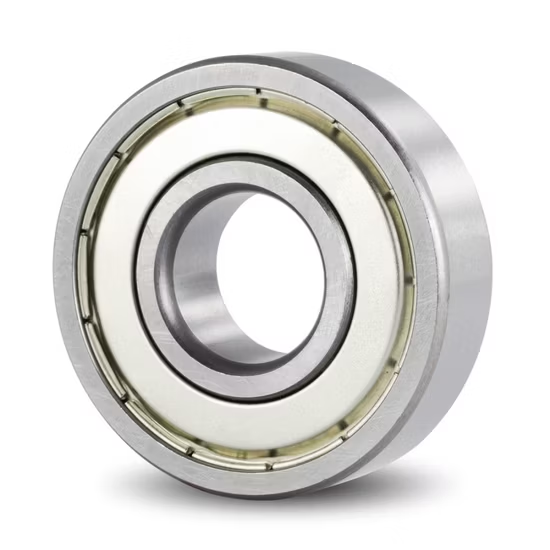


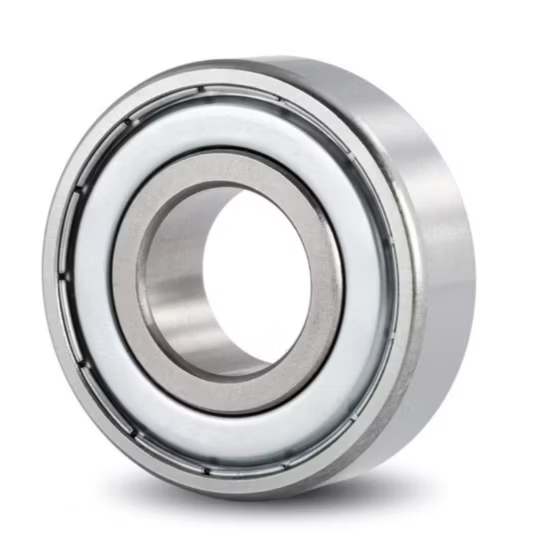
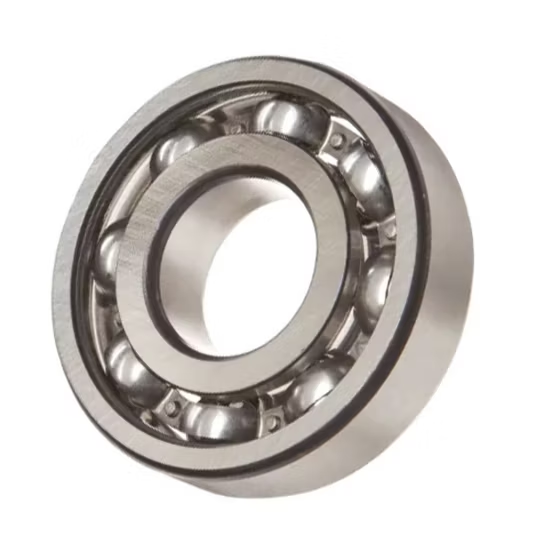
698 Zz Deep Groove Ball Bearing — stainless steel construction delivers reliable corrosion resistance for food processing and washdown environments.
QR Authenticity Verification — Scan the official brand app to confirm the metallurgical batch of every 698 Zz unit before installation.
| Parameter | Value |
|---|---|
| Designation | 698 Zz |
| Bearing Type | Deep Groove Ball Bearing |
| Material | Stainless steel (standard bearing steel options available) |
| Seal or Shield Type | Double metal shields (Zz) |
| Bore Type | Cylindrical |
| Precision Class | P0 to P2 options |
| Clearance Class | CN to C5 options |
| Customization | Cross-brand interchange supported |
| Industry | Typical Applications |
|---|---|
| Food Processing | Washdown conveyor rollers and packaging machinery drive shafts |
| Household Appliances | High-speed blender motor armatures and washing machine drain pumps |
| Electric Motors | Miniature cooling fan spindles and servo motor encoder ends |
| Corrosive Environments | Chemical dosing pump impeller shafts and marine instrument gimbals |
The Zz shield configuration prevents moisture ingress without the friction penalties of rubber contact seals.
Sourcing small-bore bearings for humid or washdown environments often leads to catastrophic field failures when procurement teams match the base number but overlook the suffix. I have seen stainless steel deep groove ball units fail within weeks because a supplier substituted open or rubber-sealed variants, leading to either lubricant washout or excessive friction heat. When specifying a 698 Zz stainless steel deep groove ball bearing, confirming the exact shield design is non-negotiable to avoid premature seizure .
Selecting the correct 698 Zz stainless steel deep groove ball bearing requires balancing corrosion resistance with high-speed rotational stability. While the stainless construction handles aggressive washdowns, the internal geometry and cage material must withstand the centrifugal forces of miniature motor applications. Our technical team reviews your specific speed and load profiles to ensure the selected variant avoids the cage fragmentation issues common in poorly matched small-bore replacements.
Miniature applications often operate at high RPMs where friction heat builds up rapidly. Metal shields provide a non-contact barrier that keeps particulates out while generating virtually no friction heat, unlike rubber seals that can melt or degrade under continuous high-speed rotation. In food processing or appliance motors, maintaining this thermal balance is critical. If the internal clearance is incorrectly specified, thermal expansion will eliminate the internal play, causing the bearing to bind and fail catastrophically .
The Zz suffix explicitly denotes double metal shields, a critical feature for keeping dust and moisture out of the raceway without adding rotational drag. Beyond the shields, the internal cage material dictates high-speed survival; a mismatched polymer cage in a high-RPM stainless unit will deform and shatter, while a pressed steel cage ensures structural integrity. Furthermore, selecting the appropriate clearance class—such as C3 for applications where the inner ring runs hotter than the housing—prevents the thermal binding that plagues improperly specified miniature bearings.
Substituting a standard carbon steel bearing or ignoring the Zz shield requirement in a corrosive environment leads to rapid raceway pitting and unplanned downtime. Even if the base dimensions match, a failure to verify the stainless material grade and non-contact shield design results in premature failure and voided equipment warranties. The financial impact of halting a food processing line to replace a seized miniature bearing far exceeds the initial procurement savings .
Our distribution network ensures that every 698 Zz unit is backed by verifiable documentation, eliminating the risk of counterfeit soft inner rings that plague the miniature bearing market. We cross-reference not just the base dimensions, but the exact Zz shield tolerance and stainless material specification against OEM requirements. By providing batch-level traceability and application-specific selection reviews, we guarantee that the bearing you install matches the exact engineering intent of your equipment.
To ensure optimal performance, provide our engineering team with your radial and axial load profiles, operating speeds, and ambient temperature ranges. Supplying the OEM equipment designation allows us to perform a comprehensive cross-reference check, verifying that the material, clearance, and shield configuration perfectly align with your application demands.
Q: How can I verify the authenticity of stainless steel bearings and avoid counterfeit soft inner rings?
A: Counterfeiters often use inferior alloys that pass visual inspection but fail under load. We supply every unit with batch traceability documentation and official brand app QR codes. Scanning these codes confirms the metallurgical origin, ensuring the inner and outer rings possess the correct hardness and corrosion resistance required for your specific washdown or high-speed application.
Q: What cross-reference checks are critical beyond the base designation for this bearing?
A: Matching the base number is insufficient. You must verify the Zz metal shield configuration, the specific stainless steel grade, and the internal clearance class. A base match with incorrect shields or standard carbon steel material will lead to rapid friction heat buildup or corrosion failure. Our technical team validates all suffixes and material specs against your OEM requirements.
Q: When should I choose metal shields over rubber contact seals for stainless deep groove ball bearings?
A: Metal shields are ideal for high-speed applications where friction heat must be minimized, and where the primary threat is dust or moisture splash rather than high-pressure liquid submersion. Rubber seals provide better water exclusion but generate friction heat that can degrade lubricants at high RPMs. We evaluate your speed and contamination profile to recommend the optimal sealing arrangement.
Q: How do vibration and noise levels impact electric motor and appliance applications?
A: In household appliances and precision electric motors, excessive vibration translates directly into unacceptable acoustic noise and accelerated wear on adjacent components. Selecting the appropriate precision class and ensuring the internal geometry is free from manufacturing defects guarantees smooth, quiet operation. We source units that meet strict acoustic grading requirements for sensitive consumer and industrial equipment.
Q: What documentation proves material compliance for export and corrosive environments?
A: For international shipments and stringent food processing environments, you need more than a basic invoice. We provide comprehensive material test reports confirming the stainless steel composition, alongside Certificates of Conformity and country-of-origin documentation. This complete paper trail ensures your equipment meets international safety and hygiene standards without facing customs or compliance delays.
Our 5-step process ensures every order is engineered, validated, and supported for optimal performance.
Technical needs assessment
Custom specifications
Free samples for $50k+
Pre-shipment inspection
On-site & predictive
Our certified engineers respond within 24 hours with detailed technical specifications, pricing, and lead time information.