01
Consultation
Technical needs assessment

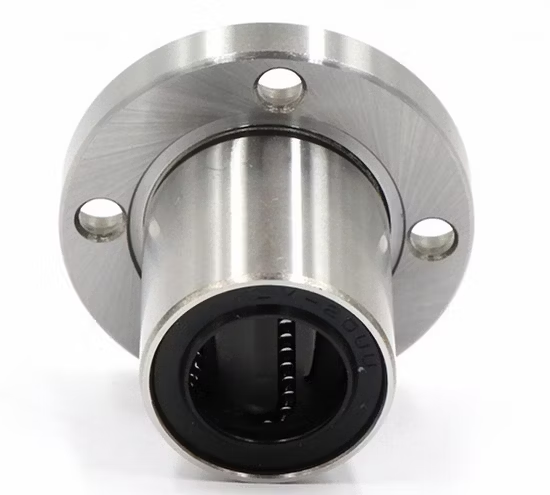


Lmef8luu Circular Flange Linear Bearing — featuring bearing steel construction and an open design for automated systems.
Multi-brand authorized coverage — Source genuine Lmef8luu linear bearing units alongside international rotary bearings in a single consolidated shipment without juggling multiple vendors.
| Parameter | Value |
|---|---|
| Designation | Lmef8luu |
| Bearing Type | Linear Bearing |
| Flange Shape | Circular |
| Shape | Open |
| Series | LM |
| Material | Bearing steel (stainless steel variants available) |
| Feature | High Speed, Low Voice, High Temperature capability |
| Precision Rating | P0, P6, P5, P4, P2 |
| Cage Material | Nylon Cage |
| Origin | Germany, Japan, Sweden, Malaysia, China |
| HS Code | 8483109000 |
Note: Lmef and luu are unverified suffixes requiring manufacturer catalog confirmation for exact dimensional and sealing specifications.
| Industry | Typical Applications |
|---|---|
| Machine Tool Manufacturing | High-speed spindle guidance and precision slide ways |
| Robotics & Automation | Linear actuators and articulated arm guide rails |
| Precision Equipment | Optical inspection stages and coordinate measuring machines |
| Automated Assembly | Pick-and-place linear modules and conveyor transfer units |
Minor deviations in circular flange geometry cause uneven load distribution, accelerating track wear long before the rolling elements fatigue.
Procurement teams often focus solely on the base designation, overlooking how flange thickness and mounting hole alignment affect the overall rigidity of the linear guide system. When the flange fails to seat perfectly flush against the housing, localized stress concentrations emerge during high-speed traversal. I have inspected returned units where the inner shaft showed severe brinelling simply because the circular flange was machined with a slight taper, forcing the bearing into a misaligned state . Verifying the flatness and perpendicularity of the flange is just as critical as checking the internal clearance of the rolling elements.
Automated assembly lines demand repetitive positioning accuracy, making the Lmef8luu linear bearing a reliable choice for pick-and-place modules. The circular flange provides a robust mounting interface that resists moment loads when the actuator extends fully. By supplying units with verified batch traceability, we ensure that replacement bearings match the exact dimensional tolerances of the original installation, preventing the micro-stuttering that ruins assembly cycle times.
High-speed traverse rates generate friction heat within the recirculation zones, which can degrade standard lubricants and cause thermal expansion of the shaft. An open shape design allows for continuous external lubrication flushing, carrying away microscopic wear particles that would otherwise score the bearing steel. In environments with heavy particulate matter, the lack of integrated seals means the housing must incorporate high-quality external wipers to prevent abrasive dust from entering the load-bearing zones .
Selecting between P0 and P2 precision grades fundamentally alters the positioning repeatability of CNC machinery and optical inspection stages. While P0 suffices for general material handling, P2 grade ensures minimal radial play for sub-micron positioning tasks. The nylon cage significantly reduces operational noise and maintains low friction at elevated speeds, though it requires careful consideration if the ambient temperature consistently exceeds the thermal limits of standard polymers. Understanding these internal design choices prevents the common mistake of installing a high-precision unit in a heavily contaminated environment where the cage would rapidly degrade.
Purchasing unverified replacements often leads to catastrophic track degradation. I once analyzed a failed unit from a client who sourced a cheaper alternative for an LMEF12LUU application; the inner shaft hardness was well below specification, leading to rapid wear and complete machine stoppage within weeks. According to ISO 15243 frameworks, surface distress and wear from inadequate material hardness are classified as primary failure modes that void equipment warranties . Compromising on metallurgical verification always results in disproportionately high unplanned downtime costs.
We eliminate cross-reference errors by matching not just the base number, but the exact flange shape, length series, and precision suffixes required by your equipment. Our inventory provides full batch traceability to the manufacturer, allowing you to verify authenticity through official brand applications. We review your application parameters—load, speed, and mounting constraints—to ensure the selected open-shape design aligns with your external sealing and lubrication strategy. This comprehensive technical vetting prevents the thermal binding and premature cage failures that plague poorly specified replacements.
To ensure the selected linear guide meets your operational demands, please provide the dynamic load profile, maximum traverse speed, and ambient temperature range. Sharing the OEM equipment number or existing housing drawings allows our engineering team to verify the exact flange thickness and mounting hole patterns. This technical review guarantees the replacement integrates flawlessly into your automated systems without requiring housing modifications.
Q: How do I verify the authenticity and batch origin of the linear bearings?
A: Every unit ships with a Certificate of Conformity and batch traceability documentation. You can scan the provided QR codes using the manufacturer's official mobile application to confirm the metallurgical origin and production date, ensuring the bearing steel meets the required hardness specifications for your machinery.
Q: What happens if the cross-reference ignores the flange shape suffix?
A: Matching only the base bore diameter while ignoring the circular flange geometry leads to severe mounting misalignments. The bearing will experience uneven load distribution, causing premature track wear and potential shaft binding, which ultimately compromises the positioning accuracy of your automated assembly equipment.
Q: Are nylon cages suitable for high-temperature automated environments?
A: Nylon retainers offer excellent low-noise and high-speed performance, but their thermal limits must be respected. If your application involves sustained elevated temperatures or aggressive chemical coolants, we can review your operating parameters to recommend alternative retainer materials or specialized high-temperature variants.
Q: How does the precision rating affect my CNC equipment performance?
A: Upgrading from standard P0 to higher grades like P4 or P2 drastically reduces radial play and dimensional variations. This tighter tolerance is essential for machine tool spindles and precision equipment, ensuring sub-micron positioning repeatability and preventing the micro-vibrations that degrade surface finish quality.
Q: How should I manage contamination with an open-shape design?
A: Since the open shape lacks integrated contact seals, it relies entirely on the housing's external wipers to block abrasive dust. You must ensure your machine enclosure features high-quality scraping seals and implement regular external lubrication flushing to carry away particulate matter from the recirculation tracks.
Our 5-step process ensures every order is engineered, validated, and supported for optimal performance.
Technical needs assessment
Custom specifications
Free samples for $50k+
Pre-shipment inspection
On-site & predictive
Our certified engineers respond within 24 hours with detailed technical specifications, pricing, and lead time information.