01
Consultation
Technical needs assessment


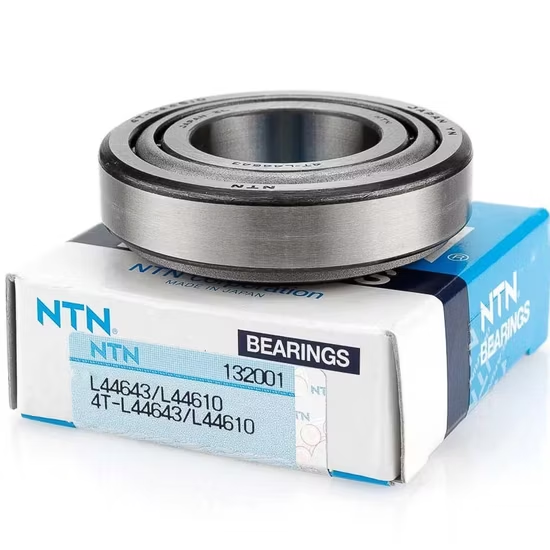

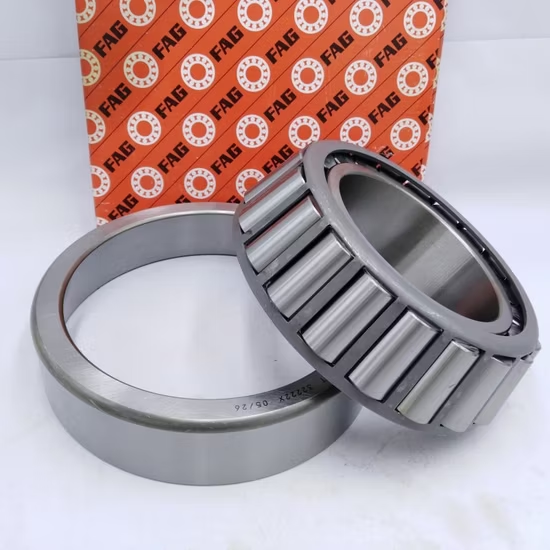
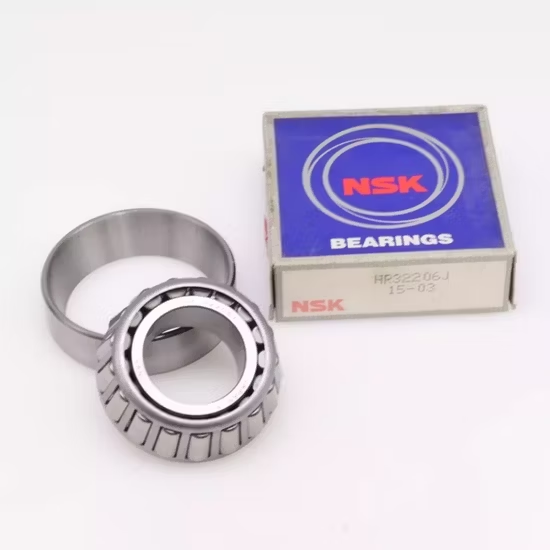

L44649/10 Inch Tapered Roller Bearing 26.988×50.292×14.224 mm P4
Unified Multi-Brand Sourcing — Procure your L44649/10 assemblies alongside other major manufacturer equivalents in a single consolidated shipment, eliminating the friction of coordinating multiple vendor accounts.
| Parameter | Value |
|---|---|
| Designation | L44649/10 |
| Bearing Type | Tapered Roller Bearing |
| Bore Diameter (d) | 26.988 mm (1.0625 inch) |
| Outside Diameter (D) | 50.292 mm (1.9800 inch) |
| Total Width (T) | 14.224 mm |
| Inner Ring Width (B) | 14.732 mm |
| Outer Ring Width (C) | 10.668 mm |
| Precision Class | P4 |
| Cage Material Options | Nylon, Brass, or Iron |
| Material | GCr15 Bearing Steel |
| Cross-Reference | SET4 / L44649/L44610 |
| Industry | Typical Applications |
|---|---|
| Automotive Repair | Light truck wheel hub assemblies and steering knuckle bearings |
| Commercial Trailers | Trailer axle ends and idler pulley tensioning mechanisms |
| Agricultural Machinery | Tractor PTO shaft supports and combine harvester rotor drives |
| Material Handling | Forklift mast roller guides and conveyor idler pulleys |
Matching the basic cone and cup designation is never enough to guarantee survival in high-load hub environments.
I learned this the hard way on a Latin American logistics route where a fleet of trailers suffered catastrophic wheel-end seizures. The procurement team ordered the correct base number, but ignored the internal clearance and cage material suffixes. Under sustained highway speeds and heavy axial cornering loads, the incorrect internal geometry caused rapid thermal expansion, leading to binding and total hub destruction. Sourcing a genuine L44649/10 inch tapered roller bearing requires verifying the exact internal configuration, not just the stamped outer ring code .
Selecting the right configuration for automotive wheel hubs means looking beyond the outer dimensions. The L44649/10 inch tapered roller bearing must be paired with the correct cage material and internal clearance to handle the specific thermal and load profile of the axle. Our engineering review ensures the selected assembly matches the OEM equipment requirements, preventing the premature wear that plagues mismatched replacements.
Trailer axles and light truck drivetrains subject wheel bearings to punishing combined radial and axial loads, especially during cornering and braking. Inadequate internal clearance prevents the rolling elements from compensating for thermal expansion, generating excessive friction heat. Proper lubrication intervals and selecting the correct seal or shield configuration are critical to keeping contaminants out while managing the operating temperature envelope .
The "/10" suffix specifically identifies the standard outer ring (cup) dimension for this inch-series assembly, ensuring it seats correctly in the hub bore. The P4 precision rating provides tighter dimensional and running accuracy, which is vital for minimizing vibration and noise at highway speeds. Furthermore, the availability of nylon, brass, or iron cage options allows buyers to match the retainer material to the specific speed and temperature boundaries of their application.
Relying solely on basic dimensional cross-referencing often leads to unplanned downtime and catastrophic damage to the axle spindle. When an interchange matches the bore and OD but ignores the internal contact angle or cage design, the bearing fails to distribute loads evenly. This localized stress accelerates fatigue, voiding equipment warranties and forcing expensive emergency repairs far earlier than the calculated L10 life .
Our authorization across major international brands means we supply fully traceable L44649/10 units without the risk of cloned QR codes or soft inner rings. We scrutinize the cross-reference to SET4 or L44649/L44610 to ensure the cup and cone pairing is exact. Every shipment includes batch traceability and dimensional inspection reports, giving MRO managers the confidence that the precision class and internal geometry perfectly align with the original equipment specifications.
To ensure the selected assembly survives your specific operating environment, provide our engineering team with the exact radial and axial load profiles, operating speeds, and hub temperature ranges. If you are replacing an existing unit, share the OEM equipment number or the full designation stamped on the original cup and cone. This data allows us to perform a precise cross-reference review and confirm the optimal cage material and internal clearance for your application.
Q: Why is matching the base designation insufficient when replacing a wheel hub bearing?
A: Matching the base number only confirms the outer envelope dimensions. It ignores critical internal variables like cage material, internal clearance, and roller profiling. Installing a unit with incorrect internal geometry for the thermal and load conditions will cause rapid heat buildup, leading to thermal binding, cage failure, and ultimately, seizure of the wheel hub assembly on the road.
Q: How can I verify the authenticity of the received tapered roller assemblies?
A: Every genuine unit we supply features batch traceability and can be verified using the manufacturer's official mobile application via QR code scanning. This digital check confirms the metallurgical origin and production facility, effectively eliminating the risk of installing counterfeit bearings that utilize soft inner rings and fail prematurely under heavy axial cornering loads.
Q: Which cage material should I specify for high-speed trailer axle applications?
A: The choice between nylon, brass, and iron cages depends on the specific operating temperature and speed boundaries of the axle. Brass cages generally offer superior durability and heat dissipation for heavy-duty, high-speed highway applications, while specialized polymer cages might be selected for specific friction and weight reduction requirements based on the exact OEM engineering parameters.
Q: What is the correct mounting practice for this inch-series cup and cone assembly?
A: Proper installation requires heating the inner ring (cone) using an induction heater to achieve a uniform expansion for the interference fit on the spindle. The outer ring (cup) should be pressed into the hub bore using a dedicated drift tool. Mixing components from different manufacturers or applying uneven force during pressing will destroy the P4 precision raceways and void the warranty.
Our 5-step process ensures every order is engineered, validated, and supported for optimal performance.
Technical needs assessment
Custom specifications
Free samples for $50k+
Pre-shipment inspection
On-site & predictive
Our certified engineers respond within 24 hours with detailed technical specifications, pricing, and lead time information.