01
Consultation
Technical needs assessment


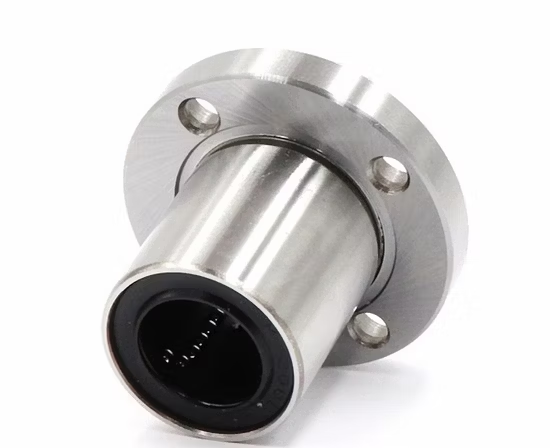
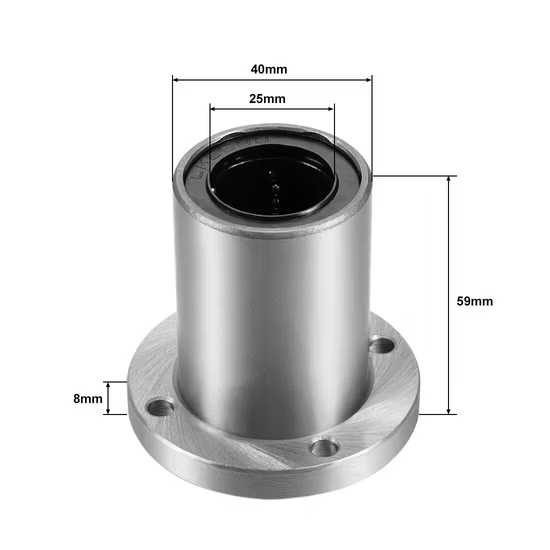
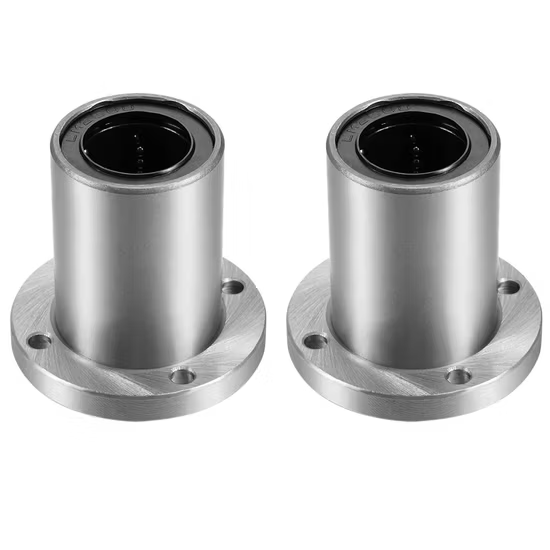
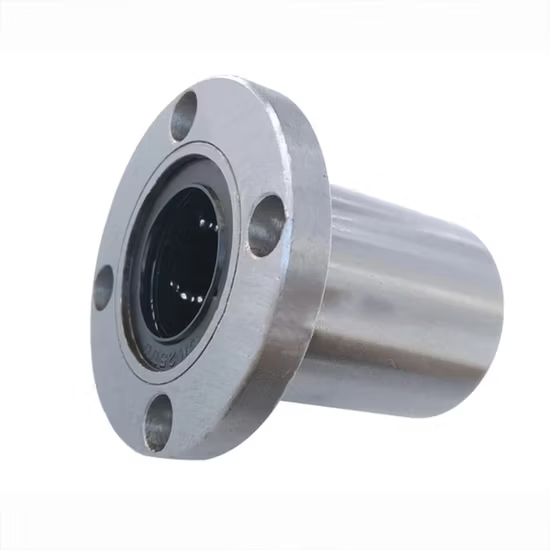
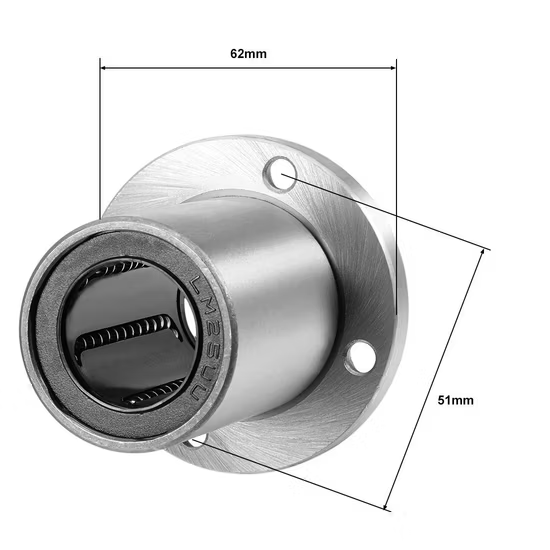
Lmf60uu Circular Flange Linear Bearing utilizes bearing steel and a nylon cage for high-speed, low-noise operation.
Three-Dimension Cross-Reference Alignment — We verify flange geometry, sealing suffixes, and precision classes rather than just matching the base number.
| Parameter | Value |
|---|---|
| Designation | Lmf60uu |
| Bearing Type | Linear Bearing |
| Flange Shape | Circular |
| Shape | Open type |
| Series | LM |
| Material | Bearing steel or stainless steel variants |
| Cage Material | Nylon, with brass or steel options available |
| Feature | High Speed, Low Voice |
| Precision Class | P0, P6, P5, P4, P2 |
| Origin | Germany, Japan, Sweden, Malaysia, China |
Note: Specific suffix interpretations regarding flange and sealing configurations are subject to individual manufacturer catalog confirmation.
| Industry | Typical Applications |
|---|---|
| CNC Machine Tools | Spindle cooling jackets and automated tool changers |
| Industrial Automation | High-speed pick-and-place linear modules |
| Precision Measuring Instruments | Coordinate measuring machine guide rails |
| Semiconductor Manufacturing | Wafer transfer robot linear actuators |
| Packaging Machinery | High-speed cartoning and sealing linear guides |
Ignoring the flange profile and sealing suffix turns a perfect dimensional match into a catastrophic assembly failure.
In my years troubleshooting automated lines in Dongguan, I have seen countless linear modules seize simply because the replacement part matched the base designation but lacked the correct flange geometry or sealing configuration. Procurement teams often focus solely on the shaft diameter, overlooking how a mismatched circular flange alters the mounting stress distribution. When the wrong sealing suffix is installed in a dusty environment, contaminants bypass the retention system, leading to premature track scoring . Sourcing a genuine Lmf60uu circular flange linear bearing requires validating the complete suffix string, not just the primary numbers.
Selecting the right linear motion component goes beyond basic dimensional checks. The Lmf60uu circular flange linear bearing must align with the specific load dynamics and mounting constraints of the automation equipment. Our technical team reviews the application parameters to ensure the flange thickness and fastener hole spacing match the carriage design, preventing localized stress concentrations during high-speed reciprocation.
High-speed pick-and-place operations generate significant inertial forces and friction heat. The thermal expansion of the shaft and housing dictates the required internal clearance and material pairing. If the operating temperature fluctuates wildly, the lubrication regime must be adjusted to prevent film breakdown . Proper sealing is equally critical; contact seals provide superior contamination exclusion but increase friction, while non-contact shields are better suited for ultra-high-speed, clean-room environments.
The "F" denotes the circular flange, providing a uniform mounting surface compared to square alternatives. The "60" indicates the nominal shaft diameter, while the "uu" suffix typically refers to standard sealed configurations on both ends. For high-speed applications, upgrading from a standard nylon cage to a brass or specialized steel variant minimizes inertia and prevents cage fragmentation under rapid acceleration. Precision classes ranging from P0 to P2 allow buyers to select the exact running accuracy required, ensuring tight positioning tolerances for semiconductor wafer handlers.
Installing a linear bearing with an incorrect seal type or mismatched flange shape inevitably leads to unplanned downtime. The resulting track damage often necessitates replacing the entire guide rail assembly, causing catastrophic damage to the surrounding automation hardware. According to failure analysis frameworks, misalignment and improper sealing are primary drivers of premature wear . This collateral damage voids equipment warranties and halts production lines for extended periods.
We prevent cross-reference errors by aligning the flange geometry, sealing suffix, and precision class, rather than just shipping a base-number match. Our batch traceability ensures you receive certified bearing steel, avoiding the soft inner rings common in counterfeit markets. We support mixed-brand requirements, allowing you to consolidate SKF, FAG, or THK equivalents in a single order. Furthermore, we provide application-based selection reviews to confirm that the chosen cage material can withstand your specific acceleration and temperature profiles.
To ensure optimal performance, please share your radial and axial load profiles, maximum travel speed, and operating temperature range. Providing the OEM equipment number or the existing guide rail specifications allows our engineering team to perform a precise cross-reference check. We will evaluate your application parameters to recommend the appropriate precision class and cage material, ensuring the selected configuration meets your L10 life requirements.
Q: What is the functional difference between the circular flange and square flange linear bearings?
A: The circular flange provides a symmetrical mounting surface that distributes fastening loads evenly around the bearing housing. This geometry is preferred for applications requiring high rigidity and uniform stress distribution, whereas square or rectangular flanges are typically used when spatial constraints dictate a specific carriage footprint.
Q: How do precision classes like P0 versus P2 affect CNC machine tool performance?
A: Higher precision classes like P2 offer significantly tighter dimensional and running accuracy tolerances. In CNC machine tools and coordinate measuring machines, this minimizes carriage wobble and ensures exact positioning repeatability, directly impacting the surface finish and dimensional accuracy of the machined components.
Q: When should I specify a brass cage instead of the standard nylon retainer?
A: Brass cages are recommended for high-speed automation equipment where rapid acceleration generates excessive inertia and heat. While nylon retainers offer low noise and weight, brass provides superior structural integrity and thermal stability, preventing cage fragmentation during aggressive reciprocating cycles.
Q: How can I verify the authenticity of the linear bearings before installation?
A: You can verify authenticity by scanning the QR codes on the packaging using the manufacturer's official mobile application. Additionally, we provide comprehensive batch traceability documentation and material test reports that link the physical units directly to the original production facility records.
Q: What are the maintenance requirements for the sealed versus open-type linear bearings?
A: Sealed variants retain factory-applied lubrication and exclude contaminants, requiring minimal maintenance but limiting re-lubrication options. Open-type bearings require regular external lubrication intervals and rely on the machine's central lubrication system or manual greasing to maintain the protective oil film across the recirculating elements.
Our 5-step process ensures every order is engineered, validated, and supported for optimal performance.
Technical needs assessment
Custom specifications
Free samples for $50k+
Pre-shipment inspection
On-site & predictive
Our certified engineers respond within 24 hours with detailed technical specifications, pricing, and lead time information.