01
Consultation
Technical needs assessment

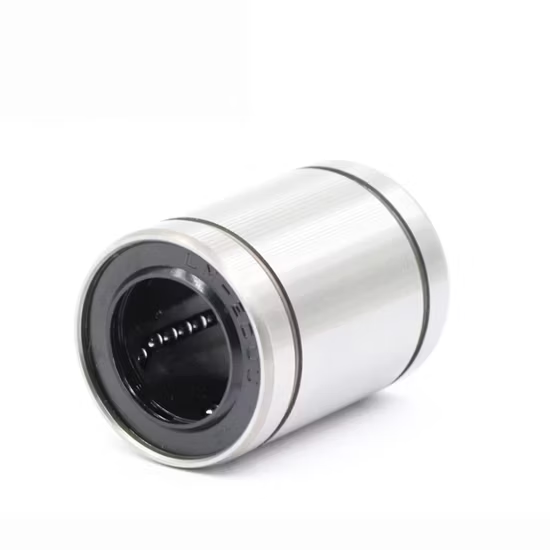
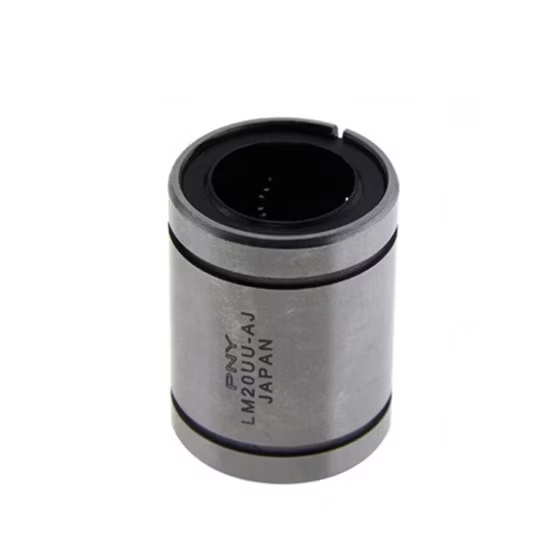
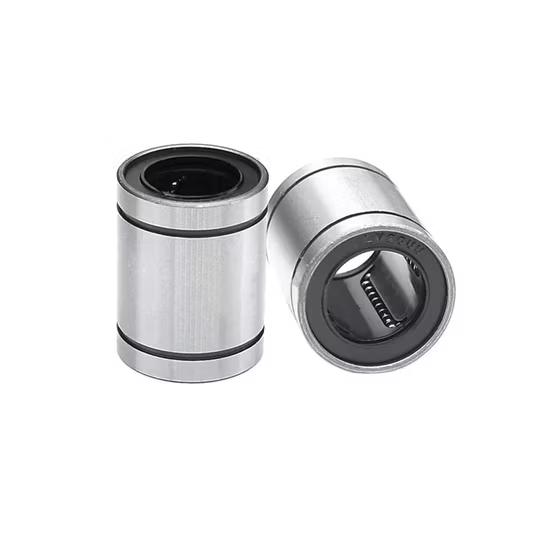


LM40UU LM50UU LM60UU LM8 Linear Bearings P0-P2 — featuring bearing steel construction and nylon cages for high-speed operation in CNC tools.
Cross-reference alignment verified — We match not just the base LM designation but also the open shape and precision class to prevent thermal binding in high-speed automation lines.
| Parameter | Value |
|---|---|
| Designation | LM40UU LM50UU LM60UU LM8 |
| Product Type | Linear Bearing |
| Bearing Type | Universal |
| Shape | Open (LM-OP) |
| Flange Shape | Circular |
| Series | LM |
| Material | Bearing Steel |
| Cage Material | Nylon Cage |
| Feature | High Temperature, High Speed |
| Lm Feature | High Speed, Low Voice |
| Precision Rating | P0, P6, P5, P4, P2 |
| Customization | Available |
| Origin | Germany / Japan / Sweden / Malaysia / China |
Note: The UU suffix is an unverified suffix — requires manufacturer catalog confirmation, though it commonly indicates a sealed linear bearing in industry catalogs.
| Industry | Typical Applications |
|---|---|
| CNC Machine Tools | Spindle linear guides and automated tool changer mechanisms |
| Industrial Automation | High-frequency reciprocating axes and robotic pick-and-place arms |
| 3D Printers | Precision extruder carriage and build plate movement systems |
| Material Handling | Automated guided vehicle steering and vertical lifting columns |
| Precision Measuring | Coordinate measuring machine probe positioning and scanning tables |
Thermal binding from mismatched shaft tolerances destroys automation uptime.
During years of commissioning automation lines in Vietnam, I have seen countless instances where linear carriages seize up shortly after installation. The failure is rarely due to the bearing steel itself. Instead, it stems from ignoring shaft diameter tolerances or mistakenly installing standard stamped cages in high-frequency reciprocating applications. When procurement teams rely solely on basic designations without verifying the exact internal geometry, the resulting friction generates excess heat, ultimately locking the carriage on the shaft . As a dedicated LM series linear bearing supplier, we ensure every cross-reference accounts for the precise clearance and cage material required for your specific motion profile.
Selecting the right linear motion component requires looking far beyond the basic outer dimensions. A reliable LM series linear bearing supplier evaluates the dynamic loads, travel speed, and acceleration forces inherent to your specific machinery. By aligning the open circular shape and nylon cage construction with your operational demands, we prevent the micro-vibrations that degrade surface finishes in CNC machining and precision measuring tasks.
High-frequency reciprocating motion generates localized heat that standard lubrication strategies often fail to dissipate. When shafts expand under thermal load, an improperly matched clearance class causes the carriage to bind, leading to catastrophic stick-slip phenomena. Furthermore, open-type designs require meticulous external lubrication protocols and robust wiper seals to keep abrasive particulates out of the load-bearing zones. Ignoring these environmental and thermal variables inevitably leads to premature track brinelling and accelerated wear .
The open circular shape, often designated as LM-OP, provides crucial versatility for adjustable clearance applications where the shaft might experience significant thermal growth. Unlike closed designs, the open profile allows the housing to be clamped tightly around the shaft to eliminate play. The integrated nylon cage is specifically engineered for high-speed, low-voice operation, drastically reducing the friction and noise associated with metal-to-metal contact. Available in precision classes ranging from P0 up to P2, these configurations ensure that machine tool spindles and automation axes maintain strict geometric accuracy without the rotational drag of heavier metallic retainers.
Relying on a base number match while overlooking internal design variations leads to devastating field failures. Installing a standard steel cage in a high-speed application causes excessive vibration, while ignoring the required precision class results in unacceptable axial runout in measuring instruments. These cross-reference errors trigger unplanned downtime, voided equipment warranties, and secondary damage to the hardened shafts, costing far more than the initial component price .
We provide authorized coverage across all major international brands, allowing you to consolidate mixed-brand requirements into a single, fully traceable order. Our cross-reference process strictly verifies the open shape, flange type, and precision suffixes, preventing the thermal binding caused by mismatched internal geometries. Every shipment includes batch traceability with QR verification through official brand applications, ensuring absolute authenticity. Furthermore, our application-based selection review analyzes your specific load, speed, and temperature conditions to recommend the optimal configuration, backed by comprehensive pre-shipment dimensional inspection.
To ensure optimal performance and longevity, please provide your specific radial and axial load profiles, maximum travel speeds, and operational temperature ranges. Sharing the exact shaft diameter tolerances and available mounting space allows our engineering team to perform a rigorous L10 life calculation and verify the correct precision class. If you are replacing existing components, providing the original OEM equipment numbers enables us to execute a precise cross-reference check, ensuring the replacement matches the exact internal geometry and cage material required for your automation line.
Q: How do I differentiate between open and closed linear bearings for my automation equipment?
A: Open types feature a slit in the outer cylinder, allowing the housing to be clamped tightly around the shaft to eliminate radial play and adjust for thermal expansion. Closed types are solid cylinders pressed into a rigid housing. The choice depends on your need for adjustable clearance versus simple press-fit installation in high-speed applications.
Q: What are the cross-reference pitfalls when matching cage materials and precision suffixes?
A: Matching only the base designation often overlooks critical internal differences. Substituting a metal cage for a nylon one in high-speed reciprocating applications increases friction and noise. Similarly, ignoring precision suffixes can result in installing a standard P0 carriage in a P4 spindle application, causing unacceptable runout and premature failure.
Q: How can I verify the authenticity of linear bearings using official brand QR codes?
A: Genuine components feature specific QR codes or holographic labels that link directly to the manufacturer's official verification application. Scanning these codes confirms the batch number, production date, and origin, effectively filtering out counterfeits with soft inner rings and cloned visual markers that fail under operational loads.
Q: What are the recommended lubrication practices for high-speed nylon cage linear bearings?
A: Because open-type designs lack integrated seals to retain grease, they require a continuous or regularly scheduled external lubrication system. Using the correct viscosity oil or grease prevents metal-to-metal contact and flushes out particulates. Neglecting this maintenance rapidly degrades the nylon cage and accelerates track wear under high-speed conditions.
Q: How do I select the correct precision class for CNC and automation equipment?
A: Standard P0 or P6 classes are generally sufficient for basic material handling and heavy transport. However, CNC machine tool spindles, precision measuring instruments, and high-speed 3D printer axes demand P5, P4, or P2 classes to minimize axial runout, ensure smooth motion, and maintain strict geometric accuracy during high-frequency reciprocating cycles.
Our 5-step process ensures every order is engineered, validated, and supported for optimal performance.
Technical needs assessment
Custom specifications
Free samples for $50k+
Pre-shipment inspection
On-site & predictive
Our certified engineers respond within 24 hours with detailed technical specifications, pricing, and lead time information.


