01
Consultation
Technical needs assessment


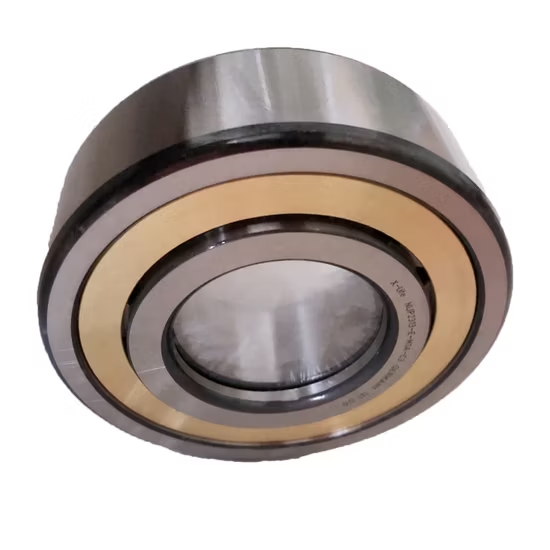
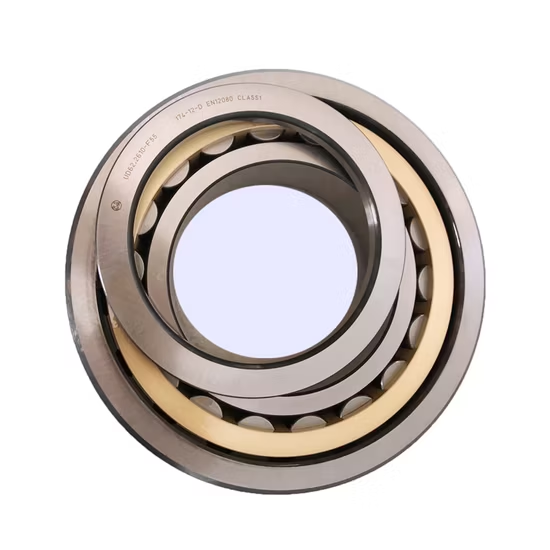
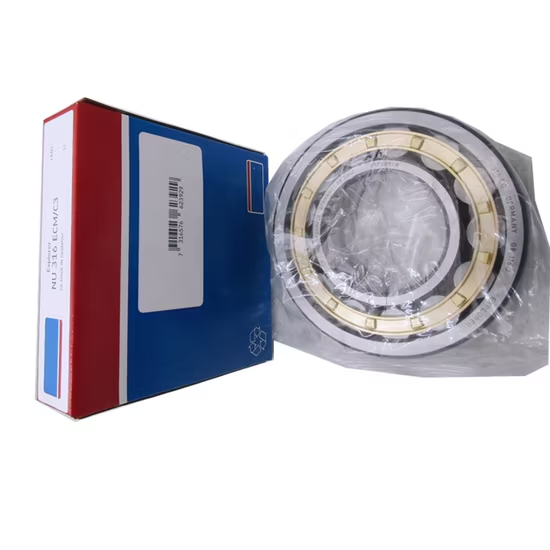


Nu202/Nu203/Nu204/Nu205/Nu206/Nu207/Nu208/Nu209 E Ecp M Cylindrical Roller Bearings — separable design with enhanced internal geometry for higher radial load capacity.
Every shipment arrives with material test reports and dimensional running accuracy inspection records for full batch verification.
Cross-Reference Triad Alignment — matching the base number without verifying cage material and internal design suffixes leads to thermal binding or cage fracture in the field.
| Parameter | Value |
|---|---|
| Designation | Nu202/Nu203/Nu204/Nu205/Nu206/Nu207/Nu208/Nu209 E Ecp M |
| Product Type | Cylindrical Roller Bearing |
| Bearing Type | Separable Cylindrical Roller |
| Cage Material Options | Machined brass (M) or glass fibre reinforced polyamide (Ecp) |
| Internal Design | Enhanced load carrying capacity (E) |
| Bore Type | Cylindrical |
| Origin | Germany / Japan / Sweden / Malaysia / China |
| Industry | Typical Applications |
|---|---|
| Electric Motors | Rotor shaft support in high-efficiency AC and DC motors |
| Industrial Gearboxes | High-speed intermediate and output shafts in helical gear units |
| Machine Tool Spindles | Radial support in precision milling and grinding spindle assemblies |
| Material Handling | Drive pulley shafts and conveyor roller bearings in bulk transport systems |
| Pumps | Centrifugal pump shaft support handling high radial loads |
The base designation only tells half the story; the suffix dictates survival.
Procurement teams frequently source Nu202-NU209 E ECP M cylindrical roller bearing units by matching the core numbers while overlooking the cage and internal design suffixes. I have seen production lines in Brazilian steel mills halt for days because an NU205 Ecp was swapped for an M variant without reviewing the thermal and vibrational boundaries. When polyamide cages are forced into high-temperature zones meant for brass, or when brass cages face chemical degradation, the result is rapid cage disintegration and severe shaft scoring .
Selecting the correct cage for the Nu202-NU209 E ECP M cylindrical roller bearing requires a strict review of the operating environment. The machined brass (M) option provides superior durability under heavy vibrational loads and elevated temperatures, making it ideal for industrial gearboxes. Conversely, the glass fibre reinforced polyamide (Ecp) cage offers lower friction and higher speed capabilities, which suits electric motor applications. Our technical team reviews your specific load and speed parameters to ensure the selected variant prevents premature wear.
Cylindrical roller bearings in this series face distinct thermal and lubrication challenges depending on the enclosure. In high-speed motor applications, friction heat generation demands precise clearance selection to accommodate thermal expansion without causing internal preloading. Lubrication intervals must align with the cage material; polyamide cages have strict upper temperature limits beyond which they lose structural integrity, while brass cages tolerate higher thermal thresholds but require robust oil film maintenance to prevent metal-to-metal contact .
The suffixes in this series define the internal geometry and cage construction. The 'E' designation indicates an optimized internal design with larger or more rollers, yielding enhanced radial load capacity. The 'Ecp' suffix specifies a window-type cage made from glass fibre reinforced polyamide, designed for quiet operation and high-speed limits. The 'M' suffix denotes a solid machined brass cage, typically roller-guided, offering maximum resilience against shock loads and high temperatures. Understanding these distinctions is critical for accurate cross-referencing.
Installing a bearing with the wrong cage material or internal design inevitably triggers a cascade of mechanical failures. A polyamide cage operating beyond its thermal limit will soften and collapse, leading to roller skewing and catastrophic raceway damage. Similarly, using a standard internal design instead of the 'E' enhanced version in high-load gearboxes accelerates subsurface fatigue. These failures result in unplanned downtime, voided equipment warranties, and extensive collateral damage to shafts and housings .
We eliminate the risks associated with粗放 matching by enforcing strict cross-reference protocols. For the Nu202/Nu203/Nu204/Nu205/Nu206/Nu207/Nu208/Nu209 E Ecp M series, we verify that the base number, clearance class, and cage suffix align perfectly with your OEM requirements. Our authorized multi-brand coverage allows you to consolidate mixed-brand orders without sacrificing traceability. Every batch is verified through official manufacturer apps, ensuring you receive genuine components rather than soft-ring counterfeits that pass casual visual checks.
To ensure the selected variant meets your operational demands, please provide the specific radial and axial loads, operating speeds, and ambient temperature ranges. Sharing the OEM equipment number or the exact spatial constraints allows our engineering team to perform a comprehensive cross-reference check and L10 life calculation. This technical review guarantees that the cage material and internal design perfectly match your application environment.
Q: Why must clearance, cage, and precision align during cross-referencing?
A: Matching only the base designation ignores critical operational boundaries. An incorrect cage material may fail under specific thermal or chemical conditions, while wrong clearance causes internal binding or excessive vibration. Aligning all three parameters ensures the replacement bearing survives the exact loads and speeds of your specific application without premature failure.
Q: What are the application limits for Ecp versus M cages?
A: The Ecp polyamide cage excels in high-speed, lower-temperature environments like electric motors due to its low friction and weight. The M machined brass cage is mandatory for heavy-load, high-vibration, or high-temperature applications such as industrial gearboxes, where polymer cages would soften or degrade under severe mechanical and thermal stress.
Q: How does the E suffix alter the bearing's performance?
A: The E suffix indicates an enhanced internal geometry, typically featuring larger or a greater number of rolling elements. This design modification significantly increases the radial load carrying capacity and extends the fatigue life of the bearing, making it highly suitable for heavy-duty machinery where standard internal designs would experience accelerated subsurface fatigue.
Q: How can we verify the authenticity of the supplied batches?
A: Every bearing we supply includes batch traceability documentation and a unique QR code. You can scan this code using the respective brand's official mobile application to instantly verify the manufacturing origin, production date, and specifications, effectively eliminating the risk of installing counterfeit components with compromised metallurgy.
Our 5-step process ensures every order is engineered, validated, and supported for optimal performance.
Technical needs assessment
Custom specifications
Free samples for $50k+
Pre-shipment inspection
On-site & predictive
Our certified engineers respond within 24 hours with detailed technical specifications, pricing, and lead time information.


