01
Consultation
Technical needs assessment



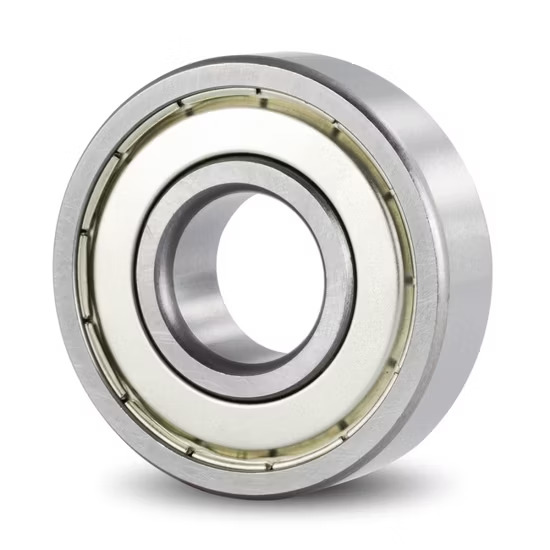

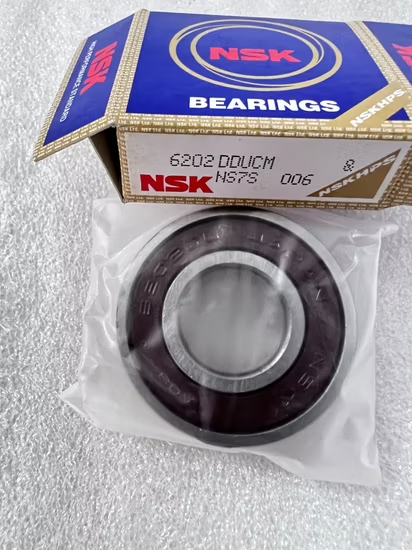
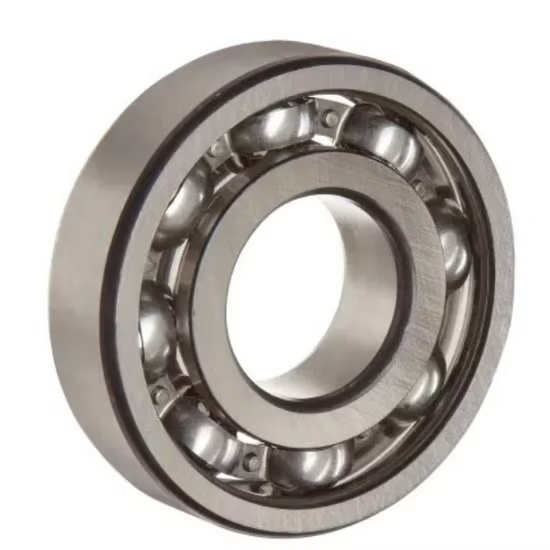
NSK 6304ddunr Deep Groove Ball Bearing 20×52×15 mm — engineered for reliable radial load support and high-speed operation in electric motors and industrial gearboxes.
Scan To Verify Origin — Every NSK 6304ddunr deep groove ball bearing we dispatch carries a factory-applied QR code readable directly through the official brand application for instant authenticity confirmation.
| Parameter | Value |
|---|---|
| Designation | NSK 6304ddunr |
| Bearing Type | Deep Groove Ball Bearing |
| Bore Diameter (d) | 20 mm |
| Outside Diameter (D) | 52 mm |
| Width (B) | 15 mm |
| Seal or Shield Type | Rubber Seals / Iron Seals (available options) |
| Quality Level | Z1V1, Z2V2, Z3V3, Z4V4 |
| Origin | Germany / Japan / Sweden / Malaysia / China |
Note: The 'ddu' and 'nr' suffixes are listed as unverified in preliminary drafts and require manufacturer catalog confirmation for exact internal design specifics.
| Industry | Typical Applications |
|---|---|
| Electric Motors | High-speed rotor supports requiring low-noise Z3V3 or Z4V4 grades |
| Industrial Gearboxes | Intermediate shaft positioning with reliable contamination exclusion |
| Material Handling | Conveyor roller ends exposed to airborne dust and particulate debris |
Matching the base designation is never enough to prevent premature motor burnout.
Procurement teams often approve orders based solely on the 6304 core number, completely overlooking the critical seal and snap ring suffixes. In high-speed electric motors, installing an open or improperly shielded variant allows microscopic dust to infiltrate the raceway, rapidly degrading the lubricant and causing catastrophic thermal binding . Sourcing a genuine NSK 6304ddunr deep groove ball bearing ensures the exact sealing configuration and dimensional tolerances are maintained, eliminating the hidden risks of cross-reference errors that ignore vital suffix variations.
Selecting the correct sealing arrangement dictates the operational lifespan of the equipment. Rubber seals provide superior exclusion of fine particulates but introduce rotational friction, which generates internal heat. For the NSK 6304ddunr deep groove ball bearing, verifying the exact contact seal design ensures that friction torque remains within acceptable limits for the motor's cooling capacity, preventing the grease from breaking down under sustained thermal stress.
Electric motors and conveyor systems operate in environments heavily laden with abrasive particles. The primary challenge is maintaining lubricant integrity without frequent maintenance interventions. Sealed configurations trap the factory-filled grease inside the raceway, shielding the rolling elements from external contamination while dampening operational noise. Proper selection of the quality level, ranging up to Z4V4, is essential to minimize vibration transmission to the motor housing .
The physical dimensions of a deep groove ball bearing dictate its fitment, but the suffixes govern its behavior inside the housing. The presence of a snap ring groove alters the outer ring geometry, requiring precise housing machining to ensure the ring seats flatly without inducing distortion. Furthermore, the specific seal type determines whether the bearing can be relubricated or must be treated as a sealed-for-life component, directly influencing the maintenance schedule of the driven equipment.
Ignoring suffix variations during the procurement phase inevitably leads to severe operational consequences. Installing a bearing lacking the correct snap ring can result in axial creep within the housing, causing unplanned downtime and severe shaft misalignment. According to ISO 281 frameworks, contamination drastically reduces fatigue life, meaning a wrong seal choice transforms a reliable component into a frequent failure point, ultimately voiding equipment warranties and escalating maintenance costs .
We maintain authorized distribution across all major brands, allowing mixed-brand orders to be fulfilled with consistent documentation. Our cross-reference process strictly aligns clearance, cage, and precision suffixes, ensuring that a requested replacement perfectly matches the original equipment manufacturer's intent. We specifically scrutinize seal types and snap ring dimensions, preventing the common error of supplying a basic open bearing when a fully sealed and grooved variant is required for dusty environments.
To guarantee optimal performance and accurate cross-referencing, please provide the specific radial and axial loads, operational speeds, and ambient temperature ranges of your application. Supplying the original equipment manufacturer's part number or detailed housing dimensions allows our engineering team to verify the exact seal friction and snap ring fitment required for your machinery.
Q: How do I verify the authenticity of the received bearings?
A: Every unit we supply features a unique QR code applied by the manufacturer. Simply scan this code using the official brand application on your smartphone to instantly verify the batch origin, production date, and authenticity, ensuring you have received genuine products rather than cloned counterfeits with soft inner rings.
Q: Why is suffix accuracy critical when cross-referencing this model?
A: Base numbers only define the outer dimensions. Suffixes dictate the internal clearance, seal friction, and snap ring geometry. Overlooking these details can result in thermal binding or axial creep. Our technical review ensures the cross-referenced equivalent perfectly matches the original suffix requirements for your specific operating environment.
Q: What is the operational difference between rubber seals and iron shields?
A: Rubber seals provide excellent protection against fine dust and moisture but generate slightly higher friction. Iron shields offer low-friction operation suitable for high speeds but provide less protection against liquid ingress. Selecting the right type depends on your specific contamination and speed requirements.
Q: How do I choose the correct Z/V quality level for electric motors?
A: The Z/V grades define the noise and vibration limits of the bearing. Standard applications may use Z1V1, while precision electric motors and household appliances typically require Z3V3 or Z4V4 to ensure ultra-quiet operation and minimize vibration transmission to the surrounding equipment structure.
Our 5-step process ensures every order is engineered, validated, and supported for optimal performance.
Technical needs assessment
Custom specifications
Free samples for $50k+
Pre-shipment inspection
On-site & predictive
Our certified engineers respond within 24 hours with detailed technical specifications, pricing, and lead time information.