01
Consultation
Technical needs assessment

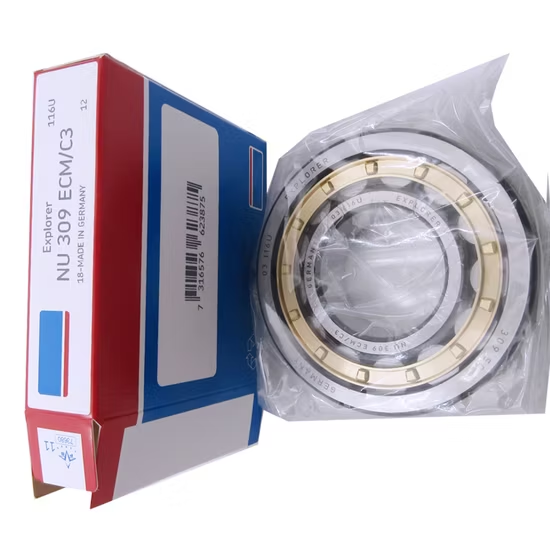
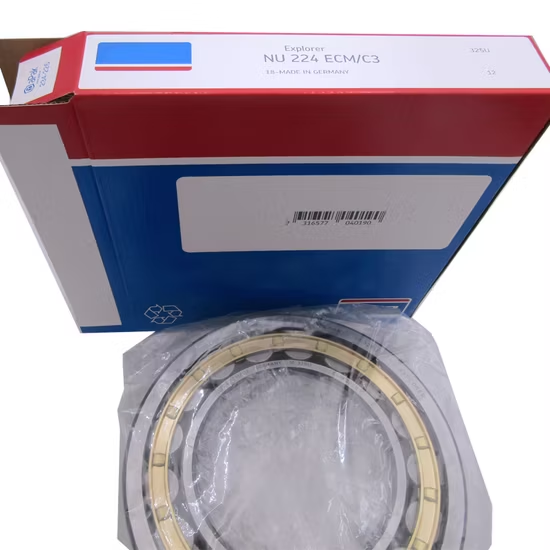
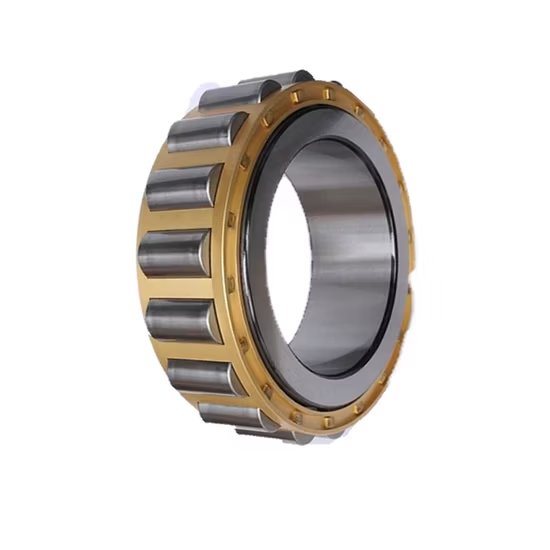


Nj202/Nj203/Nj204/Nj205/Nj206/Nj207/Nj208/Nj209 E M Cylindrical Roller Bearings feature optimized internal design for increased load capacity.
Batch Traceability Guaranteed — Every Nj202/Nj203/Nj204/Nj205/Nj206/Nj207/Nj208/Nj209 E M unit ships with verifiable manufacturer lot documentation to eliminate counterfeit risks.
| Parameter | Value |
|---|---|
| Designation | Nj202/Nj203/Nj204/Nj205/Nj206/Nj207/Nj208/Nj209 E M |
| Product Type | Cylindrical Roller Bearing |
| Cage Material | Brass (Machined) |
| Internal Design | Enhanced capacity (E) |
| Separable Design | Separated (inner ring with roller/cage assembly and outer ring mount independently) |
| Origin | Germany / Japan / Sweden / Malaysia / China |
| Industry | Typical Applications |
|---|---|
| Power Transmission | Heavy-duty industrial gearbox shafts subjected to high radial loads |
| Rail & Transit | Traction motor armature shafts requiring high-speed stability |
| Metal Processing | Rolling mill work rolls and backup rolls experiencing severe shock loads |
| Electric Motors | Large-scale motor rotor supports demanding low vibration and high rigidity |
Stamped steel cages shatter under the shock loads that machined brass effortlessly absorbs.
In heavy industrial gearboxes, substituting a machined brass cage with a standard pressed steel alternative often leads to sudden cage fragmentation. When the cage fails, the rollers skew, causing immediate seizure and catastrophic gear tooth damage. Procurement errors that match the base designation but overlook the critical M suffix result in unplanned downtime that far exceeds the initial component savings . Sourcing the correct Nj202-Nj209 E M cylindrical roller bearing ensures the internal components can withstand the severe vibrational stresses inherent to these applications.
The machined brass cage (M) provides the structural rigidity required for heavy-duty gearboxes and traction motors. Unlike polyamide cages that degrade under high thermal stress, or stamped steel cages that lack damping capacity, the brass variant maintains its geometric integrity under severe radial loads. When sourcing a Nj202-Nj209 E M cylindrical roller bearing, verifying this specific cage material ensures the bearing can handle the intense vibrations typical of rolling mills and large electric motors without premature fatigue.
These applications generate substantial radial forces and significant operational heat. The separable design of the NJ series allows the inner ring to be mounted with an interference fit while the outer ring slides into the housing, simplifying assembly. However, thermal expansion during continuous operation demands precise clearance selection. If the operational temperature rises significantly, a standard clearance might close up, causing thermal binding. Proper lubrication management and verifying the internal clearance class are essential to prevent the rollers from skidding against the raceways under high-speed, high-temperature conditions .
The E suffix signifies an enhanced internal design with optimized roller geometry, maximizing the load-carrying capacity within the same dimensional envelope. This means the bearing can support heavier radial loads without increasing the physical size of the gearbox. The M suffix confirms the presence of a machined brass cage, which is guided on the rolling elements. This specific combination is critical; an E design without the M cage might rely on a weaker pressed steel cage that cannot adequately guide the optimized rollers under shock loading, leading to rapid wear and structural collapse.
Ignoring the E and M suffixes during cross-referencing frequently results in severe operational failures. Installing a base-model bearing without the enhanced capacity design leads to accelerated fatigue spalling on the raceways. Similarly, accepting a polyamide cage instead of the specified machined brass variant in a high-temperature traction motor will cause the cage to melt or deform, resulting in total motor seizure. These failures trigger extensive secondary damage to shafts and housings, voiding equipment warranties and causing prolonged production stoppages .
We strictly validate the E and M suffixes during our cross-reference process, ensuring you never receive a base-number match with incorrect internal geometry. Our inventory covers authorized brands, allowing mixed-brand orders to be consolidated without sacrificing technical accuracy. We reject shipments where the inner ring hardness falls below specification, a common trait of counterfeits. By providing exact cross-reference matching that includes cage material and internal design, we protect your heavy-duty gearboxes from the hidden risks of substitute parts.
To ensure precise selection and L10 life calculation, please provide your specific radial and axial load profiles, operational speeds, and expected temperature ranges. If you are replacing an existing unit, sharing the exact OEM equipment number or the full designation printed on the current bearing allows our engineering team to perform a comprehensive cross-reference check. Detailing the environmental conditions, such as exposure to heavy particulate contamination, will also help us confirm the optimal clearance and sealing arrangements for your application.
Q: Why must cross-referencing align the cage material and internal design alongside the base number?
A: Matching only the base number often results in receiving a bearing with a weaker pressed steel cage or standard load capacity. The M suffix guarantees a machined brass cage for high shock loads, while the E suffix ensures optimized internal geometry for maximum radial capacity. Overlooking these specific suffixes leads to premature cage fragmentation and raceway spalling in heavy-duty applications.
Q: How to verify bearing authenticity and batch traceability upon delivery?
A: Every genuine unit is supplied with manufacturer batch and lot traceability documentation. You can verify authenticity by scanning the QR codes on the packaging using the official brand applications. This digital verification confirms the exact origin and production details, effectively eliminating the risk of installing counterfeits with soft inner rings or cloned visual markers.
Q: What are the mounting advantages of the separable design in NJ cylindrical roller bearings?
A: The separable architecture allows the inner ring, complete with the roller and machined brass cage assembly, to be mounted independently from the outer ring. This simplifies the installation process, particularly when applying tight interference fits to the shaft. It also facilitates easier maintenance and inspection, as the inner assembly can be removed without disturbing the outer ring seated in the housing.
Q: When should a machined brass cage be selected over pressed steel or polyamide cages?
A: A machined brass cage is essential in applications involving heavy shock loads, high speeds, and elevated temperatures, such as traction motors and rolling mills. Unlike polyamide cages that degrade under high heat, or stamped steel cages that lack sufficient damping capacity, the brass variant provides superior structural strength, vibration dampening, and reliable guidance for the rolling elements under severe operational stress.
Our 5-step process ensures every order is engineered, validated, and supported for optimal performance.
Technical needs assessment
Custom specifications
Free samples for $50k+
Pre-shipment inspection
On-site & predictive
Our certified engineers respond within 24 hours with detailed technical specifications, pricing, and lead time information.


