01
Consultation
Technical needs assessment



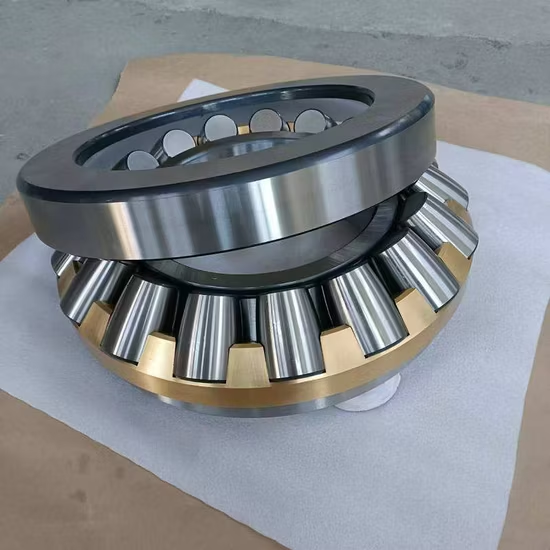
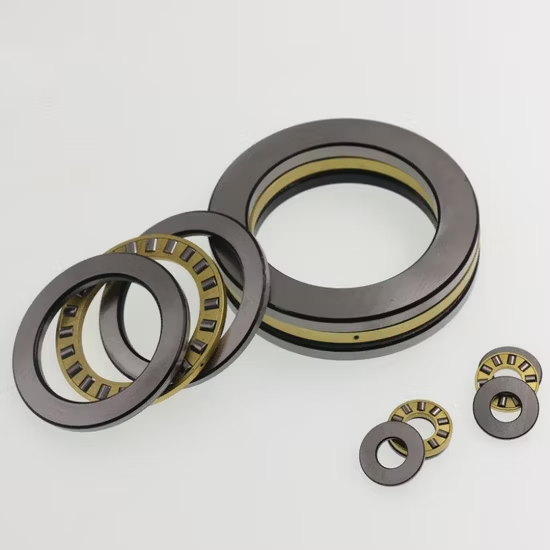
Motorcycle Thrust Ball Bearing for Light Machinery Axial Load Support — engineered for high-vibration motorcycle assemblies and equipment requiring reliable axial capacity.
Multi-Brand Authorized Coverage — Source mixed-brand thrust bearings for motorcycle and machinery assemblies through a single verified distribution channel without coordinating multiple vendors.
| Parameter | Value |
|---|---|
| Product Type | Thrust Ball Bearing |
| Material Options | Available in standard bearing steel or stainless steel variants |
| Target Applications | Motorcycle assemblies, light machinery models, axial load equipment |
| Certification | Certificate of Conformity, manufacturer batch traceability |
| Industry | Typical Applications |
|---|---|
| Automotive & Motorcycle | Clutch release mechanisms, steering stem assemblies, transmission shafts |
| Light Machinery | Small winch drives, vertical pump shafts, conveyor tensioners |
| General MRO | Axial load support fixtures, manual press spindles, lifting jacks |
Matching the base designation is never enough when axial loads and high RPMs demand precise cage and material alignment.
In the Pearl River Delta repair workshops, I have seen countless clutch and steering assemblies fail prematurely because the replacement part matched the basic number but lacked the correct high-speed cage design. When a standard stamped steel cage is forced into a high-vibration motorcycle transmission, it fractures and locks the shaft entirely. Relying on a qualified motorcycle thrust ball bearing supplier ensures the internal geometry actually survives the real-world road test, avoiding the catastrophic damage caused by overlooked suffixes.
Selecting the correct thrust bearing for motorcycle and light machinery applications requires a deep understanding of the specific axial load profile and space constraints. A professional motorcycle thrust ball bearing supplier evaluates whether the application demands standard flat raceways or self-aligning spherical thrust roller designs to accommodate minor misalignments. This technical review guarantees that the chosen component handles the exact thrust forces without inducing premature edge loading on the rolling elements.
Motorcycle transmissions and light machinery spindles subject thrust bearings to intense vibration, rapid acceleration, and significant thermal cycling. These dynamic conditions dictate strict requirements for cage material stability and lubrication retention to prevent metal-to-metal contact. If the operating temperature exceeds the thermal limit of standard bearing steel, alternative materials or specialized heat treatments become mandatory to maintain dimensional stability. Proper sealing selection is equally critical to block abrasive road dust or industrial particulates from degrading the raceway finish.
The operational environment dictates whether standard bearing steel or corrosion-resistant stainless steel variants are required for the rings and rolling elements. Cage material selection is equally vital; machined brass cages offer superior stability under heavy axial loads and high vibrations, while polyamide cages reduce friction in high-speed, lightly loaded motorcycle clutch assemblies. Understanding these material boundaries prevents the common mistake of installing a standard industrial bearing into a high-RPM application where it will rapidly overheat and fail.
Installing a thrust bearing with an incorrect internal clearance or incompatible cage material inevitably leads to unplanned downtime and severe secondary damage. The resulting friction generates excessive heat, causing the lubricant to break down and the rolling elements to skid across the raceways. This cascade of failures often destroys the surrounding housing and shaft, voiding equipment warranties and turning a simple maintenance task into a major mechanical overhaul.
Our distribution network provides authorized coverage across all major global brands, allowing you to fulfill mixed-brand requirements for complex machinery assemblies in a single order. We prevent cross-reference errors by verifying that the replacement matches the original equipment not just in base designation, but in critical internal design and cage material specifications. Every shipment includes full batch traceability to the manufacturer, ensuring you receive genuine components rather than counterfeits with soft inner rings that fail under load. Our engineering team reviews your specific application parameters to confirm the selection handles the actual axial loads and thermal expansion.
To ensure the selected thrust bearing perfectly matches your equipment, provide the specific motorcycle or machinery model number alongside the original equipment manufacturer part number. Share detailed operating parameters, including maximum axial load, rotational speed, and ambient temperature, so our engineering team can verify the dynamic load rating and L10 life. Specify any environmental challenges, such as exposure to water, corrosive chemicals, or heavy dust, to help us determine the optimal material and sealing configuration.
Q: How do I determine the exact designation for my motorcycle or machinery equipment?
A: Provide the equipment model, original part number, and operating parameters like axial load and speed. Our engineering team cross-references these details to identify the precise internal design, cage material, and clearance required, ensuring the replacement part survives the actual application conditions without premature failure.
Q: What are the common failure modes of thrust bearings in high-vibration applications?
A: High vibration often causes cage fatigue, rolling element skidding, and lubricant starvation. If the cage material is not matched to the RPM and load profile, it can fracture and lock the assembly. Proper selection of machined brass or high-speed polyamide cages prevents these catastrophic failures.
Q: When should I choose spherical thrust roller bearings over standard thrust ball bearings?
A: Spherical thrust roller designs are necessary when the application involves heavy axial loads combined with moderate radial loads or slight shaft misalignments. Standard thrust ball bearings are better suited for pure axial loads at higher speeds where precise alignment is maintained by the housing.
Q: How can I verify the authenticity of the bearings to avoid counterfeits?
A: Genuine parts feature manufacturer batch traceability and can be verified using QR codes scanned through the brand's official application. Counterfeit bearings often use cloned QR codes and soft inner rings that pass visual inspection but fail hardness testing and collapse under real axial loads.
Our 5-step process ensures every order is engineered, validated, and supported for optimal performance.
Technical needs assessment
Custom specifications
Free samples for $50k+
Pre-shipment inspection
On-site & predictive
Our certified engineers respond within 24 hours with detailed technical specifications, pricing, and lead time information.