01
Consultation
Technical needs assessment

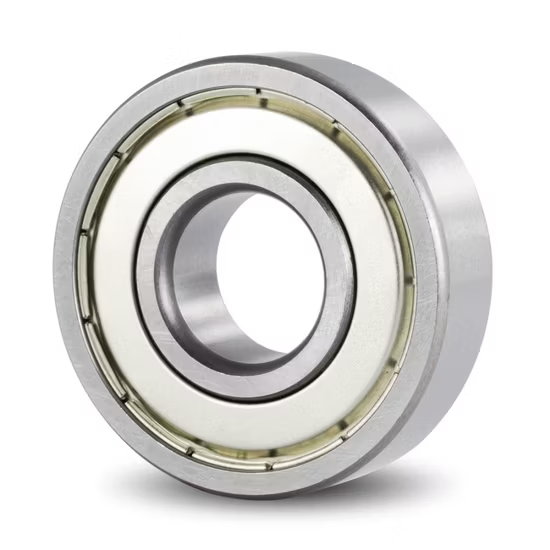


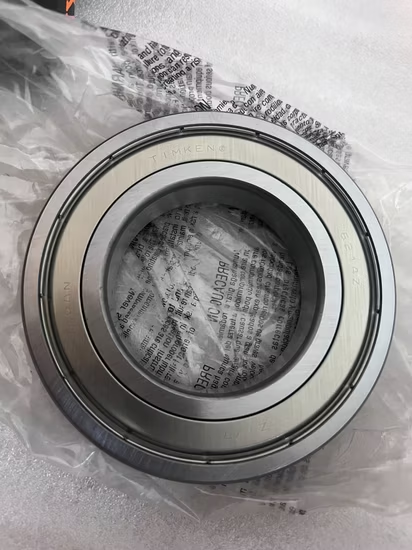

Koyo 6203 Zz Deep Groove Ball Bearing features double iron shields for effective dust protection and lubricant retention at medium speeds.
Unified Multi-Brand Sourcing — Consolidate your Koyo 6203 Zz deep groove ball bearing requirements alongside other major international brands within a single authorized distribution agreement.
| Parameter | Value |
|---|---|
| Designation | Koyo 6203 Zz |
| Bearing Type | Deep Groove Ball Bearing |
| Seal or Shield Type | Double Shielded (Iron Seals) |
| Noise and Vibration Level | Z1V1, Z2V2, Z3V3, Z4V4 |
| HS Code | 848210 |
| Industry | Typical Applications |
|---|---|
| Electric Motors | Rotor shaft support, stator end-shields, cooling fan assemblies |
| Industrial Gearboxes | High-speed input shafts, intermediate gear support, output bearings |
| Material Handling | Conveyor pulley shafts, idler roller supports, drive motor couplings |
| Household Appliances | Washing machine drum shafts, HVAC blower motors, compressor rotors |
A mismatched shield configuration or incorrect internal clearance rapidly degrades the operational lifespan of a Koyo 6203 Zz deep groove ball bearing in continuous-duty electric motors.
During my quality inspection years in Qingdao, I documented countless instances of motor stator rubbing caused directly by deep groove ball bearing cage embrittlement and subsequent fragmentation. Many procurement teams focus exclusively on the base 6203 designation while entirely ignoring how standard CN clearance triggers thermal binding under sustained high-speed operation . When the internal temperature rises, the shaft expands faster than the housing, eliminating the operational clearance and forcing the rolling elements to skid. This generates immense friction heat, ultimately melting the cage material and causing catastrophic rotor seizure. Sourcing authentic components with verified suffix alignment prevents these avoidable field failures.
Selecting the correct Koyo 6203 Zz deep groove ball bearing requires matching the non-contact iron shields to the specific contamination profile of the electric motor or gearbox. Our technical review process ensures the selected shielding effectively blocks abrasive dust ingress without introducing the excessive friction heat associated with contacting rubber seals, thereby preserving the high-speed capability required for precision spindle and motor applications.
Electric motor shafts subject deep groove ball bearings to sustained high rotational speeds and moderate radial loads, demanding strict attention to thermal expansion dynamics. When ambient temperatures fluctuate or internal friction generates heat, the inner ring expands, progressively reducing the internal radial clearance . If the initial clearance class is too tight, the rolling elements experience excessive preload, accelerating lubricant degradation and cage fatigue. Furthermore, the non-contact iron shields must maintain precise dimensional tolerances to prevent rubbing against the inner ring land during high-speed rotation, which would otherwise generate localized hot spots and compromise the grease life.
The Zz suffix explicitly designates double iron shields, providing a non-contact metallic barrier that retains factory-applied lubricant while excluding coarse particulate contamination. Unlike contacting rubber seals, these pressed steel shields introduce virtually no frictional torque, making them mandatory for high-speed electric motor applications where thermal limits are easily exceeded. Additionally, the availability of Z1V1 through Z4V4 noise and vibration quality grades allows engineers to specify the exact acoustic and dynamic smoothness required. A Z3V3 or Z4V4 grade undergoes stricter geometric tolerancing and surface finishing, significantly reducing the high-frequency vibration signatures that cause noise in household appliances and precision industrial gearboxes.
Installing a standard clearance variant where a C3 expansion clearance was mandated leads to premature thermal binding, resulting in unplanned downtime and severe collateral damage to the motor windings. According to failure mode classifications outlined in ISO 15243, surface distress and cage fragmentation frequently stem from inadequate internal clearance management rather than material defects . Such catastrophic failures void equipment warranties and escalate maintenance costs far beyond the initial component savings, emphasizing the critical need for precise suffix verification during the procurement phase.
We eliminate the risk of counterfeit deep groove ball bearings by providing full batch traceability directly linked to the manufacturer's production facilities. Procurement engineers frequently encounter cloned QR codes on soft inner rings that pass casual visual checks but fail under load; our authorized channel guarantees authentic metallurgy. We rigorously cross-reference the base designation, clearance class, and shield type to prevent the common error of substituting open or rubber-sealed variants. Furthermore, our application-based selection review evaluates your specific speed and temperature parameters to recommend the optimal noise and vibration grade, ensuring long-term operational stability.
To ensure the selected deep groove ball bearing perfectly matches your operational requirements, please provide the exact radial and axial loads, continuous operating speeds, and expected thermal gradients. Supplying the original OEM equipment numbers allows our engineering team to perform a comprehensive cross-reference validation, confirming that the internal design and clearance class align precisely with the machinery specifications.
Q: What is the functional difference between Zz iron shields and 2RS rubber seals for the 6203 bearing?
A: The Zz configuration utilizes non-contact iron shields that retain lubricant and block coarse dust without adding frictional torque, making it ideal for high-speed electric motors. Conversely, 2RS rubber seals provide superior moisture and fine particle exclusion but introduce contact friction, which limits the maximum permissible rotational speed and generates additional heat.
Q: How can I verify the authenticity of the received batch using the official app?
A: Each authorized shipment includes packaging equipped with a secure, encrypted QR code linked to the manufacturer's central database. By scanning this code with the brand's official mobile application, procurement teams can instantly confirm the production date, factory origin, and batch validity, effectively filtering out sophisticated counterfeits with cloned visual markers.
Q: Why is matching the exact clearance suffix critical during cross-referencing?
A: Substituting a standard CN clearance unit where a C3 expansion clearance is required causes thermal binding as the motor shaft heats up and expands. This eliminates the internal operational gap, leading to excessive rolling friction, rapid lubricant breakdown, and eventual cage failure. Exact suffix matching ensures the bearing accommodates the specific thermal dynamics of the application.
Q: How do Z1V1 to Z4V4 quality levels impact performance in electric motors?
A: These designations classify the bearing's noise and vibration characteristics, with Z4V4 representing the strictest geometric tolerances and surface finishes. Selecting a higher grade significantly reduces high-frequency acoustic emissions and dynamic vibration, which is essential for preventing resonance in precision gearboxes and ensuring quiet operation in household appliance motors.
Our 5-step process ensures every order is engineered, validated, and supported for optimal performance.
Technical needs assessment
Custom specifications
Free samples for $50k+
Pre-shipment inspection
On-site & predictive
Our certified engineers respond within 24 hours with detailed technical specifications, pricing, and lead time information.