01
Consultation
Technical needs assessment



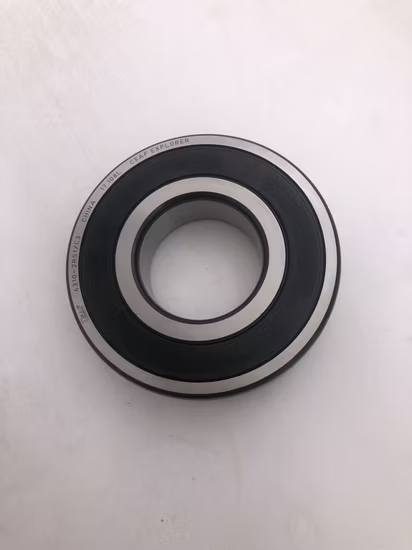


6203-2RS Deep Groove Ball Bearing — engineered with Gcr15 steel for reliable radial load capacity in electric motors and motorcycles.
Multi-brand authorized sourcing — Procure genuine 6203-2RS deep groove ball bearings alongside other major manufacturer brands in a single consolidated order without coordinating multiple suppliers.
| Parameter | Value |
|---|---|
| Designation | 6203-2RS |
| Bearing Type | Deep Groove Ball Bearing |
| Material | Gcr15 bearing steel |
| Seal Type | 2RS double-sided contact seal |
| Structure | Deep Groove |
| Origin | Shanghai |
| Industry | Typical Applications |
|---|---|
| Automotive & Motorcycles | Motorcycle engine crankshafts and wheel hub assemblies |
| Electric Motors | High-speed rotor shafts and stator end-shield supports |
| Industrial Gearboxes | Intermediate shaft supports and input/output sealing zones |
| Material Handling | Conveyor belt drive pulleys and return roller mechanisms |
Matching the base number without verifying the exact seal lip tolerance leads to rapid thermal degradation under high rotational speeds.
Procurement teams frequently approve shipments based solely on the base designation, overlooking critical suffix variations. I once traced a batch of premature failures in motorcycle transmissions directly to replacement units where the seal lip dimensional tolerance deviated slightly from the OEM specification. This minor discrepancy generated excessive friction at high RPMs, causing t*at . When sourcing a 6203-2RS deep groove ball bearing, assuming all contact seals perform identically across different manufacturing batches is a costly mistake that compromises the entire drivetrain.
Selecting the correct 6203-2RS deep groove ball bearing requires aligning the internal geometry and sealing friction with the specific rotational profile of the equipment. Our technical review process goes beyond basic part number matching to evaluate how the double-sided contact seal interacts with the shaft surface under continuous operation. By verifying the exact seal compound and lip geometry against the application's speed parameters, we ensure the unit maintains optimal lubricant retention without generating destructive parasitic heat.
In motorcycle engines and industrial electric motors, the operating environment presents a dual challenge of high rotational velocity and pervasive particulate contamination. The 2RS double-sided contact seal must maintain a precise interference fit to block dust and moisture ingress, yet this physical contact inherently generates friction. If the operating temperature rises beyond the thermal limit of standard bearing steel, the internal clearance decreases, leading to preload conditions and eventual cage failure . Balancing sealing effectiveness with friction management is critical to preventing catastrophic seizure in high-speed shaft applications.
The 2RS suffix explicitly designates a double-sided contact seal, typically manufactured from oil-resistant nitrile rubber, which provides superior exclusion of fine particulates compared to non-contact metal shields. This sealing arrangement is paired with Gcr15 high-carbon chromium bearing steel, a material chosen for its high hardenability and uniform carbide distribution. The deep groove raceway geometry allows the bearing to accommodate combined radial and light axial loads while maintaining low friction characteristics. Understanding these specific material and sealing interactions ensures the component can withstand the demanding mechanical stresses of continuous industrial operation.
Installing a unit with an incorrect seal variant or substandard material composition inevitably results in unplanned downtime and extensive secondary damage. When a contact seal fails to retain grease or exclude contaminants, the resulting abrasive wear rapidly degrades the raceway surface, leading to premature spalling and catastrophic shaft misalignment. According to ISO 281 standards for dynamic load ratings, operating a bearing outside its intended sealing and lubrication parameters drastically reduces its calculated fatigue life . This accelerated degradation not only voids equipment warranties but also forces expensive emergency maintenance interventions.
We eliminate the risk of receiving counterfeit or misapplied components by enforcing strict cross-reference alignment that verifies the seal type, internal clearance, and precision class match the OEM requirement exactly. Every 6203-2RS deep groove ball bearing we supply is backed by batch traceability to the manufacturer, ensuring the Gcr15 material meets authentic metallurgical standards. Our application-based selection review specifically checks for high-speed thermal binding risks, preventing the installation of standard clearance units where thermal expansion demands a C3 variant. This rigorous technical vetting guarantees that the physical product perfectly matches the engineering intent of your machinery.
To ensure the selected unit perfectly matches your operational requirements, please provide the specific radial and axial load profiles, continuous operating speeds, and ambient temperature ranges for your application. Supplying the exact OEM equipment model number allows our engineering team to perform a comprehensive cross-reference check, verifying that the internal clearance and seal friction characteristics align with the original design parameters. This technical data enables us to confirm the L10 fatigue life and recommend any necessary modifications for extreme operating environments.
Q: How can I verify the authenticity of the 2RS seal and avoid counterfeit packaging?
A: Counterfeiters often clone packaging but use inferior rubber compounds that harden and crack under high-speed friction. We supply units with verifiable batch traceability and QR codes that link directly to the manufacturer's official authentication database. This ensures the physical seal material and internal Gcr15 steel components meet genuine OEM specifications, preventing the rapid thermal failures associated with cloned visual identifiers.
Q: Why is cross-reference alignment critical when replacing this specific designation?
A: A basic number match often overlooks critical internal variations, such as installing a standard CN clearance where a C3 is required for thermal expansion in electric motors. Our technical review verifies that the exact seal type, internal clearance, and precision class align with your equipment's operational demands. This prevents destructive thermal binding and ensures the replacement unit handles the specific load and speed parameters of your application.
Q: When should I choose the 2RS contact seal over a ZZ metal shield variant?
A: The 2RS double-sided contact seal provides superior exclusion of fine dust and moisture, making it essential for motorcycle wheel hubs and contaminated industrial environments. However, the physical lip contact generates slightly more friction than non-contact ZZ shields. If your application operates at extreme rotational speeds in a clean environment, a shielded variant might be preferable, but for robust contamination protection, the 2RS configuration is the standard requirement.
Q: What are the correct mounting practices to protect the double-sided contact seals?
A: Mechanical pressing forces applied directly to the outer ring can easily distort the raceway or tear the delicate 2RS rubber seal lips. The correct procedure involves using induction heating to expand the inn*ithout applying axial force to the sealed assembly. This preserves the precise interference fit of the seal lip, ensuring optimal contamination exclusion and lubricant retention throughout the bearing's operational life.
Our 5-step process ensures every order is engineered, validated, and supported for optimal performance.
Technical needs assessment
Custom specifications
Free samples for $50k+
Pre-shipment inspection
On-site & predictive
Our certified engineers respond within 24 hours with detailed technical specifications, pricing, and lead time information.