01
Consultation
Technical needs assessment

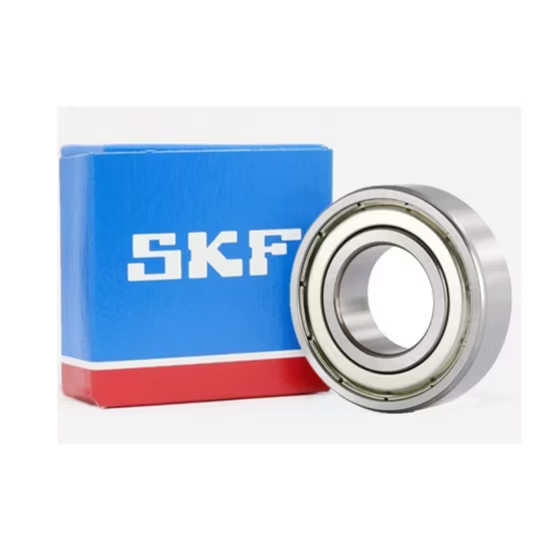
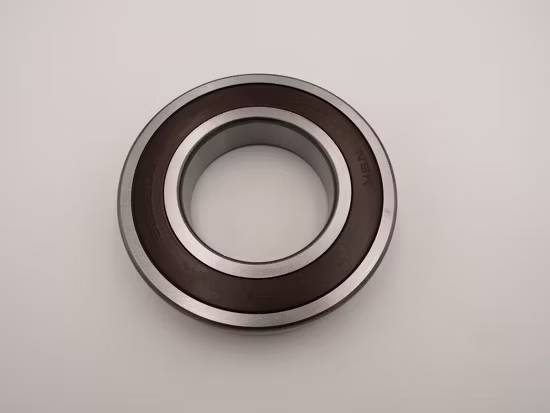
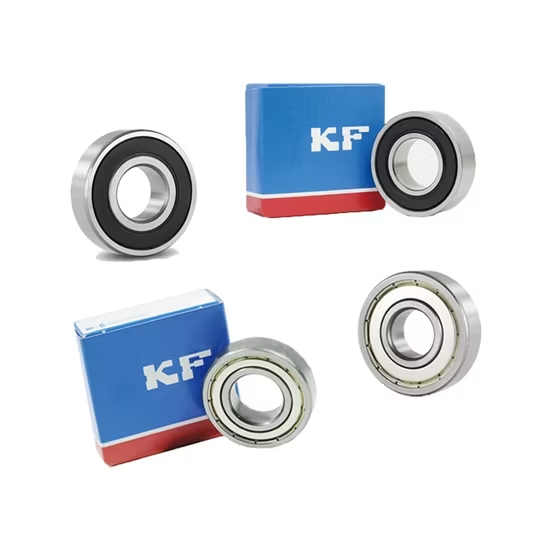
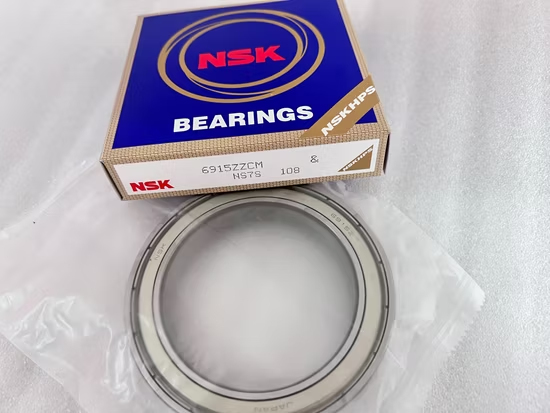
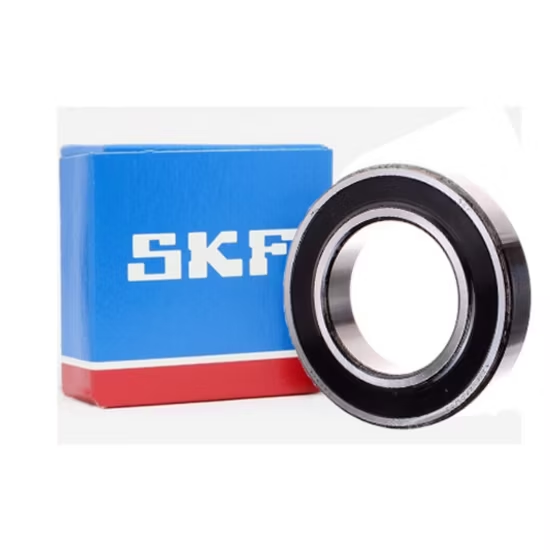

6002 Deep Groove Ball Bearing — supplied in open, rubber-sealed, and iron-shielded configurations to suit diverse friction and contamination environments.
Multi-brand authorized coverage — Source your 6002 deep groove ball bearing from SKF, FAG, or NSK in a single consolidated shipment with unified batch traceability.
| Parameter | Value |
|---|---|
| Designation | 6002 |
| Bearing Type | Deep Groove Ball Bearing |
| Seal or Shield Type | Open, Rubber Seals, Iron Seals |
| Noise and Vibration Class | Z1V1, Z2V2, Z3V3, Z4V4 |
| Origin | Germany, Japan, Sweden, Malaysia, China |
| HS Code | 848210 |
| Industry | Typical Applications |
|---|---|
| Electric Motors | Rotor shaft support in fractional horsepower AC/DC motors |
| Household Appliances | High-speed spindle assemblies in washing machines and blenders |
| Industrial Gearboxes | Low-torque input shaft support and auxiliary drive mechanisms |
| Pumps and Conveyors | Idler roller ends and small impeller shaft bearings |
Matching the base number is only the first step; ignoring sealing friction and vibration grades guarantees premature motor failure.
Purchasing managers often approve a 6002 deep groove ball bearing based solely on the base designation, assuming all variants perform identically. In reality, installing an iron-shielded variant in a high-moisture environment leads to rapid corrosion, while using an open bearing in a dusty gearbox causes abrasive wear . I have seen countless production lines halt because procurement overlooked the specific noise and vibration class required for high-speed appliance spindles, resulting in unacceptable acoustic resonance and early cage fatigue.
Selecting the correct configuration for a 6002 deep groove ball bearing requires balancing contamination exclusion against rotational friction. Open variants dissipate heat efficiently and allow for custom oil bath lubrication in enclosed gearboxes. Rubber seals provide superior protection against moisture and fine particulates but introduce higher friction, making them ideal for sealed-for-life appliance motors. Iron shields offer a non-contact compromise, keeping out large debris while maintaining the high-speed capability needed for precision electric motor rotors.
Electric motors and household appliances subject these components to sustained high-speed radial loads where thermal management is critical. The choice between contact rubber seals and non-contact iron shields directly dictates the operating temperature and re-lubrication interval. Furthermore, high-speed rotor assemblies generate acoustic vibrations that transfer to the equipment housing. Selecting the appropriate Z-class vibration grading ensures the internal geometry and surface finishes are optimized to suppress harmonic resonance, preventing structural noise in quiet-running consumer appliances .
The Z1V1 through Z4V4 classifications define the strictness of the manufacturing tolerances and the surface finish of the raceways. A standard Z1V1 grade is generally sufficient for basic industrial conveyors or slow-speed pump idlers where acoustic output is irrelevant. Conversely, Z3V3 and Z4V4 grades undergo stringent dynamic testing to eliminate microscopic surface irregularities that cause high-frequency humming. This precision is non-negotiable for household appliances and medical equipment motors, where even minor vibration translates into noticeable operational noise and accelerated fatigue.
Substituting a standard open bearing for a sealed variant in a washdown environment inevitably leads to grease washout and catastrophic raceway scoring. Similarly, ignoring the required Z4V4 acoustic grade in a premium appliance motor results in high warranty return rates due to perceived quality defects. According to ISO 281 frameworks, operating a bearing outside its intended friction and contamination parameters drastically reduces the calculated L10 life, turning a minor procurement saving into massive unplanned downtime and brand reputation damage .
We supply the 6002 deep groove ball bearing with verified batch traceability across all major international brands, eliminating the risk of mixed-origin counterfeits. Our technical team cross-references your exact sealing and vibration requirements, ensuring you do not accidentally receive Z1V1 when Z3V3 is specified for a quiet motor application. We provide official app QR verification for every batch, proving the metallurgical origin. Furthermore, we match the exact internal clearance and cage design required for your specific thermal expansion profile, preventing the binding issues common with generic substitutions.
To ensure precise application matching, please share your operational parameters, including continuous radial loads, maximum rotational speeds, and ambient operating temperatures. If you are replacing an existing component, provide the exact OEM equipment number or the full designation including any seal and vibration suffixes. This data allows our engineering team to verify the L10 life calculation and recommend the optimal sealing configuration for your specific environment.
Q: How do I verify the authenticity of the 6002 deep groove ball bearing upon delivery?
A: Every unit we supply features a manufacturer-applied QR code. You can scan this code using the official brand application to instantly verify the batch number, production facility, and material origin. We also provide a Certificate of Conformity and dimensional inspection reports that cross-reference the exact seal type and vibration class shipped, ensuring complete transparency and eliminating the risk of counterfeit components with soft inner rings.
Q: What is the practical difference between rubber seals and iron shields for electric motors?
A: Rubber seals provide excellent exclusion of fine dust and moisture but generate higher friction, which slightly limits maximum speed and increases operating temperature. Iron shields maintain a small non-contact air gap, offering lower friction and higher speed capability while still blocking large debris. The choice depends on whether your motor prioritizes absolute contamination exclusion in harsh environments or maximum rotational efficiency in clean, high-speed applications.
Q: How do I select the correct noise and vibration class for household appliances?
A: Household appliances like washing machines require exceptionally quiet operation, making Z3V3 or Z4V4 classes mandatory. These grades feature ultra-smooth raceway finishes and stringent dynamic balancing that suppress high-frequency acoustic resonance. Using a standard Z1V1 class in these applications will result in noticeable humming and vibration, leading to poor end-user experience and increased warranty claims due to perceived product defects.
Q: Why must exact clearance and precision suffixes be matched during cross-brand interchange?
A: A base number match does not guarantee internal geometry equivalence. Installing a standard clearance bearing in an application requiring extra clearance for thermal expansion will cause the rolling elements to bind as the shaft heats up, leading to rapid thermal failure. We review your specific operating temperatures and mounting tolerances to ensure the substituted bearing matches the exact internal clearance and precision grade required by the original equipment manufacturer.
Our 5-step process ensures every order is engineered, validated, and supported for optimal performance.
Technical needs assessment
Custom specifications
Free samples for $50k+
Pre-shipment inspection
On-site & predictive
Our certified engineers respond within 24 hours with detailed technical specifications, pricing, and lead time information.