01
Consultation
Technical needs assessment

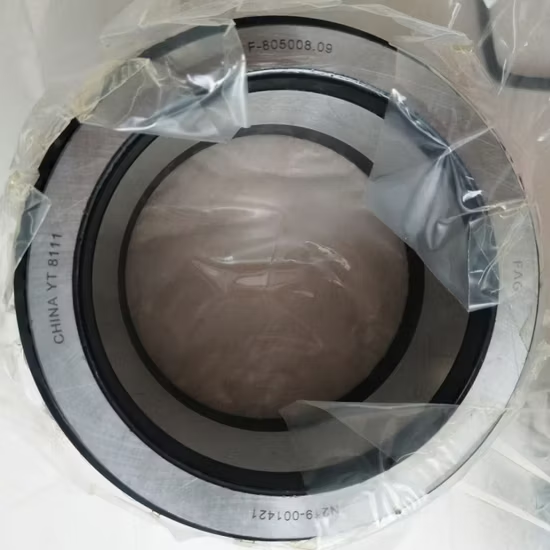
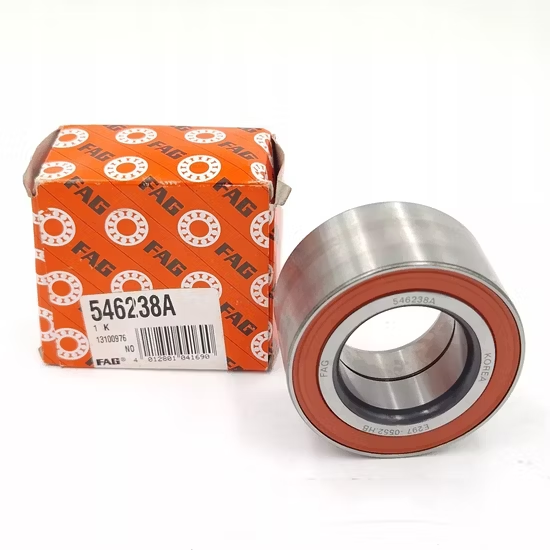
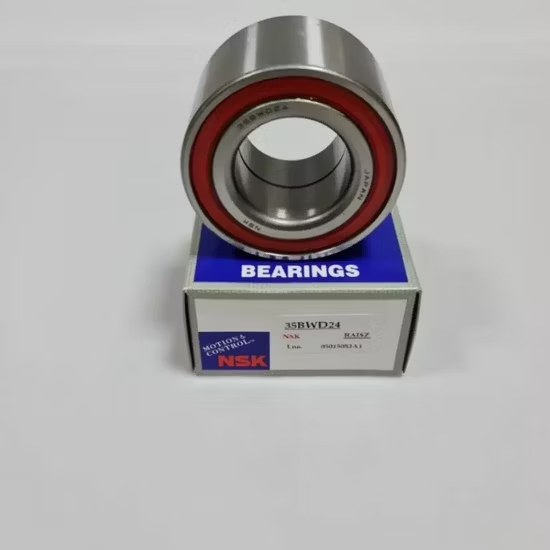
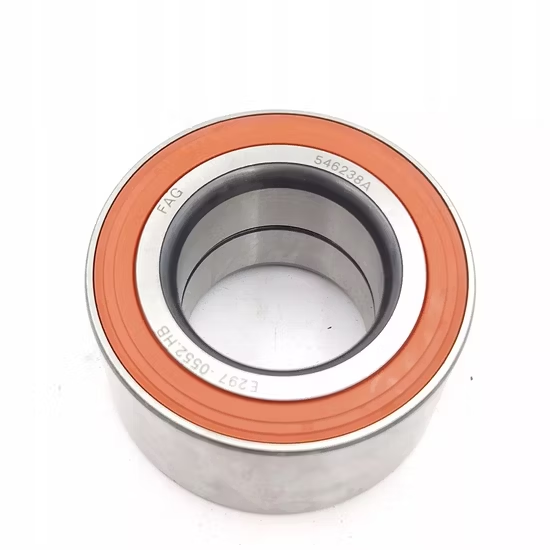
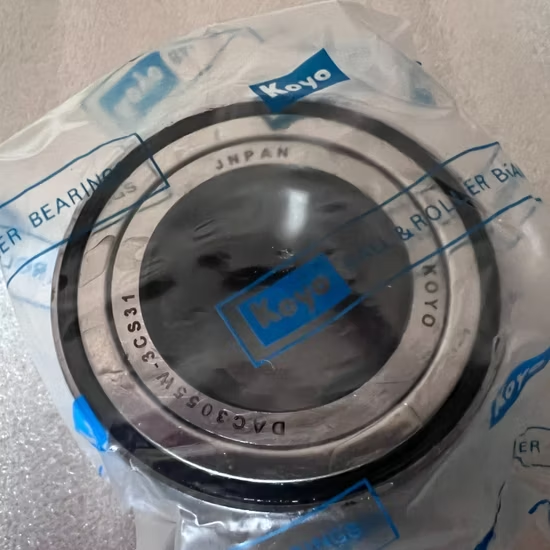
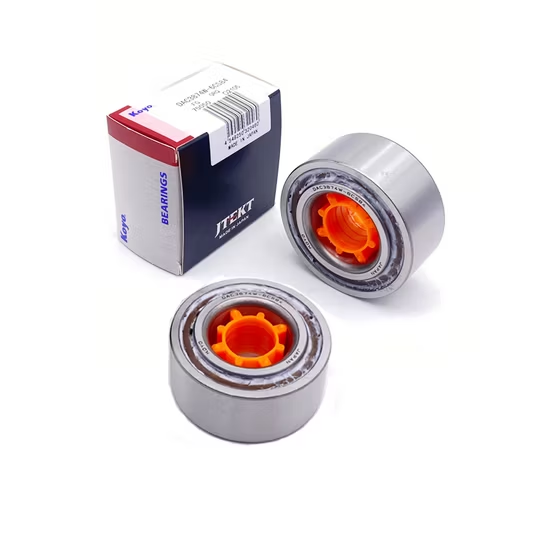
Dac25550045 Front Wheel Hub Bearing — P4 precision and C0 clearance double row unit.
Three-point cross-reference alignment — verifying base dimensions, ABS sensor ring type, and internal clearance prevents premature hub failure in dusty environments.
| Parameter | Value |
|---|---|
| Designation | Dac25550045 |
| Bearing Type | Wheel Hub Bearing |
| Material | Chrome Steel |
| Precision Class | P4 |
| Clearance Class | C0 |
| ABS Sensor | With ABS |
| Number of Rows | Double Row |
| Seal Type | Nylon / Brass / Iron Seal options |
| Certification | ISO9001 |
| Origin | Shanghai |
| Industry | Typical Applications |
|---|---|
| Automotive | Passenger vehicle front wheel hub assemblies requiring integrated ABS signal generation |
| Tractor | Light agricultural machinery steering axles exposed to moderate dust and moisture |
| Construction Machinery | Compact loader and skid steer front wheel hubs handling combined radial and axial loads |
| Rolling Equipment | Industrial transfer cart wheel axles demanding precise rotational stability |
Base number matches do not guarantee functional equivalence in the field.
Sourcing teams frequently approve replacements based solely on the outer dimensions, overlooking critical internal variations. When a generic alternative lacks the exact magnetic encoder ring configuration or utilizes an incorrect internal clearance, the result is often an illuminated ABS fault light or thermal binding during highway driving. I have seen countless hubs returned from desert routes because the seal specification was ignored during cross-referencing, allowing fine silica dust to destroy the raceways within weeks.
Selecting the correct Dac25550045 front wheel hub bearing requires looking beyond the catalog number to evaluate the actual operating environment. Our technical review process ensures that the selected seal variant and clearance class align with the specific vehicle dynamics and regional climate. This prevents the common aftermarket pitfall where a standard highway specification is mistakenly installed on a vehicle subjected to heavy off-road vibration and extreme ambient heat.
Front wheel hubs endure a brutal combination of radial vehicle weight, axial cornering forces, and severe contamination risks. In arid regions, fine particulate matter easily bypasses degraded seals, acting as a lapping compound that accelerates raceway wear. Temperature fluctuations also dictate lubrication stability; excessive heat thins the grease, while sudden water immersion during wadi crossings can cause rapid thermal contraction that compromises the seal lip integrity. Proper seal selection is therefore non-negotiable for maintaining grease purity and structural longevity.
The P4 precision class combined with C0 standard clearance provides a tight dimensional tolerance suitable for modern hub assemblies where excessive play triggers steering wheel vibration. The integrated ABS sensor design ensures precise magnetic signal transmission to the vehicle's braking control module, preventing erratic braking behavior. Depending on the regional operating conditions, buyers can choose between nylon, brass, or iron seal variants. Nylon offers low friction for standard commuting, brass provides superior durability against heavy debris impact, and iron shields deliver maximum structural rigidity for demanding commercial applications.
Installing a hub with mismatched internal geometry or a soft inner ring leads to unplanned downtime and catastrophic secondary damage to the steering knuckle and brake caliper. Premature failure under warranty not only voids the parts guarantee but also damages the repair shop's reputation. According to ISO 15243, a significant share of early hub failures stems from improper mounting practices or undetected internal defects rather than normal fatigue. Relying on unverified supply chains amplifies these risks exponentially.
We maintain authorized distribution channels that guarantee genuine Japanese and international brand products, eliminating the risk of counterfeit soft-ring hubs. Every shipment includes batch traceability, allowing buyers to verify authenticity directly through the manufacturer's official app. Our cross-reference protocol strictly aligns the base designation, ABS encoder tooth count, and seal material, ensuring direct drop-in replacement without electronic or mechanical conflicts. Furthermore, our application engineers review load and speed parameters to confirm the selected variant meets the specific vehicle's durability requirements.
To initiate a precise technical review, procurement teams should provide the target vehicle's OEM equipment number alongside the expected operating environment. Sharing details regarding axial load expectations and exposure to fine dust or water immersion allows our engineering desk to recommend the optimal seal variant. We will then return a comprehensive cross-reference report confirming ABS sensor compatibility and dimensional interchangeability.
Q: Why does a matching base designation still cause ABS warning lights?
A: Base dimensions might align, but the internal magnetic encoder ring's pole count or magnetization pattern often differs between manufacturers. If the Dac25550045 front wheel hub bearing lacks the exact signal profile required by the vehicle's ECU, the system registers a fault. We verify the sensor specifications during the cross-reference phase to prevent electronic mismatches.
Q: How can I verify the authenticity of the received hub units?
A: Every genuine unit features a unique batch code and QR label applied by the manufacturer. Buyers can scan this code using the brand's official mobile application to confirm the production facility, date, and material specifications. We also provide a Certificate of Conformity linking the physical goods to the original factory release documentation.
Q: What is the advantage of P4 precision over standard P0 for wheel hubs?
A: P4 precision ensures significantly tighter tolerances in bore diameter, outer diameter, and running accuracy. For the Dac25550045 front wheel hub bearing, this reduces micro-vibrations at highway speeds, minimizes uneven tire wear, and extends the fatigue life of the rolling elements under heavy radial and axial cornering loads compared to looser P0 grade alternatives.
Q: How do I choose between nylon, brass, and iron seals?
A: Nylon seals offer low friction for standard paved-road commuting. Brass seals provide enhanced structural resistance against rock strikes and heavy debris in off-road or agricultural conditions. Iron shields deliver maximum rigidity and contamination exclusion for commercial vehicles operating in extreme dust environments. We recommend the material based on your specific application data.
Q: Why must a hydraulic press be used instead of a hammer for installation?
A: Hammering transmits severe shock loads directly through the rolling elements, causing Brinell indentation on the chrome steel raceways. This destroys the P4 precision surface finish and leads to immediate noise and premature spalling. A hydraulic press applies controlled axial force strictly to the ring being fitted, preserving the internal geometry and C0 clearance.
Our 5-step process ensures every order is engineered, validated, and supported for optimal performance.
Technical needs assessment
Custom specifications
Free samples for $50k+
Pre-shipment inspection
On-site & predictive
Our certified engineers respond within 24 hours with detailed technical specifications, pricing, and lead time information.