01
Consultation
Technical needs assessment


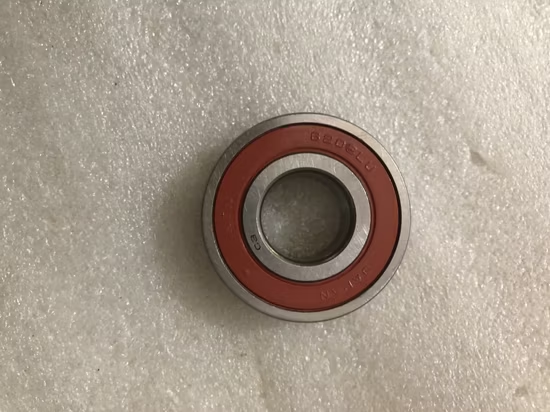
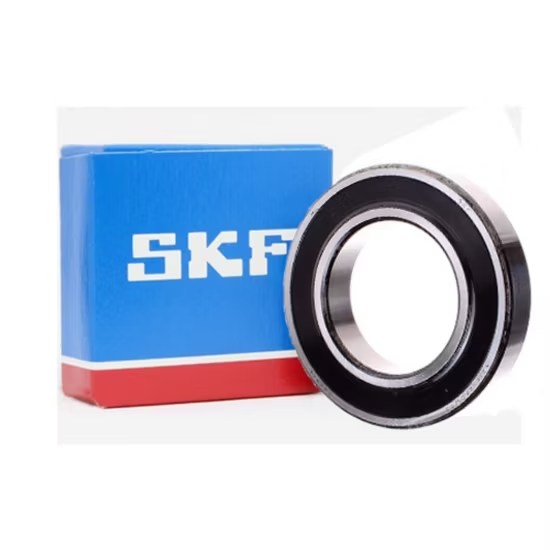


6313 Deep Groove Ball Bearing P4 P5 P6 — chrome steel construction for electric motors and automotive applications.
Unified multi-brand sourcing — Procure genuine 6313 variants from SKF, FAG, NSK, or NTN in a single consolidated shipment, eliminating the need to coordinate across fragmented suppliers.
| Parameter | Value |
|---|---|
| Designation | 6313 |
| Bearing Type | Deep Groove Ball Bearing |
| Bore Type | Cylindrical |
| Material | Chrome Steel |
| Seal or Shield Type | Open, Iron Seals (ZZ), Rubber Seals (2RS) |
| Precision Class | P4, P5, P6 |
| Quality Level | Z1V1, Z2V2, Z3V3, Z4V4 |
| Origin | Germany, Japan, Sweden, Malaysia, China |
| Industry | Typical Applications |
|---|---|
| Electric Motors | High-speed rotor shafts requiring low-noise Z3V3 or Z4V4 vibration grades |
| Automotive Parts | Alternator assemblies and transmission sub-components needing precise P5 or P6 tolerances |
| Industrial Gearboxes | Input and output shafts demanding reliable ZZ or 2RS contamination protection |
Matching the base number is never enough when internal clearances and seal friction clash with operational heat.
I have seen motor plants in the Pearl River Delta treat this designation as a generic commodity, only to face catastrophic thermal binding on the assembly line. When a high-precision setup ignores the necessary clearance expansion or selects a high-friction rubber seal for an ultra-high-speed spindle, the cage fails prematurely under thermal stress. . Procurement teams often assume the base designation guarantees interchangeability, overlooking how a mismatched suffix combination silently compromises the entire drive system.
Selecting the right 6313 deep groove ball bearing means balancing contamination exclusion against rotational friction. For enclosed automotive alternators, the double-shielded ZZ variant provides adequate dust protection with minimal torque penalty. Conversely, exposed industrial drives benefit from the contacting lip of the 2RS rubber seal to block moisture ingress, though this adds friction that must be accounted for in high-speed motor applications.
High-speed electric motors generate significant internal heat, directly impacting the operational clearance of the bearing. If a standard CN clearance is installed where a C3 expansion gap was required, the thermal growth of the chrome steel rings will eliminate the internal play, leading to severe skidding and cage destruction. Furthermore, the chosen lubrication must withstand these elevated temperatures without degrading, while the sealing mechanism must prevent external particulates from contaminating the grease reservoir over thousands of operational hours. .
The distinction between P4, P5, and P6 precision classes dictates the running accuracy and geometric tolerances of the rings and rolling elements. In demanding automotive spindles or precision machine tools, a P4 grade ensures minimal radial runout, preventing vibration transfer to the finished product. Coupled with strict Z1V1 through Z4V4 quality levels, these bearings guarantee ultra-quiet operation by controlling the surface waviness and roughness of the raceways, which is absolutely critical for minimizing acoustic noise in premium electric motors.
Relying solely on the base number without verifying the exact seal type, clearance, and precision suffix inevitably leads to unplanned downtime and premature failure. A replacement part that physically fits the housing but lacks the correct thermal clearance will seize under load, causing catastrophic damage to the motor shaft and stator. Such field failures not only void equipment warranties but also destroy the operational reliability metrics of the entire production line. .
We provide authorized distribution across all major international brands, meaning your mixed-brand requirements are handled in one traceable order. Our cross-reference review specifically targets the common error of matching the base 6313 number while ignoring the critical C3 clearance or P4 precision suffixes that your specific equipment demands. Every batch is backed by manufacturer traceability and QR verification through official brand apps, ensuring you never install a counterfeit with a soft inner ring. We also conduct application-based selection reviews covering your exact load, speed, and temperature parameters before finalizing the quotation.
To ensure the selected configuration perfectly matches your operational reality, please provide your specific radial and axial loads, operating speeds, and ambient temperature ranges. Sharing the exact OEM equipment number allows our engineering team to perform a rigorous cross-reference check, verifying that the clearance, cage, and seal suffixes align with the original design intent. This technical review guarantees the proposed solution delivers optimal L10 life and prevents premature thermal binding in your specific application.
Q: How do I choose between ZZ iron shields and 2RS rubber seals for this application?
A: The ZZ iron shields offer non-contact protection ideal for high-speed electric motors where minimizing rotational friction and heat generation is critical. The 2RS rubber seals provide contacting lips that deliver superior exclusion of moisture and heavy dust, making them better suited for automotive or agricultural environments where contamination risks outweigh the slight increase in friction torque.
Q: What are the practical differences between P4, P5, and P6 precision classes?
A: These classes define the strictness of dimensional and running accuracy tolerances. P6 is standard for general industrial gearboxes, while P5 offers tighter runout for standard electric motors. P4 provides the highest precision among the three, ensuring minimal vibration and exact rotational geometry required for high-speed automotive parts and precision spindles where microscopic deviations cause significant acoustic noise.
Q: Why is matching the exact quality level like Z1V1 versus Z4V4 critical for motors?
A: The Z and V grades measure the vibration velocity and noise levels of the bearing during rotation. While Z1V1 is acceptable for basic industrial conveyors, premium electric motors demand Z3V3 or Z4V4 grades to ensure ultra-quiet operation. Installing a lower grade in a high-end motor will result in unacceptable acoustic noise and indicate underlying surface waviness that accelerates wear.
Q: How do you verify the authenticity and batch traceability of the supplied units?
A: As an authorized multi-brand distributor, we supply a Certificate of Conformity and full batch traceability linking the material to the manufacturer's heat records. Buyers can independently verify authenticity by scanning the QR codes on the packaging using the official brand applications, ensuring the internal components meet genuine metallurgical standards and are not counterfeits with soft inner rings.
Q: What cross-reference errors commonly occur when sourcing these replacements?
A: The most frequent error is matching the base 6313 number while completely overlooking the internal clearance and precision suffixes. Procurement teams often order a standard CN clearance and P0 grade when the equipment specifically requires C3 clearance for thermal expansion and P5 precision for high-speed stability, leading to rapid thermal binding and catastrophic cage failure in the field.
Our 5-step process ensures every order is engineered, validated, and supported for optimal performance.
Technical needs assessment
Custom specifications
Free samples for $50k+
Pre-shipment inspection
On-site & predictive
Our certified engineers respond within 24 hours with detailed technical specifications, pricing, and lead time information.