01
Consultation
Technical needs assessment

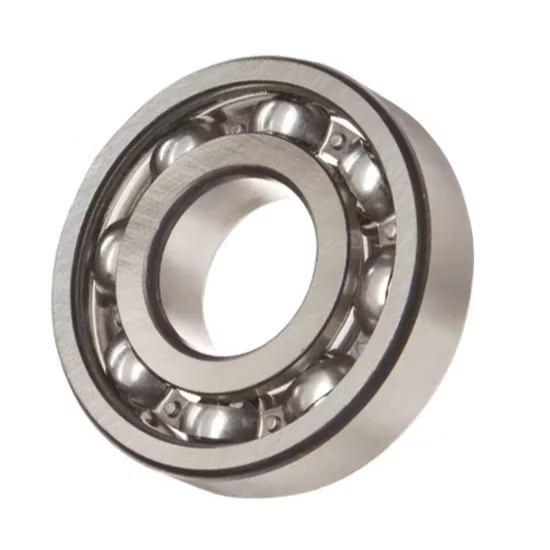
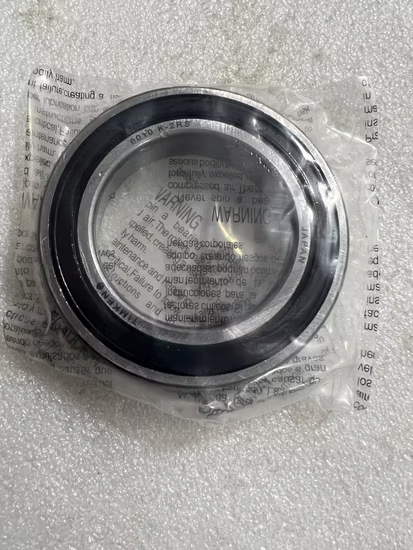
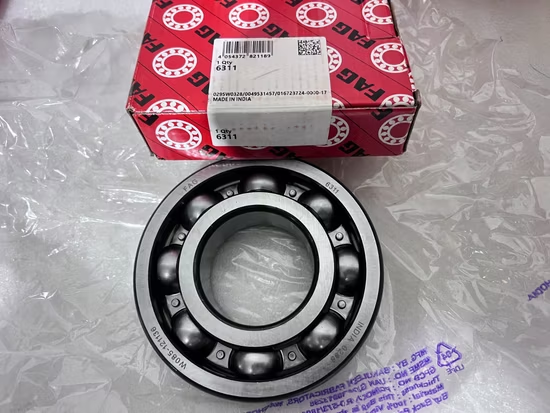
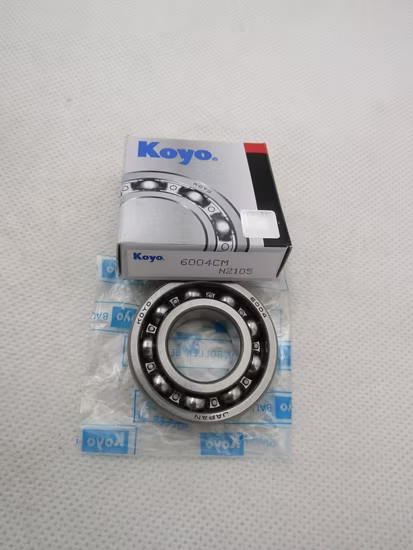
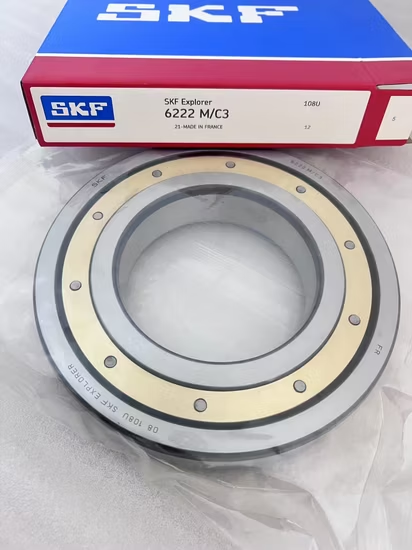
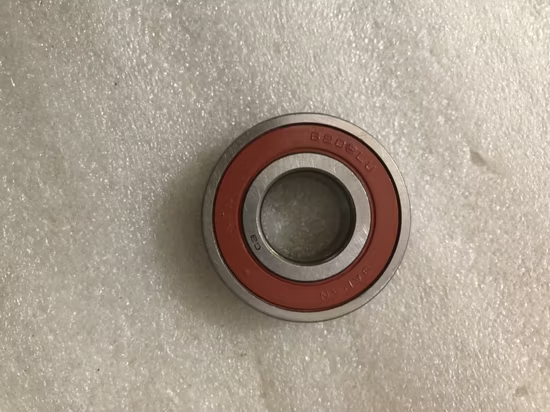
6204 Deep Groove Ball Bearing — offered in open, rubber seal, and iron shield configurations to match specific contamination environments.
Batch Traceability — Every 6204 deep groove ball bearing we supply ships with verifiable manufacturer lot documentation to eliminate counterfeit risks.
| Parameter | Value |
|---|---|
| Designation | 6204 |
| Bearing Type | Deep Groove Ball Bearing |
| Seal or Shield Type | Open, Rubber Seals, Iron Seals |
| Noise and Vibration Level | Z1V1, Z2V2, Z3V3, Z4V4 |
| Origin | Germany, Japan, Sweden, Malaysia, China |
| HS Code | 848210 |
| Industry | Typical Applications |
|---|---|
| Electric Motors | Rotor shaft support, cooling fan drives |
| Industrial Gearboxes | High-speed input shafts, intermediate gearing |
| Material Handling | Conveyor pulley bearings, transfer chain idlers |
| Pumps | Centrifugal pump impeller shafts, circulation pumps |
Matching the base number without verifying the Z/V noise and vibration class leads to premature electrical pitting and bearing seizure.
In the Yangtze River Delta manufacturing hubs, I have dismantled countless burnt-out electric motors where the root cause was a mismatched 6204 deep groove ball bearing. Procurement teams often focus solely on the basic designation, ignoring that a standard vibration level will transmit destructive harmonic resonance into the motor housing. When the internal geometry and surface finish do not align with the required Z3V3 or Z4V4 specifications, the resulting micro-vibrations accelerate grease degradation and cause cage fatigue .
Selecting the correct 6204 deep groove ball bearing requires balancing friction against contamination ingress. Open variants suit clean, oil-lubricated gearboxes where external filtration is guaranteed. Iron shields provide non-contact protection for high-speed motor shafts, minimizing friction heat while blocking large debris. Rubber seals offer maximum defense for conveyors operating in dusty environments, though the contact lip generates thermal limits that must be respected during continuous duty cycles.
Electric motors and industrial gearboxes subject deep groove ball bearings to complex thermal and radial loads. As motor windings heat up, the shaft expands faster than the aluminum housing, internally reducing the bearing clearance. If a standard clearance is installed where thermal expansion demands a looser internal fit, the rolling elements bind, generating catastrophic friction heat. Proper selection must account for the operating temperature gradient, the radial load from belt tension, and the specific grease fill required to maintain a stable lubricating film without churning losses .
The Z1V1 through Z4V4 classifications dictate the acoustic and vibrational performance of the bearing. Higher grades like Z4V4 demand stringent manufacturing tolerances, superior raceway superfinishing, and advanced cage designs to ensure silent operation in precision household appliances and premium electric motors. The seal configuration directly impacts this performance; while rubber seals provide superior exclusion of fine particulate matter, the physical contact with the inner ring introduces a slight drag that engineers must factor into the overall torque budget of the driven equipment.
Substituting a bearing based purely on outer dimensions while ignoring internal geometry differences results in unplanned downtime and catastrophic damage to adjacent machinery. A mismatched seal type can starve the contact zone of lubrication, while an incorrect vibration grade in a high-speed spindle induces structural resonance. Following the failure analysis frameworks outlined in international standards, these installation errors consistently lead to premature spalling and raceway smearing, entirely voiding equipment warranties and halting production lines .
We maintain authorized distribution channels across all major global brands, ensuring your mixed-brand orders are consolidated without compromising traceability. Our cross-reference protocol strictly verifies the seal type, clearance class, and vibration grade, preventing the common error of installing an open bearing where a sealed unit was specified. Every batch is verified through the manufacturer's official application to reject cloned QR codes and soft inner rings. We provide application-based selection reviews to ensure the chosen configuration withstands your specific thermal and load parameters.
Share your precise radial and axial load calculations, operational RPM, and ambient temperature ranges so our engineering team can validate the internal clearance and lubrication requirements. Provide the original equipment manufacturer part numbers to ensure our cross-reference aligns perfectly with the factory-specified seal and vibration grades. Detailing the environmental exposure allows us to recommend the optimal shielding configuration for your specific machinery.
Q: How do different seal types affect the speed limit of this bearing?
A: Iron shields maintain non-contact clearances, allowing the bearing to reach the same high-speed limits as open variants, making them ideal for electric motor shafts. Rubber seals feature a contact lip that provides superior dust exclusion for conveyors but generates friction heat, which slightly reduces the maximum permissible rotational speed during continuous operation.
Q: Why is verifying the Z/V vibration grade critical for electric motors?
A: Electric motors demand exceptionally smooth rotation to prevent harmonic resonance from transferring into the housing. Utilizing a lower vibration grade than specified introduces micro-vibrations that accelerate grease breakdown and cause electrical pitting on the raceways. We ensure the supplied units strictly match the required Z3V3 or Z4V4 acoustic standards for silent operation.
Q: What causes thermal binding in deep groove ball bearings?
A: Thermal binding occurs when the inner ring expands faster than the outer housing due to heat generated by the motor windings or driven equipment. If the internal clearance is not appropriately selected to accommodate this differential thermal expansion, the rolling elements are compressed, leading to excessive friction, rapid lubricant failure, and eventual seizure.
Q: How do you ensure the cross-referenced bearings match the OEM requirements?
A: We do not merely match the base numerical designation. Our technical review process verifies the exact seal configuration, internal clearance class, and vibration grade required by the original equipment. This comprehensive alignment prevents the installation of functionally incompatible bearings that would otherwise lead to premature field failures.
Our 5-step process ensures every order is engineered, validated, and supported for optimal performance.
Technical needs assessment
Custom specifications
Free samples for $50k+
Pre-shipment inspection
On-site & predictive
Our certified engineers respond within 24 hours with detailed technical specifications, pricing, and lead time information.