01
Consultation
Technical needs assessment



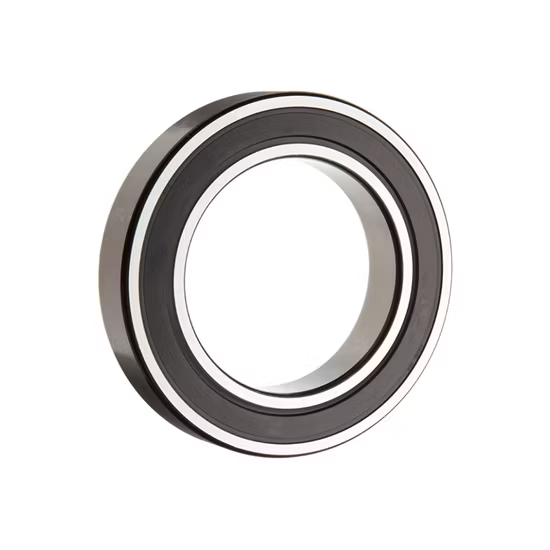

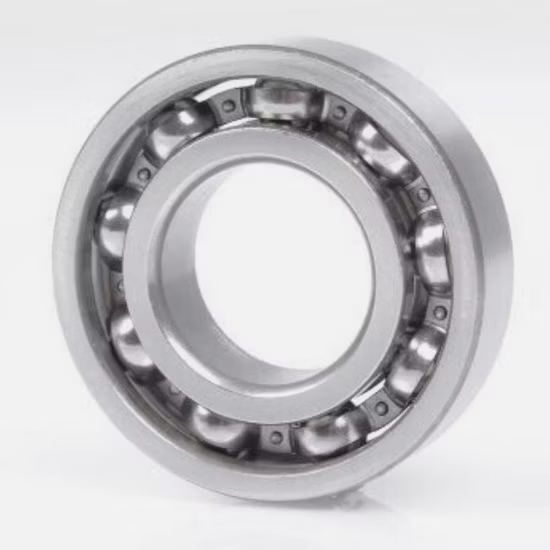
61901 Deep Groove Ball Bearing — miniature bearing supplied in open, rubber-sealed, and iron-shielded configurations with quality grading up to Z4V4 for low-noise, high-speed operation in precision instruments, small electric motors, and robotics.
Every batch ships with material certificates and dimensional inspection reports for full procurement transparency.
Authorized Multi-Brand Coverage — A single purchase order secures genuine 61901 units from multiple premium manufacturers without juggling separate vendors.
| Parameter | Value |
|---|---|
| Designation | 61901 |
| Product Type | Deep Groove Ball Bearing |
| Bearing Style Options | Open, Rubber Seals, Iron Seals |
| Quality Level Options | Z1V1, Z2V2, Z3V3, Z4V4 |
| Feature | Low Noise, High Speed, Long Service Life |
| Origin Options | Germany, Japan, Sweden, Malaysia, China |
| HS Code | 848210 |
| Industry | Typical Applications |
|---|---|
| Electric Motors | Small motor armature shafts, cooling fan drives |
| Precision Instruments | Optical encoder shafts, measurement device spindles |
| Robotics | Articulation joints, lightweight actuator gearboxes |
Matching the basic 61901 designation is never enough to prevent thermal binding in high-speed miniature applications.
In my years on the workshop floor in Ningbo, I have dismantled countless small electric motors where the armature shaft locked up completely. The root cause is almost always a mismatch in internal clearance or seal friction, even when the installed part was technically a 61901 deep groove ball bearing. Procurement teams often focus solely on the base number, overlooking that an open variant requires a completely different lubrication strategy than a rubber-sealed one. When a standard clearance is forced into a high-temperature motor environment, the thermal expansion eliminates the internal gap, leading to catastrophic cage failure .
Sourcing the correct 61901 deep groove ball bearing requires aligning the seal type and quality grade with the specific operational environment. For clean, enclosed gearboxes in robotics, an open or iron-shielded variant minimizes friction, whereas rubber seals are mandatory for agricultural pumps exposed to dust and moisture. We verify these exact configurations during the cross-reference phase to ensure the selected unit handles the specific contamination and speed profile of your equipment.
Miniature bearings operate at exceptionally high rotational speeds, making friction management critical. Iron shields provide non-contact protection that keeps torque low, while rubber seals introduce contact friction that can generate excess heat if the speed limit is exceeded. Furthermore, noise and vibration grades dictate the smoothness of the raceway and rolling elements. In precision instruments, selecting a lower vibration grade prevents resonance issues that degrade measurement accuracy over time .
The transition from Z1V1 to Z4V4 represents a strict refinement in raceway superfinishing and ball sorting, directly reducing acoustic emissions and vibration amplitudes. For high-speed electric motors, a Z3V3 or Z4V4 grade ensures the 61901 deep groove ball bearing runs quietly without generating destructive harmonic frequencies. Regarding sealing, open bearings rely entirely on the housing for lubrication retention, while rubber and iron seals offer varying degrees of ingress protection. Choosing the wrong seal type alters the friction torque, which can stall low-power servo motors or cause overheating in continuous-duty applications.
Installing a standard clearance bearing in an application that demands extra clearance leads to premature fatigue and unplanned downtime. As the shaft and housing reach operational temperatures, the differential expansion crushes the internal gap, forcing the rolling elements to skid rather than roll. This skidding rapidly destroys the raceway finish and degrades the lubricant, resulting in catastrophic damage that voids equipment warranties and halts production lines .
We do not simply ship a box with the right base number printed on it; we validate the internal geometry and seal friction against your application parameters. Our cross-reference process specifically checks whether your OEM design requires a rubber seal or an iron shield, preventing the accidental installation of high-friction variants in high-speed spindles. Every batch we supply includes full traceability, ensuring that the dimensional and running accuracy reports match the exact Z-grade vibration limits your precision instruments demand.
To ensure the selected 61901 variant perfectly matches your machinery, please provide the exact radial and axial loads, operational speed, and ambient temperature range. Sharing the OEM equipment number or the specific seal and clearance requirements allows our engineering team to perform a precise cross-reference and L10 life calculation. This technical review guarantees that the internal geometry and friction characteristics align with your operational demands.
Q: How do I choose between rubber seals and iron shields for the 61901?
A: Iron shields provide non-contact protection, keeping friction and heat generation low for high-speed electric motors. Rubber seals offer contact sealing, which is essential for dusty or wet environments like agricultural pumps, but they introduce higher friction. We review your specific contamination and speed data to recommend the optimal configuration.
Q: What do Z1V1 to Z4V4 quality levels mean for noise control?
A: These grades classify the bearing's vibration and acoustic emissions, with Z4V4 representing the strictest limits achieved through superior raceway superfinishing. For precision instruments and quiet household appliances, higher grades prevent disruptive resonance and ensure smooth, silent operation at high rotational speeds.
Q: Why is matching the base number not enough for cross-referencing?
A: The base number only defines the outer dimensions. It ignores critical internal factors like clearance class, cage material, and seal friction. Installing a standard clearance unit in a high-temperature motor causes thermal binding, while using a rubber-sealed variant in a high-speed spindle generates excess heat. We verify all internal parameters.
Q: How can I verify the authenticity and origin of miniature bearings?
A: Counterfeit miniature bearings often feature soft inner rings that fail rapidly under load. We supply genuine products with full batch traceability and country-of-origin documentation. You can verify authenticity instantly by scanning the QR codes using the official mobile applications provided by the original manufacturers.
Q: How does clearance selection affect small motors at high temperatures?
A: As a motor operates, the shaft expands faster than the housing, reducing the bearing's internal clearance. If a standard clearance is used instead of the required extra clearance, the gap closes completely, causing the balls to skid and the lubricant to burn. We calculate the thermal expansion to specify the exact clearance class needed.
Our 5-step process ensures every order is engineered, validated, and supported for optimal performance.
Technical needs assessment
Custom specifications
Free samples for $50k+
Pre-shipment inspection
On-site & predictive
Our certified engineers respond within 24 hours with detailed technical specifications, pricing, and lead time information.