01
Consultation
Technical needs assessment



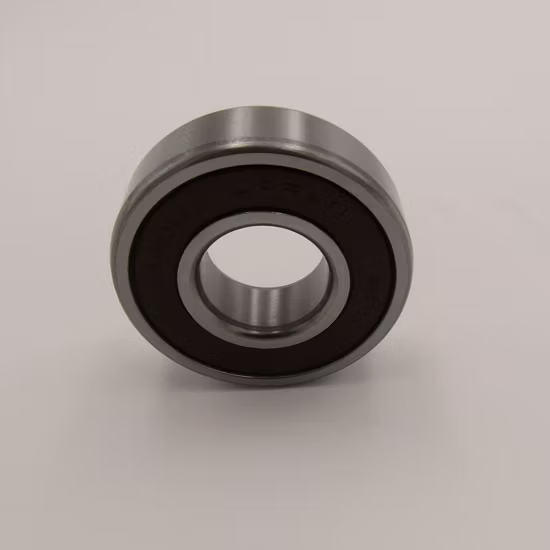
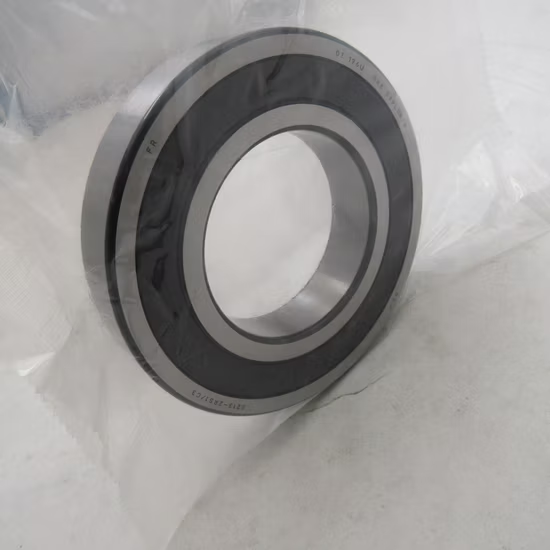
603 Deep Groove Ball Bearing — miniature ceramic variant with Si3N4 or ZrO2 rolling elements for reduced friction and weight in compact assemblies.
Every shipment includes full batch traceability to the manufacturer with QR verification, plus dimensional inspection reports and material certificates.
Authentic QR Verification — Every 603 batch is validated through official brand apps to eliminate cloned codes.
| Parameter | Value |
|---|---|
| Designation | 603 |
| Bearing Type | Deep Groove Ball Bearing |
| Material Options | Ceramic Ball (Si3N4, ZrO2) |
| Bearing Style | Open, Rubber Seals, Iron Seals |
| Quality Level | Z1V1, Z2V2, Z3V3, Z4V4 |
| Origin | Germany, Japan, Sweden, Malaysia, China |
| HS Code | 848210 |
| Industry | Typical Applications |
|---|---|
| Fishing Gear | High-speed spinning reel main shaft and pinion gear supports |
| Miniature Motors | Coreless DC motor rotor bearings and micro fan drives |
| Precision Instruments | Optical lens adjustment mechanisms and gyroscopes |
| RC Models | High-RPM brushless outrunner motor shafts and drivetrain idlers |
Reduced rotational mass prevents thermal seizure under extreme RPM.
In my years running the Latin American supply routes, I have seen countless high-speed fishing reels destroyed by premature bearing failure. When standard steel elements spin at the extreme velocities required by modern casting reels, centrifugal forces and friction generate immense heat. Without adequate thermal expansion clearance, the components bind and seize. A 603 ceramic deep groove ball bearing mitigates this by utilizing rolling elements that are noticeably lighter than steel, drastically lowering centrifugal load and friction heat . The market is currently flooded with counterfeit miniature bearings featuring soft inner rings and cloned QR codes that pass casual visual checks but disintegrate under real operational stress. Securing a verified supply chain is the only way to prevent catastrophic downtime in precision equipment.
Selecting the correct tolerance is critical when integrating a 603 ceramic deep groove ball bearing into sensitive equipment. Our technical review process ensures that the specific Z-level quality matches the acoustic and vibrational thresholds of your application. While a Z1V1 grade might suffice for basic small appliances, high-end fishing gear and precision optical instruments require the ultra-smooth operation provided by Z3V3 or Z4V4 classifications to eliminate micro-vibrations.
Miniature applications present unique environmental and mechanical challenges that dictate seal and clearance selection. High-RPM RC motors and fishing reels operate in environments heavily contaminated with dust, saltwater, or debris, requiring robust rubber or iron seals to protect the raceways. However, contact seals introduce friction, which can elevate operating temperatures and degrade lubricants rapidly . Furthermore, the lack of thermal mass in miniature housings means that even slight friction heat can quickly exceed the thermal limits of standard greases, making the selection of high-temperature lubricants and appropriate internal clearances absolutely vital for sustained operation.
The transition from steel to ceramic rolling elements fundamentally alters the dynamic behavior of the assembly. Silicon nitride (Si3N4) and zirconia (ZrO2) options provide distinct advantages: Si3N4 is exceptionally suited for ultra-high-speed applications due to its low density and high rigidity, while ZrO2 offers superior fracture toughness for environments subject to shock loads. Because ceramic materials exhibit considerably less thermal expansion than bearing steel, the internal clearance requirements shift, preventing the thermal binding often seen when standard CN clearance is mistakenly installed in high-heat miniature motors. Additionally, the Z1V1 to Z4V4 quality designations directly correlate to the bearing's noise and vibration footprint, ensuring that the chosen component aligns perfectly with the acoustic standards of precision instruments.
Installing unverified or incorrectly specified miniature bearings triggers a cascade of mechanical failures. In high-speed reels, a soft inner ring will rapidly deform under radial load, causing the gear mesh to misalign and strip the pinion teeth. According to ISO 281 frameworks, inadequate clearance in high-RPM applications leads to excessive preload, accelerating fatigue and resulting in unplanned downtime . Ultimately, relying on components lacking proper metallurgical integrity voids equipment warranties and causes catastrophic damage to the surrounding precision housings.
Our distribution network guarantees that every 603 ceramic deep groove ball bearing is fully traceable to the manufacturer's production facilities. We actively prevent cross-reference errors by verifying not just the base designation, but also the exact seal configuration and ceramic material required by your specific equipment. By providing comprehensive application-based selection reviews, we ensure that high-speed fishing reels receive the correct clearance class to prevent thermal binding. Furthermore, our strict rejection of cloned QR codes and soft-ring counterfeits protects your supply chain from the hidden defects that cause premature field failures.
To ensure optimal performance, provide our engineering team with your exact radial and axial load profiles, operating RPM, and thermal environment. Sharing the specific equipment model or OEM part number allows us to perform a rigorous cross-reference check, confirming that the seal type, internal clearance, and ceramic material perfectly align with your design requirements.
Q: How can I verify the authenticity of miniature ceramic bearings and avoid cloned QR codes?
A: Counterfeiters often replicate packaging and print fake QR codes that redirect to cloned websites. We supply fully traceable inventory that must be verified using the manufacturer's official mobile application. This direct digital handshake confirms the batch origin and exposes soft inner rings that fail under high-speed operational stress.
Q: What cross-reference factors matter when replacing standard steel 603 bearings with ceramic variants?
A: Simply matching the base number is insufficient. You must account for the reduced thermal expansion of ceramic elements, which often necessitates a different internal clearance class to prevent thermal binding. Additionally, verifying the exact seal friction and cage material is critical to maintaining the target RPM in miniature motors.
Q: How do Z1V1 to Z4V4 quality levels affect noise and vibration in high-speed fishing reels?
A: These designations define the bearing's acoustic and vibrational limits. While Z1V1 is adequate for basic appliances, high-end spinning reels demand Z3V3 or Z4V4 grades to eliminate micro-vibrations. Installing a lower grade introduces detectable hum and accelerates wear on the delicate pinion gear mesh under heavy drag loads.
Q: What are the material differences between Si3N4 and ZrO2 ceramic balls for miniature applications?
A: Silicon nitride (Si3N4) offers superior rigidity and lower density, making it the primary choice for ultra-high-RPM brushless motors and casting reels. Zirconia (ZrO2) provides higher fracture toughness, better suiting applications subjected to sudden shock loads or severe impact, though it is slightly denser than silicon nitride.
Q: How do I select the correct seal type based on the operating environment of miniature motors?
A: Open bearings offer the lowest friction for maximum speed but require a clean, externally lubricated environment. Rubber seals provide excellent contamination protection against dust and moisture but introduce friction heat. Iron shields offer a compromise, keeping out large debris while maintaining lower friction than full-contact rubber seals.
Our 5-step process ensures every order is engineered, validated, and supported for optimal performance.
Technical needs assessment
Custom specifications
Free samples for $50k+
Pre-shipment inspection
On-site & predictive
Our certified engineers respond within 24 hours with detailed technical specifications, pricing, and lead time information.