01
Consultation
Technical needs assessment


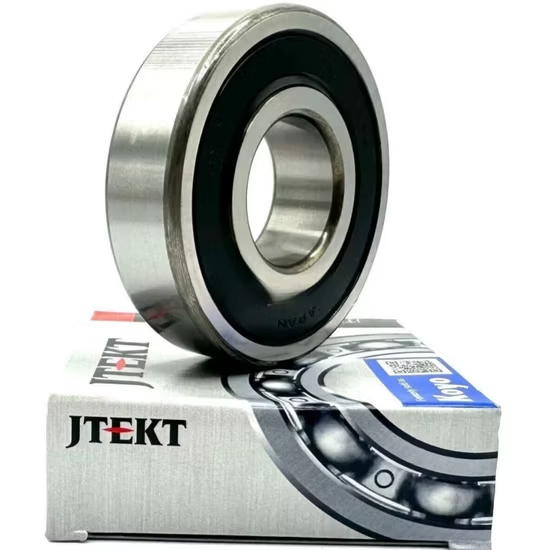
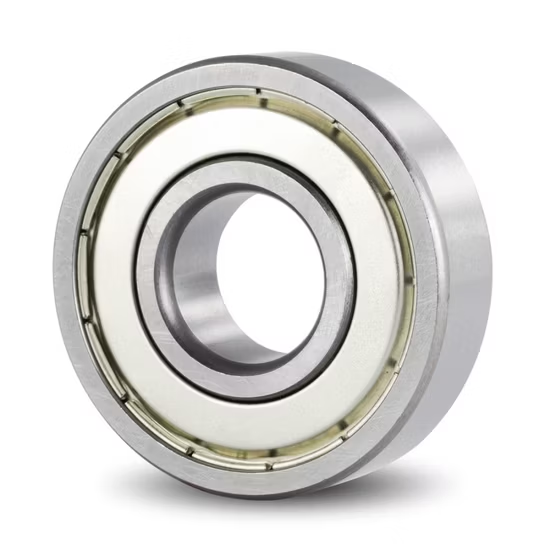

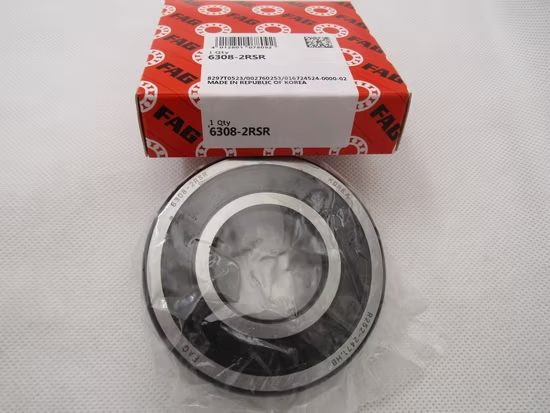

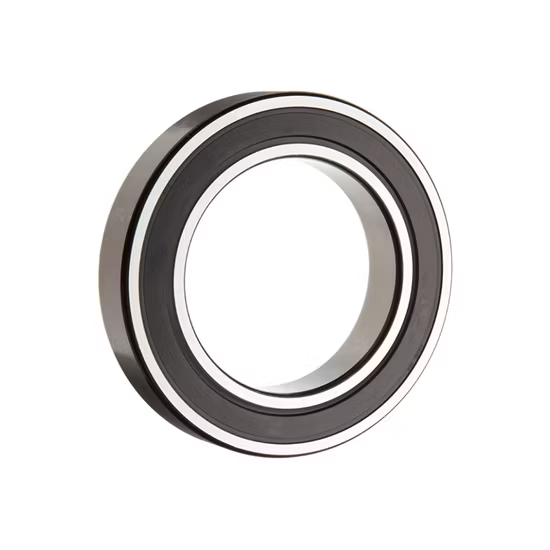
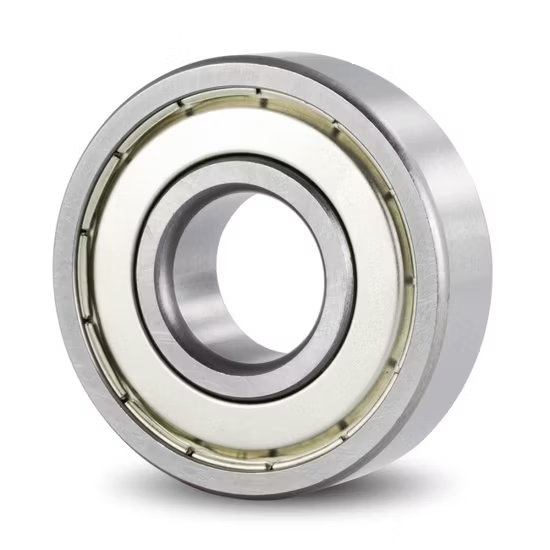
6020zz Deep Groove Ball Bearing P4/P5/P6 — Double shielded design provides reliable medium-speed dust protection for printing press parts. P4, P5, and P6 precision classes ensure strict dimensional accuracy.
Scan to verify authenticity — Every 6020zz batch includes a traceable QR code readable via the manufacturer's official application to confirm origin and metallurgical pedigree.
| Parameter | Value |
|---|---|
| Designation | 6020zz |
| Bearing Type | Deep Groove Ball Bearing |
| Bore Diameter (d) | 100 mm |
| Outside Diameter (D) | 150 mm |
| Width (B) | 24 mm |
| Seal or Shield Type | Double shielded (ZZ) / Single rubber seal (RS) |
| Precision Class | P4, P5, P6 |
| Material | Chrome Steel |
| Noise and Vibration Quality | Z1V1, Z2V2, Z3V3, Z4V4 |
| Origin | Germany / Japan / Sweden / Malaysia / China |
| Industry | Typical Applications |
|---|---|
| Printing Machinery | High-speed printing press cylinders, impression roller journals, web tensioning units |
| Electric Motors | Precision motor shafts, servo drive rotors, high-frequency spindle assemblies |
| Machine Tools | Grinding wheel spindles, precision indexing heads, high-speed milling arbor supports |
Installing a standard tolerance 6020zz deep groove ball bearing into a high-speed printing press cylinder often ends in catastrophic vibration and premature raceway spalling. The fundamental mismatch lies in ignoring the precision suffix during cross-referencing, assuming the base dimension is sufficient for dynamic stability.
Years ago on a grinding shop floor in the Yangtze River Delta, I watched a batch of standard P0 grade bearings disintegrate inside a printing mechanism because the thermal expansion at operational speeds exceeded the internal clearance limits. The resulting vibration ruined the print registration. Specifying P4 or P5 precision alongside strict Z3V3 or Z4V4 noise and vibration quality levels is not optional for these applications; it is the baseline requirement to prevent the inner ring from loosening on the shaft under centrifugal load .
A 6020zz deep groove ball bearing must maintain exact radial positioning to keep printing rollers perfectly parallel. When procurement teams cross-reference based solely on the 100x150x24 mm envelope, they frequently receive P0 or P6 grades that introduce unacceptable runout. By enforcing P4 and P5 precision classes, we ensure the dimensional and running accuracy required to eliminate the micro-vibrations that cause ghosting on printed materials.
Printing press environments generate significant frictional heat near the impression cylinders, which directly impacts internal clearance. If a standard CN clearance is installed where a C3 was required for thermal expansion, the bearing will thermally bind and seize. Furthermore, the choice between ZZ double shields and RS single rubber seals dictates the friction profile; shields offer lower friction for high-speed rotation, while rubber seals provide superior protection against ink mist and paper dust ingress .
The Z1V1 through Z4V4 quality levels define the strict acoustic and vibrational thresholds of the bearing. For high-speed printing press parts, Z3V3 or Z4V4 is mandatory to guarantee the smooth, silent operation that prevents chatter marks on the final product. The ZZ suffix indicates non-contact metal shields that retain factory grease and exclude coarse debris without adding rotational drag, whereas the RS variant utilizes a contacting rubber lip for environments heavily contaminated with atomized ink or fine paper particulate.
Deploying an incorrect precision grade or misjudging the shielding requirement leads to unplanned downtime that halts entire printing lines. According to the failure classification frameworks in ISO 15243, improper internal clearance or inadequate sealing rapidly accelerates fatigue and abrasive wear. The resulting production delays, scrapped print runs, and emergency maintenance interventions inflict severe financial damage far beyond the initial component cost .
Our technical review process catches the suffix errors that automated catalog systems miss. When you request a 6020zz, we verify that the precision class, clearance, and quality level perfectly match your specific press cylinder requirements rather than shipping a generic replacement. We provide cross-brand interchange expertise that aligns the exact internal geometry and cage design, ensuring the replacement integrates flawlessly into your existing high-speed machinery.
To ensure the selected 6020zz variant perfectly suits your machinery, please provide the operational parameters including radial loads, rotational speeds, and ambient temperatures. Sharing the specific OEM equipment number or the exact printing press cylinder position allows our engineering team to perform a precise cross-reference and L10 life calculation. Detailing the environmental exposure to ink solvents or paper dust will help us finalize the optimal shield or seal configuration.
Q: Why does ignoring the precision suffix cause printing press failures?
A: Standard P0 bearings possess wider dimensional tolerances that generate excessive radial runout at high speeds. In printing press cylinders, this runout translates directly into vibration, causing ghosting on the print and accelerating raceway fatigue. Specifying P4 or P5 ensures the tight running accuracy required for stable, high-speed impression roller operation.
Q: How do Z1V1 to Z4V4 quality levels affect press performance?
A: These designations classify the bearing's noise and vibration characteristics. Higher levels like Z3V3 and Z4V4 indicate strictly controlled geometric deviations and surface finishes. For printing machinery, this minimizes high-frequency vibrations that could otherwise transfer through the shaft and create visible chatter marks on the printed substrate.
Q: What is the selection boundary between ZZ shields and RS seals?
A: ZZ metal shields provide excellent dust exclusion with minimal friction, making them ideal for high-speed, relatively clean environments. RS rubber seals offer a contacting lip that provides superior protection against liquid contaminants like ink mist or heavy paper dust, though they introduce slightly higher frictional heat and have lower maximum speed limits.
Q: How can we verify the authenticity of the delivered bearings?
A: Counterfeiters often clone visual markings but fail to replicate secure digital tracking. We supply original packaging featuring traceable QR codes. By scanning these codes through the manufacturer's official mobile application, you can instantly verify the production batch, origin, and authenticity of the chrome steel components.
Q: How do ISO precision classes map to ABEC standards?
A: The ISO 492 standard defines precision classes such as P6, P5, and P4, which broadly correspond to ABEC 3, ABEC 5, and ABEC 7 respectively. When cross-referencing replacements for high-speed spindles, ensuring the correct ISO class is specified prevents the installation of lower-tolerance components that cannot sustain the required rotational accuracy.
Our 5-step process ensures every order is engineered, validated, and supported for optimal performance.
Technical needs assessment
Custom specifications
Free samples for $50k+
Pre-shipment inspection
On-site & predictive
Our certified engineers respond within 24 hours with detailed technical specifications, pricing, and lead time information.