01
Consultation
Technical needs assessment


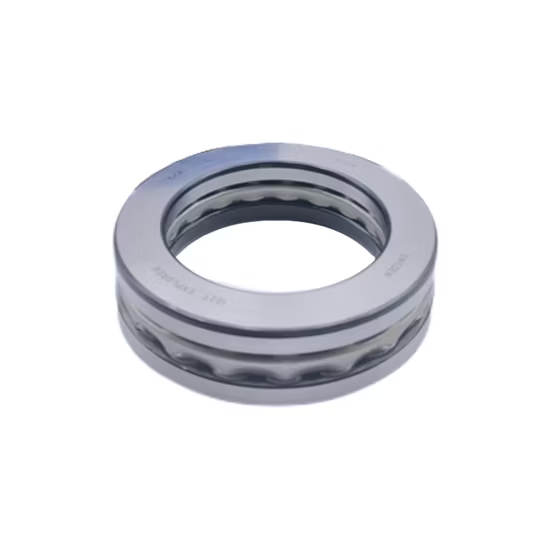
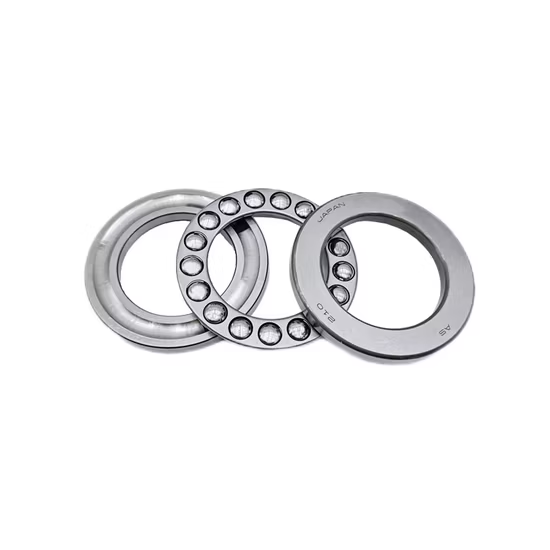


51216 Thrust Ball Bearing 80×115×28 mm — engineered to sustain heavy unidirectional axial loads for crane hooks and vertical water pumps.
Unified Multi-Brand Sourcing — Procure your 51216 thrust ball bearing alongside mixed SKF, FAG, or NTN requirements in a single consolidated shipment, eliminating the need to coordinate with multiple regional vendors.
| Parameter | Value |
|---|---|
| Designation | 51216 |
| Bearing Type | Thrust Ball Bearing |
| Bore Diameter (d) | 80 mm |
| Outside Diameter (D) | 115 mm |
| Width (T) | 28 mm |
| Cross Reference | 8216 |
| Cage Material | Pressed steel or machined brass options |
| Origin | Germany / Japan / Sweden / Malaysia / China |
| Industry | Typical Applications |
|---|---|
| Mining and Material Handling | Crane hook thrust washers and heavy-duty hoist axial retention |
| Water Treatment and Fluid Transfer | Vertical water pump shaft axial positioning and impeller support |
| Automotive and Heavy Machinery | Steering column thrust support and heavy-duty gearbox axial locating |
When specifying a 51216 thrust ball bearing for heavy lifting, the structural steel of the hook rarely fails first; the hidden axial components do.
The true point of failure in vertical load-bearing assemblies is almost always the thrust interface, not the primary hook forging.
I have seen countless procurement cycles in Dubai where buyers focused entirely on the tensile strength of the crane hook steel while ignoring the internal quality of the thrust washers. When counterfeit units with soft inner rings are installed, they deform under extreme vertical loads, causing the rolling elements to skew and the cage to fracture. This leads to sudden, catastrophic dropping of the load. Sourcing a genuine 51216 thrust ball bearing with verified batch traceability ensures the raceway hardness matches the OEM specification, preventing these silent, disastrous failures before they compromise the entire lifting mechanism .
Selecting the correct configuration for this 80x115x28mm footprint requires looking beyond the basic designation. While the standard 51216 thrust ball bearing handles unidirectional axial loads efficiently, the specific cage material and precision class must align with the operational vibration and speed of the equipment. We review the exact load dynamics of your crane hooks or vertical pumps to ensure the selected variant provides adequate fatigue resistance, leveraging our cross-brand interchange expertise to match not just the base dimensions, but the critical internal geometry required for sustained heavy-duty performance.
Vertical water pumps present a unique set of thermal and contamination challenges for thrust components. The upward axial force generated by the impeller requires the bearing to operate continuously under significant stress, often in environments where moisture ingress is a constant threat. Proper lubrication is critical; insufficient grease intervals lead to rapid raceway wear, while over-lubrication causes churning and excessive heat buildup. Furthermore, thermal expansion of the vertical shaft can alter the internal clearance dynamically. Selecting the appropriate clearance class and ensuring robust sealing arrangements are essential to prevent thermal binding and premature cage failure under these fluctuating temperature conditions .
The 51216 designation is the modern ISO standard, while 8216 represents the older designation still frequently found on legacy equipment nameplates and outdated maintenance manuals. When cross-referencing these numbers, it is vital to verify that the replacement unit matches the original equipment manufacturer's exact specifications. Although the base 51216 lacks complex angular contact suffixes, variations in cage design—such as pressed steel versus machined brass—drastically alter the speed limits and vibration resistance. A machined brass cage is often mandatory for high-speed or high-vibration applications to prevent cage disintegration, whereas pressed steel suffices for slower, steady-load crane hooks. Ensuring this internal design alignment prevents unexpected thermal binding and extends the operational lifecycle of the assembly.
Installing unverified thrust components introduces severe operational risks that extend far beyond the initial purchase price. If a soft inner ring fails in a vertical pump, the resulting shaft drop can destroy the impeller and the main motor, leading to extensive unplanned downtime and massive repair bills. In lifting applications, the consequences are even more severe, potentially resulting in catastrophic load drops and voided equipment warranties. Adhering to ISO 281 standards for dynamic load rating calculations is meaningless if the physical material properties of the installed bearing do not match the certified data. Compromised traceability inevitably translates into unacceptable safety liabilities and inflated total cost of ownership .
We eliminate the guesswork from mixed-brand orders by providing authorized coverage across all major manufacturers, allowing you to consolidate your 51216 requirements with other maintenance spares in a single shipment. Our cross-reference protocol strictly aligns clearance, cage material, and precision grades, ensuring that an 8216 replacement perfectly mirrors the original equipment's internal design rather than just matching the outer dimensions. Every unit we dispatch is backed by rigorous application-based selection reviews that account for your specific axial loads and thermal environments. Furthermore, our uncompromising stance against counterfeit goods means every batch is verified through official manufacturer channels, protecting your critical infrastructure from the devastating effects of cloned QR codes and substandard metallurgy.
To ensure optimal performance and longevity, we require detailed operational parameters to validate the selection. Please provide the exact axial load profiles, operational speeds, and ambient temperature ranges of your crane hooks or vertical pumps so our engineering team can perform a comprehensive L10 life calculation. If you are replacing legacy equipment, sharing the specific OEM part numbers or the exact 8216 cross-reference allows us to verify the required cage material and precision class. Supplying these application details guarantees that the proposed configuration perfectly aligns with your mechanical and environmental constraints.
Q: How do I verify the authenticity of a 51216 thrust ball bearing to avoid counterfeits?
A: Counterfeiters often clone QR codes and use soft inner rings that pass casual visual checks. We provide full batch traceability and official Certificate of Conformity documentation. You can verify the exact unit by scanning the provided QR code through the manufacturer's official mobile application, ensuring the metallurgical integrity and OEM precision required for heavy axial loads.
Q: What are the critical differences when cross-referencing the 51216 with the older 8216 designation?
A: While 51216 and 8216 share the same 80x115x28mm physical dimensions, the internal design may differ. It is crucial to verify the cage material and precision class during cross-referencing. Installing a standard pressed steel cage in an application that originally required a machined brass cage for high-vibration resistance will lead to rapid cage fatigue and premature failure.
Q: How does internal clearance affect the performance of this bearing in vertical water pumps?
A: Vertical pumps generate significant heat and axial thrust. Selecting the correct internal clearance is vital to accommodate thermal expansion of the shaft during operation. If a standard clearance is used where a C3 is required, the thermal expansion will eliminate the internal gap, causing severe friction, thermal binding, and eventual destruction of the raceways and rolling elements.
Q: What causes sudden cage failure in crane hook thrust applications?
A: Sudden cage failure in heavy lifting is typically caused by either inadequate lubrication or the installation of counterfeit bearings with substandard cage materials. Under extreme vertical shock loads, a poorly manufactured cage will fracture, allowing the rolling elements to skew and jam. Ensuring verified material test reports and proper grease intervals prevents these catastrophic drops.
Our 5-step process ensures every order is engineered, validated, and supported for optimal performance.
Technical needs assessment
Custom specifications
Free samples for $50k+
Pre-shipment inspection
On-site & predictive
Our certified engineers respond within 24 hours with detailed technical specifications, pricing, and lead time information.