01
Consultation
Technical needs assessment


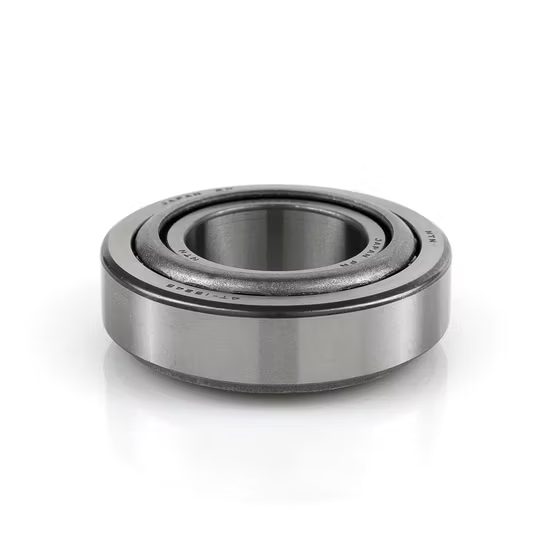
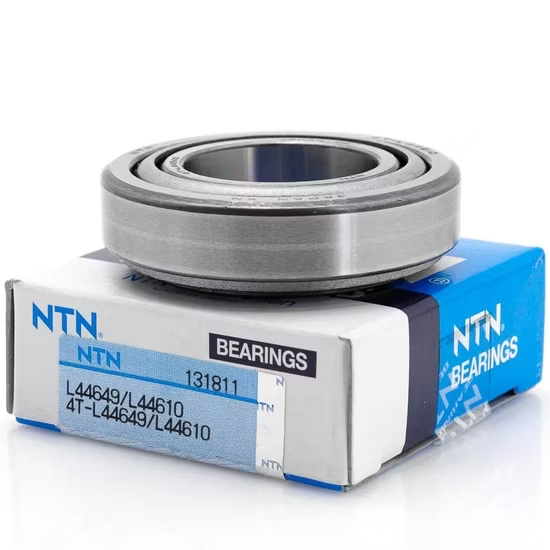

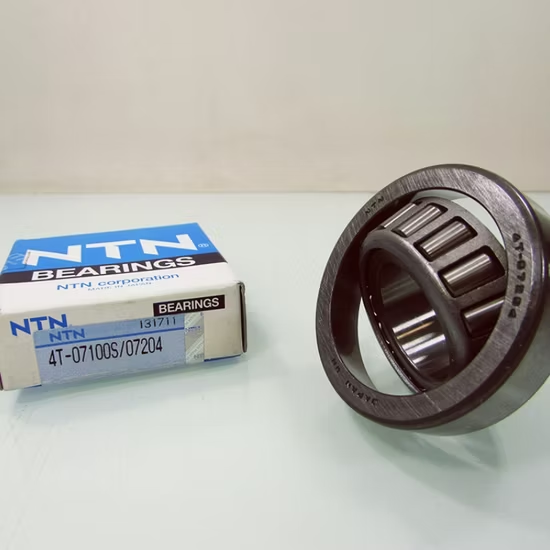

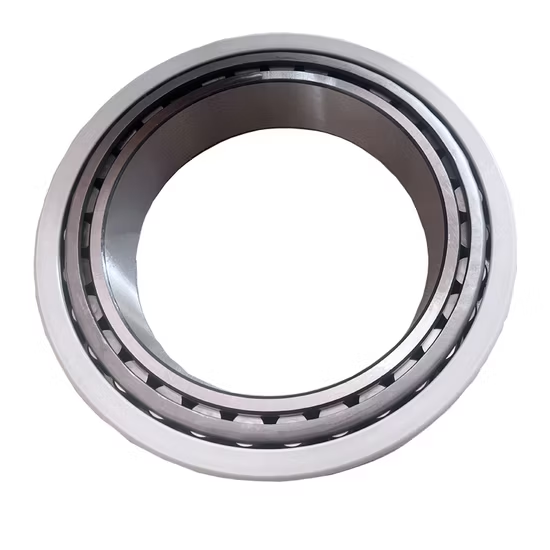
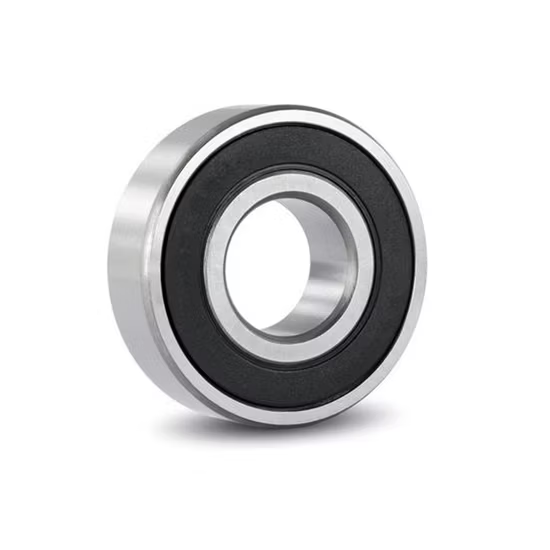
33205 Tapered Roller Bearing 25×52×22 mm P4 — engineered with GCr15 bearing steel to handle combined radial and axial loads in industrial gearboxes and truck axles. The P4 precision class ensures strict dimensional and running accuracy for applications requiring minimized vibration and tight tolerances.
Unified multi-brand sourcing — Fulfill your mixed SKF, FAG, and NSK requirements in a single consolidated shipment, eliminating the need to coordinate with multiple regional vendors for your drivetrain spares.
| Parameter | Value |
|---|---|
| Designation | 33205 |
| Bearing Type | Tapered Roller Bearing |
| Bore Diameter (d) | 25 mm |
| Outside Diameter (D) | 52 mm |
| Width (T) | 22 mm |
| Precision Class | P4 |
| Material | GCr15 Bearing Steel |
| Origin | Germany / Japan / Sweden / Malaysia / China |
| Industry | Typical Applications |
|---|---|
| Automotive & Heavy Vehicles | Wheel hub assemblies, truck axle differentials, transmission shafts |
| Industrial Power Transmission | Heavy-duty gearboxes, conveyor drive pulleys, crusher pinion shafts |
| Marine & Construction | Marine propulsion drives, building material mixer drivetrains |
Matching the basic number is never enough when thermal expansion alters internal clearances.
Procuring drivetrain components based solely on the base number often leads to catastrophic field failures. I have witnessed truck axles seize completely in desert climates because standard clearance variants were installed where thermal expansion demanded wider internal gaps. When the internal geometry binds under heat, the resulting friction destroys the raceways and scraps the entire shaft assembly . Sourcing a genuine 33205 tapered roller bearing requires verifying the exact internal design, not just the outer dimensions.
Drivetrain environments subject components to intense combined radial and axial forces. The 33205 tapered roller bearing is engineered to handle these complex load vectors simultaneously, making it ideal for truck axles and industrial gearboxes. Our technical team reviews your specific load profiles to ensure the selected variant matches the operational demands, preventing premature fatigue and ensuring reliable power transmission across your fleet or machinery lineup.
Axle housings and gearbox enclosures generate substantial heat during continuous operation. If the internal clearance is too tight, thermal expansion will eliminate the operating gap, leading to severe roller skidding and cage failure. Proper lubrication is equally critical; heavy-duty applications require high-viscosity oils or extreme-pressure greases to maintain the elastohydrodynamic film between the rollers and raceways . Contamination from road dust or industrial debris further accelerates wear if sealing solutions are inadequate.
While the base designation defines the 25x52x22mm envelope, the internal execution dictates performance. Upgrading to P4 precision ensures tighter tolerances in bore and outside diameter, which minimizes vibration and heat generation in high-speed gearboxes. The GCr15 bearing steel provides the necessary core hardness and contact fatigue strength to withstand repeated heavy shock loads. Furthermore, verifying the cage material—whether stamped steel, machined brass, or polyamide—is essential, as each offers distinct advantages regarding speed limits, vibration resistance, and operating temperature thresholds.
Installing a component with incorrect internal geometry or mismatched precision leads to unplanned downtime and cascading mechanical damage. A seized hub does not just destroy the bearing; it often scores the axle spindle and ruins the brake assembly, multiplying repair costs exponentially. According to ISO 281 frameworks, operating a component outside its verified clearance and alignment parameters drastically reduces its calculated fatigue life . These failures void equipment warranties and halt production lines without warning.
We eliminate cross-reference errors by verifying three critical parameters: base dimensions, internal clearance, and cage design. For this specific size, confusing standard clearance with a high-temperature variant is a frequent purchasing mistake that we intercept during the technical review. Our multi-brand authorization allows us to source the exact OEM equivalent, whether your maintenance protocol specifies European or Asian manufacturers. Every unit is backed by batch traceability, ensuring you receive genuine components that meet the strict metallurgical standards required for heavy-duty axles.
To ensure optimal performance, share your specific radial and axial load data, operating speeds, and ambient temperature ranges. Our engineering team will calculate the L10 fatigue life and recommend the precise internal clearance and cage configuration for your application. If you are replacing an existing unit, provide the OEM equipment number so we can execute a comprehensive cross-reference check to guarantee perfect mechanical compatibility.
Q: Why did my standard clearance bearing fail in a high-temperature axle?
A: Standard clearance is designed for normal operating temperatures. In high-heat environments like truck axles under heavy loads, thermal expansion reduces the internal gap, causing the rollers to bind and generate excessive friction. Selecting a variant with expanded internal clearance accommodates this thermal growth, preventing seizure and ensuring smooth rotation under extreme thermal stress.
Q: What advantage does P4 precision offer over standard grades in gearboxes?
A: P4 precision provides strictly controlled dimensional and running accuracy compared to standard grades. In industrial gearboxes, this tighter tolerance minimizes vibration, reduces operational noise, and ensures even load distribution across all rollers. This results in lower operating temperatures and a noticeably extended service life for high-speed or precision-driven transmission systems.
Q: How do I choose the right cage material for my application?
A: Cage selection depends on your specific speed and vibration profile. Stamped steel cages are robust and cost-effective for standard speeds, while machined brass cages offer superior durability and vibration damping in heavy-load, low-speed environments. Polyamide cages provide excellent high-speed performance and lower friction but have stricter upper temperature limits.
Q: How can I verify the authenticity of the bearings I receive?
A: Every unit we supply features batch traceability and can be verified using the manufacturer's official mobile application via QR code scanning. Additionally, we provide a Certificate of Conformity and dimensional inspection reports, allowing your maintenance team to confirm the exact origin, material grade, and precision class before installation.
Q: What information do you need to cross-reference an OEM part number?
A: Please provide the original equipment manufacturer part number, the specific machine model, and any visible markings on the old component. We will cross-reference the base dimensions and verify the internal design, clearance class, and cage material to ensure the replacement perfectly matches your equipment's original engineering specifications.
Our 5-step process ensures every order is engineered, validated, and supported for optimal performance.
Technical needs assessment
Custom specifications
Free samples for $50k+
Pre-shipment inspection
On-site & predictive
Our certified engineers respond within 24 hours with detailed technical specifications, pricing, and lead time information.