01
Consultation
Technical needs assessment

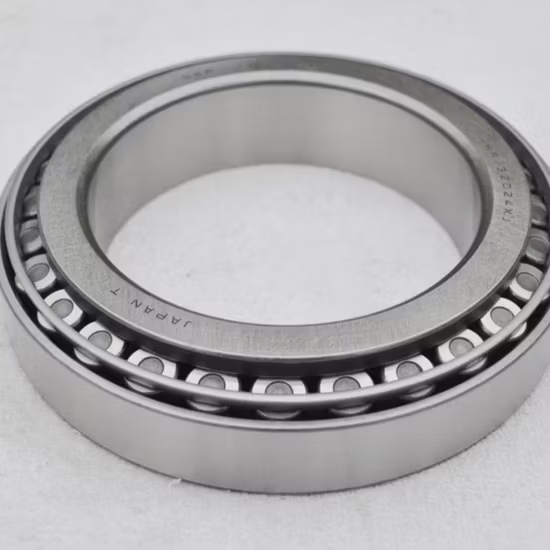
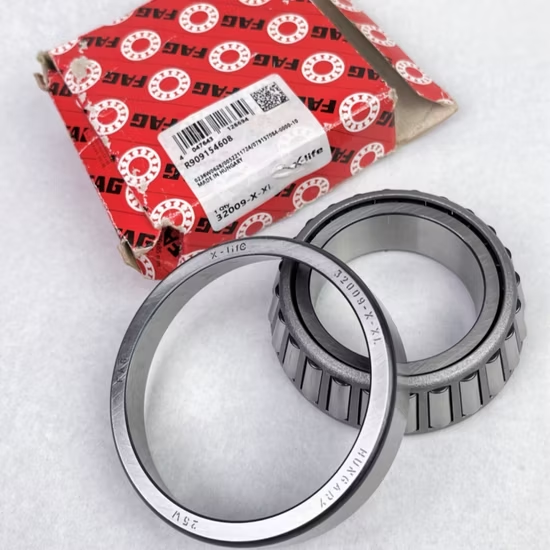
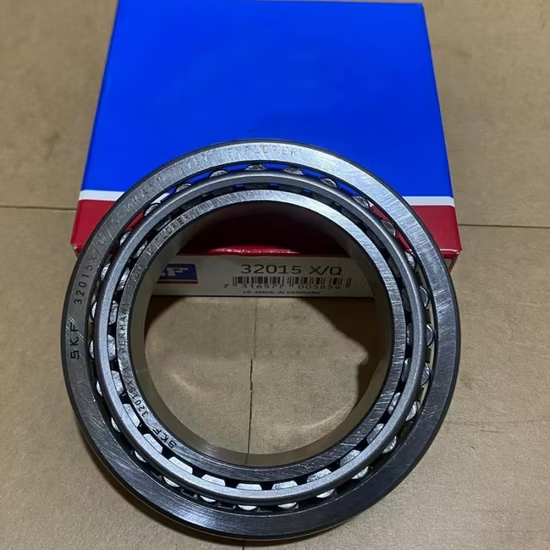

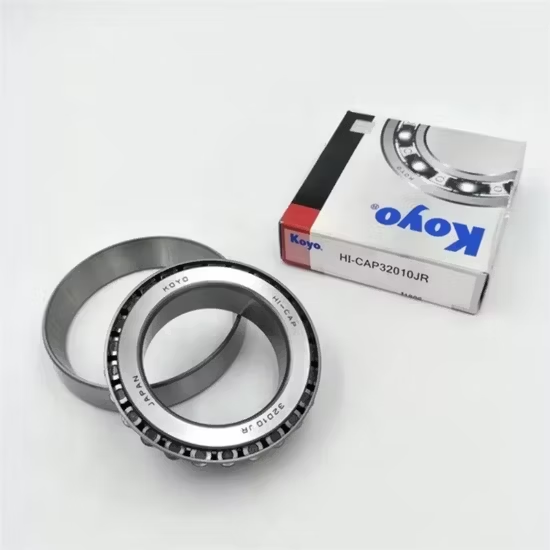
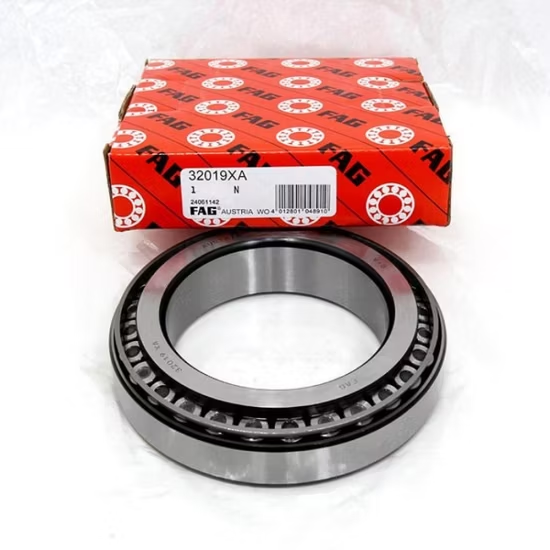
32013 32014 Tapered Roller Bearing P4 — Single-row configuration machined from GCr15 high-carbon chromium steel for reliable wear resistance. P4 precision class ensures strict dimensional accuracy for demanding industrial gearboxes and automotive wheel hubs.
Original Batch Traceability — Every 32013 32014 tapered roller bearing unit ships with manufacturer lot documentation to guarantee full supply chain transparency.
| Parameter | Value |
|---|---|
| Designation | 32013 32014 |
| Bearing Type | Tapered Roller Bearing (Single Row) |
| Precision Class | P4 |
| Cage Material | Nylon / Brass / Iron (options) |
| Material | GCr15 High Carbon Chromium Bearing Steel |
| Origin | Germany / Japan / Sweden / Malaysia / China |
| MOQ | 1 PCS |
| HS Code | 8482500090 |
| Industry | Typical Applications |
|---|---|
| Automotive & Heavy Vehicles | Wheel hub assemblies, truck axle differential pinions |
| Industrial Power Transmission | Heavy-duty gearbox reduction shafts, marine drive propeller supports |
| Building Materials & Manufacturing | Conveyor drive pulleys, crusher eccentric shaft mechanisms |
Matching the base designation without verifying internal geometry causes rapid thermal binding under continuous radial and axial loads.
Procurement teams frequently source replacements based solely on the basic 32013 or 32014 number, ignoring critical internal variations. When a standard clearance unit is forced into a high-temperature gearbox or a heavy-impact crusher application, the internal rolling elements lack the necessary thermal expansion room. This oversight leads to severe friction, cage disintegration, and sudden shaft lockups that halt entire production lines . Sourcing the correct 32013 32014 tapered roller bearing requires strict alignment of precision and internal design to prevent these catastrophic field failures.
Selecting the right configuration goes far beyond basic dimensional checks. We evaluate the specific load profiles, operating temperatures, and rotational speeds of your equipment to recommend the optimal cage material and precision grade. This application-driven approach ensures that every 32013 32014 tapered roller bearing we supply performs reliably in its designated housing, eliminating the guesswork from your maintenance planning.
Industrial gearboxes and heavy vehicle axles subject bearings to intense combined loading and fluctuating thermal cycles. Under high rotational speeds, friction generates substantial internal heat, demanding adequate internal clearance to prevent the rolling elements from skewing or binding. Furthermore, environments contaminated with abrasive dust or moisture require robust sealing solutions and appropriate lubrication regimes to protect the raceways. Ignoring these operational variables during the specification phase drastically accelerates surface fatigue and spalling .
The P4 precision class guarantees tighter dimensional tolerances and superior running accuracy compared to standard grades, which is vital for minimizing vibration in high-speed marine drives and industrial gearboxes. To match diverse operational profiles, these units are available with nylon, brass, or iron cage options. Polyamide cages offer excellent high-speed performance and lower noise levels, while machined brass or pressed steel cages provide superior structural rigidity and durability under heavy shock loads and elevated temperatures. The GCr15 high-carbon chromium steel construction ensures deep through-hardening, delivering the necessary contact fatigue resistance for demanding power transmission tasks.
Installing an incorrectly specified bearing inevitably triggers a cascade of mechanical failures that extend far beyond the component itself. When internal clearances are mismatched to the thermal environment, the resulting excessive friction rapidly degrades the lubricant and destroys the shaft seals. This localized failure often contaminates the entire gearbox oil system, leading to catastrophic gear tooth damage and unplanned downtime that severely impacts production targets and voids equipment warranties .
Our cross-referencing protocol strictly aligns the base designation, cage material, and precision class, preventing the costly mismatches that plague standard catalog ordering. We provide authorized multi-brand coverage, allowing you to consolidate mixed-brand requirements into a single, fully documented shipment. Every batch is backed by comprehensive manufacturer traceability, ensuring you receive genuine products with verifiable origins. Furthermore, our engineering team reviews your specific application parameters to validate the selection before dispatch, eliminating the technical blind spots that cause premature field failures.
To ensure optimal performance and longevity, please provide detailed operational parameters including radial and axial load profiles, rotational speeds, and expected operating temperatures. Supplying the original OEM equipment numbers allows our technical team to perform precise cross-reference verification and confirm the exact internal geometry required. This collaborative review process guarantees that the supplied components perfectly match your mechanical design and maintenance intervals.
Q: Why must clearance and cage material align during cross-referencing?
A: Matching only the base number ignores internal geometry. Incorrect clearance causes thermal binding at high temperatures, while the wrong cage material fails under specific speed or shock loads. We verify all three parameters to ensure the replacement matches the exact operational demands of your machinery, preventing premature downtime.
Q: How do nylon, brass, and iron cages differ in application?
A: Nylon cages reduce weight and noise, excelling in high-speed, low-vibration environments. Brass cages offer superior durability and heat dissipation for heavy shock loads. Iron cages provide a cost-effective, robust solution for standard industrial speeds. Selecting the correct option depends entirely on your specific thermal and mechanical operating conditions.
Q: What is the practical difference between P4 and P0 precision?
A: P4 precision enforces significantly tighter dimensional and running accuracy tolerances than standard P0 grades. This strict control minimizes vibration, reduces operational noise, and ensures uniform load distribution across the rolling elements. It is essential for high-speed gearboxes and marine drives where shaft deflection and vibration must be strictly controlled.
Q: How can I verify the authenticity of the supplied bearings?
A: Every unit includes comprehensive manufacturer batch traceability and a Certificate of Conformity. You can verify authenticity instantly by scanning the provided QR code through the official brand application. This direct digital link confirms the original production facility and prevents the installation of dangerous counterfeit components.
Q: What installation practices protect the bearing during mounting?
A: Always use induction heating for the inner ring to achieve the necessary thermal expansion without applying destructive mechanical force. Avoid hammering directly on the rings or cage, as this causes micro-fractures in the high-carbon steel. Proper alignment and controlled drive-in procedures are critical to preserving the factory-set internal geometry.
Our 5-step process ensures every order is engineered, validated, and supported for optimal performance.
Technical needs assessment
Custom specifications
Free samples for $50k+
Pre-shipment inspection
On-site & predictive
Our certified engineers respond within 24 hours with detailed technical specifications, pricing, and lead time information.