01
Consultation
Technical needs assessment


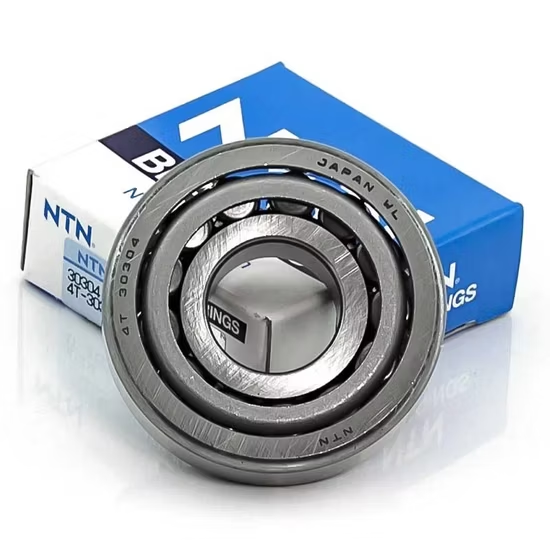
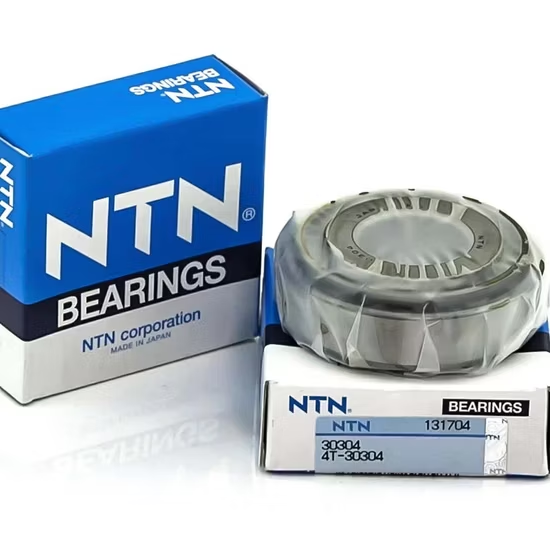

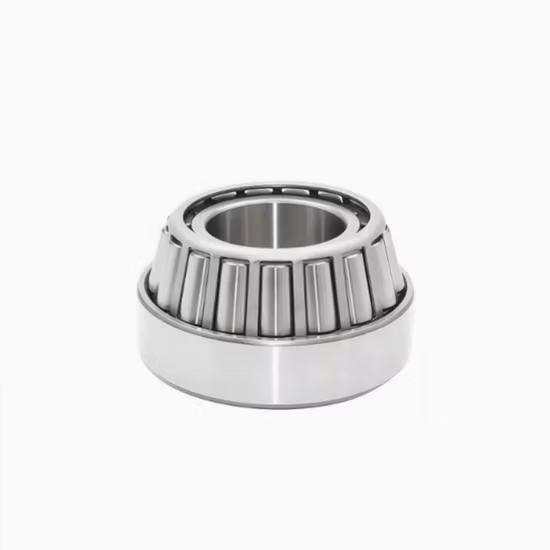

30304 Tapered Roller Bearing P4 — Manufactured from GCr15 bearing steel, this P4 precision class ensures tight running accuracy for industrial gearboxes and automotive wheel hubs. Multiple cage options allow specific selection based on operating conditions.
Full Batch Traceability — Every 30304 unit ships with manufacturer lot records and QR verification to eliminate counterfeit risks in heavy-duty applications.
| Parameter | Value |
|---|---|
| Designation | 30304 |
| Bearing Type | Tapered Roller Bearing |
| Precision Class | P4 |
| Material | GCr15 bearing steel |
| Cage Material | Available in nylon, brass, or iron variants |
| Seal or Shield Type | Open design for external lubrication |
| Origin | Manufacturer's production facilities |
Note: The variant "30304D" occasionally appears in market listings; the "D" suffix is unverified and requires manufacturer catalog confirmation for internal design specifics.
| Industry | Typical Applications |
|---|---|
| Industrial Gearboxes | Pinion shafts and reduction gear supports |
| Automotive & Heavy Vehicles | Wheel hubs and differential assemblies |
| General Manufacturing | Conveyor drive pulleys and material handling rollers |
| Mining & Crushing | Vibrating screen exciters and crusher main shafts |
Base number matching without verifying internal geometry leads to rapid thermal seizure under heavy loads.
Procurement teams often assume that any bearing stamped with the correct base number will fit and function identically. In reality, overlooking cage material and precision suffixes causes severe operational mismatches. I have witnessed mining operations in Latin America grind to a halt because a standard replacement was installed in a high-temperature zone, resulting in cage disintegration within days . When sourcing a 30304 tapered roller bearing, assuming equivalence across different manufacturers without checking the exact internal design is a primary driver of unplanned downtime.
Selecting the correct cage material for the 30304 tapered roller bearing directly dictates its survival in high-vibration environments. Brass cages offer superior resistance to shock loads and are ideal for mining crushers, while nylon variants reduce weight and friction for high-speed automotive wheel hubs. Iron cages provide a cost-effective middle ground for general manufacturing conveyors. Our technical review ensures the selected variant aligns perfectly with your specific operational speeds and thermal conditions.
Tapered roller bearings must manage combined radial and axial loads while dissipating significant friction heat. In heavy-duty gearboxes, thermal expansion can rapidly eliminate internal clearance if the initial setup is too tight, leading to catastrophic binding. Proper lubrication is equally critical; open designs require precise external grease or oil bath maintenance to prevent contaminant ingress. Misjudging the operating temperature range directly compromises the lubricant film thickness .
Achieving P4 precision ensures noticeably tighter dimensional and running accuracy compared to standard grades, which is essential for minimizing vibration in high-speed pinion shafts. The use of GCr15 bearing steel provides the necessary core hardness and wear resistance to withstand repetitive shock loading. Because internal geometries vary, verifying the exact roller profile and raceway angles is mandatory to ensure the bearing handles the specific load distribution of your equipment without premature edge stressing.
Installing a mismatched bearing inevitably triggers a cascade of mechanical failures. Beyond the immediate cost of the replacement part, the resulting unplanned downtime disrupts entire production lines and voids equipment warranties. Catastrophic damage to adjacent shafts and housings often occurs when a bearing seizes at operational speed . These compounding expenses far exceed the initial investment in proper technical verification.
Our approach eliminates the guesswork inherent in multi-brand procurement. We verify cross-references by matching internal clearance, cage material, and precision suffixes, rather than relying solely on the base designation. For applications involving extreme shock loads, we review the specific roller profile to prevent edge loading. Every shipment includes full batch traceability, ensuring that the exact metallurgical and dimensional properties are documented and verifiable before installation begins.
To ensure accurate selection and cross-reference validation, please provide your specific radial and axial load profiles, operational speeds, and typical temperature ranges. Supplying the exact OEM equipment number or the dimensions of the available mounting space allows our engineering team to verify the L10 life calculation and confirm the optimal cage material for your application.
Q: How do I verify the authenticity of the 30304 bearing upon delivery?
A: Every unit is supplied with batch traceability documentation and a unique QR code. You can scan this code using the manufacturer's official mobile application to instantly verify the production lot, origin, and authenticity, ensuring the bearing is a genuine product and not a visually similar counterfeit.
Q: Why is it critical to match cage material during cross-brand interchange?
A: Different manufacturers use varying cage designs and materials for the same base number. Installing a nylon cage in a high-temperature mining application where a brass cage is required will lead to rapid thermal degradation and cage failure, causing severe equipment damage and unplanned downtime.
Q: What running accuracy benefits does the P4 precision class provide?
A: The P4 precision class guarantees noticeably tighter dimensional and running tolerances than standard P0 or P6 grades. This enhanced accuracy minimizes vibration and heat generation, which is particularly crucial for maintaining stability and extending service life in high-speed industrial gearbox applications.
Q: How should I choose between nylon, brass, and iron cage options?
A: The choice depends on your specific operating environment. Brass cages are highly recommended for heavy shock loads and elevated temperatures, nylon cages are ideal for high-speed operations requiring low friction, and iron cages offer a reliable balance for general-purpose, moderate-load machinery applications.
Our 5-step process ensures every order is engineered, validated, and supported for optimal performance.
Technical needs assessment
Custom specifications
Free samples for $50k+
Pre-shipment inspection
On-site & predictive
Our certified engineers respond within 24 hours with detailed technical specifications, pricing, and lead time information.