01
Consultation
Technical needs assessment

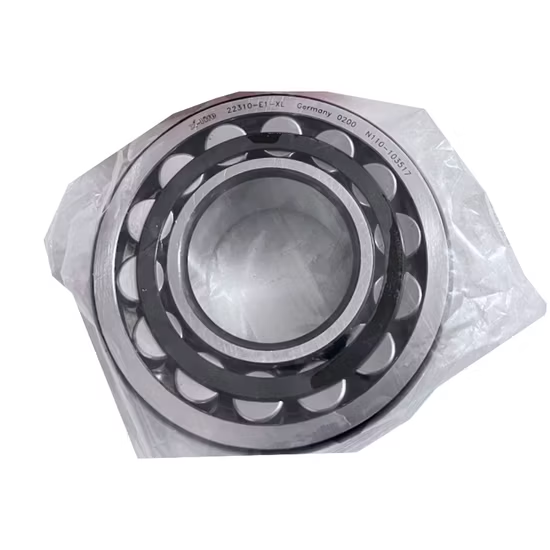
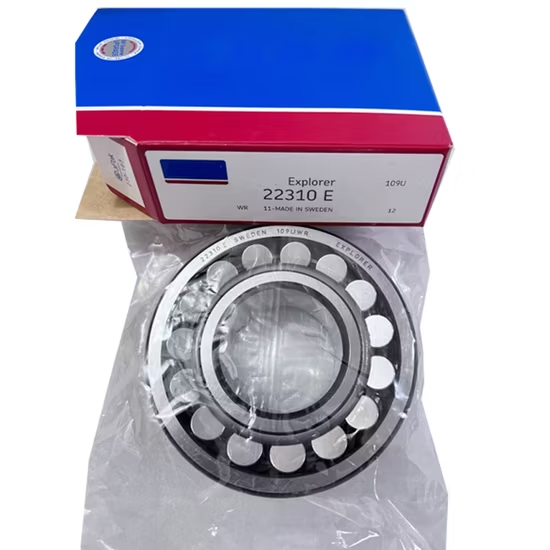

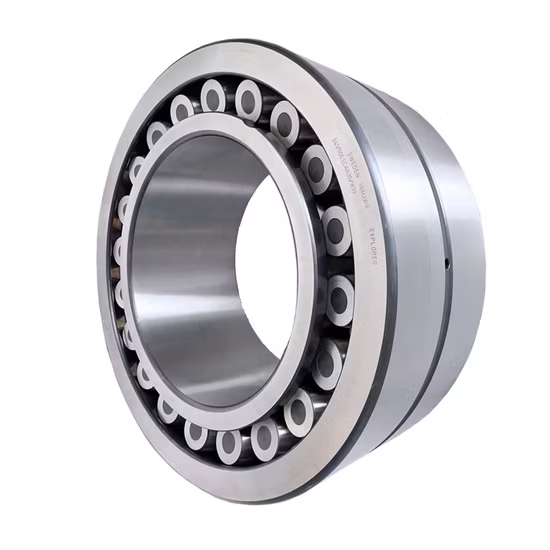
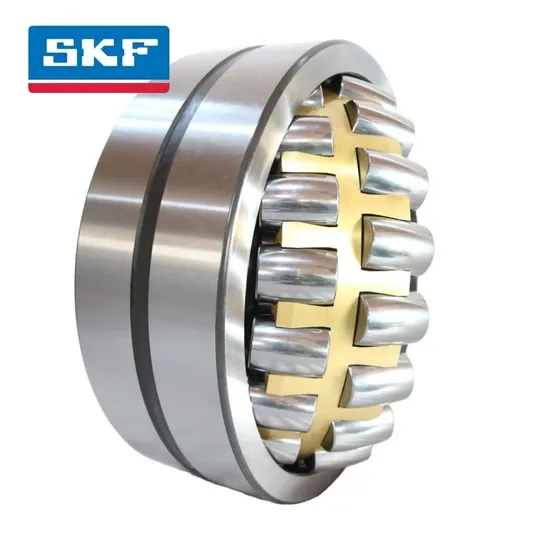
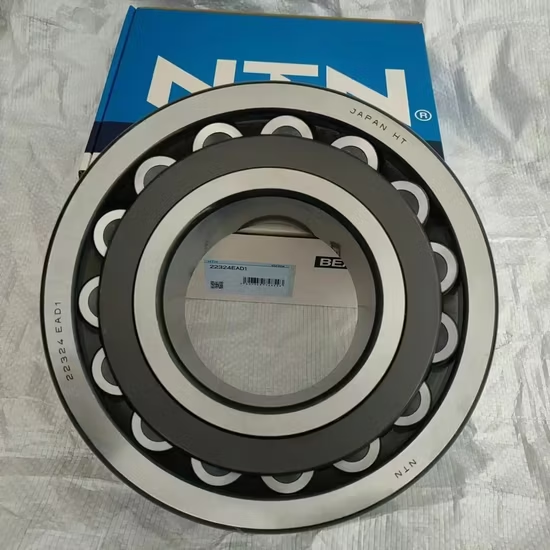
24156 Spherical Roller Bearing features a steel cage providing high structural strength for heavy loads and high-vibration conditions, while the wide series profile ensures exceptional radial capacity.
Traceable Batch Origins — Every 24156 unit ships with manufacturer lot documentation and QR verification to eliminate counterfeit risks in heavy-duty circuits.
| Parameter | Value |
|---|---|
| Designation | 24156 |
| Bearing Type | Spherical Roller Bearing |
| Bore Diameter (d) | 280 mm |
| Cage Material | Steel Cage |
| Origin | Germany / Japan / Sweden / Malaysia / China |
| HS Code | 8482500090 |
Note: Cross-reference codes such as 4053756, 4053760, and 4053764 require manufacturer catalog confirmation before substitution.
| Industry | Typical Applications |
|---|---|
| Mining and crushing | Jaw crusher toggle plates, vibrating screen eccentric shafts |
| Steel and metallurgy | Continuous casting machine segments, rolling mill work rolls |
| Material handling | Bucket elevator head pulleys, heavy-duty conveyor drive shafts |
Matching the bore and outer diameter is only the first step; ignoring internal clearance and cage design guarantees field failure.
When sourcing a 24156 spherical roller bearing supplier, procurement teams often focus strictly on the base designation. However, a wide-series spherical roller bearing operating in a high-temperature kiln or a high-vibration screen faces severe thermal expansion and shock loads. If the internal clearance is not upgraded to accommodate thermal growth, or if the cage material cannot withstand the specific vibration frequency, the bearing will seize or fracture prematurely . We review every suffix and application parameter to ensure the internal geometry matches your actual operating environment, preventing catastrophic downtime caused by simple cross-reference oversights.
Selecting the correct 24156 spherical roller bearing supplier involves more than checking stock availability; it requires validating the internal design against the specific load profile. The wide-series cross-section of this model provides exceptional radial load capacity, making it ideal for heavy machinery like vibrating screens and crushers. Our engineering review ensures that the selected variant features the appropriate cage design and clearance class to handle the combined radial and axial forces typical in these demanding applications, securing long-term operational stability.
In environments like steel mills and mining operations, equipment experiences intense shock loads and significant temperature fluctuations. Standard internal clearance often proves insufficient when the inner ring expands due to heat, leading to preload and eventual thermal seizure. Furthermore, heavy vibration demands a cage structure that resists fatigue cracking over extended periods. Proper lubrication intervals and contamination exclusion are equally critical, as abrasive dust can rapidly degrade the raceways if the sealing arrangement is inadequate for the specific housing design .
The "241" prefix identifies this unit as a wide-series spherical roller bearing, offering a larger roller complement and enhanced radial load capacity compared to standard width equivalents. The "56" suffix dictates the 280 mm bore diameter, establishing the fundamental mounting dimensions. The inclusion of a steel cage provides high structural rigidity, which is advantageous in applications with high radial loads and moderate vibration. However, the selection of internal clearance—such as C3 or C4—is paramount. While a standard CN clearance might suffice for ambient temperature conveyors, high-heat applications necessitate greater internal play to compensate for thermal expansion and prevent the rollers from binding against the outer ring raceway.
Overlooking the precise clearance class or cage material during procurement leads to severe operational consequences. A bearing installed with insufficient internal clearance in a high-temperature zone will experience thermal binding, resulting in unplanned downtime and catastrophic damage to the shaft and housing. Conversely, using a standard cage in a high-vibration screen can cause premature cage fatigue and roller skewing. These failures not only void warranty claims but also escalate maintenance costs through secondary component damage and lost production time, highlighting the critical need for precise specification matching .
Our procurement process eliminates the risks associated with mixed-brand inventories by enforcing strict cross-reference validation. When substituting equivalents for the 24156, we verify that the internal clearance, cage material, and roller profile perfectly align, rather than just matching the base number. Every shipment includes batch traceability to the manufacturer, allowing you to verify authenticity via official brand applications. This rigorous approach ensures that the bearing you install possesses the exact metallurgical and geometric properties required for your heavy-duty equipment, completely bypassing the counterfeit market.
To ensure the 24156 variant matches your specific machinery, please provide detailed operating parameters including radial and axial loads, rotational speed, and ambient operating temperatures. Sharing the OEM equipment number or the exact housing design allows our technical team to perform a comprehensive cross-reference check and L10 life calculation. This data enables us to confirm the optimal internal clearance and cage configuration, delivering a solution engineered precisely for your application environment.
Q: Why must internal clearance and cage suffixes be matched alongside the base 24156 designation?
A: The base number only defines the outer dimensions and bore size. In heavy-duty applications, ignoring the internal clearance can lead to thermal seizure if the shaft expands, while an incorrect cage material may fail under high vibration. Matching all suffixes ensures the internal geometry withstands your specific thermal and mechanical loads without premature failure.
Q: How does a steel cage perform compared to brass in high-vibration equipment like vibrating screens?
A: A steel cage offers excellent structural rigidity and handles high radial loads effectively, making it suitable for many heavy-duty applications. However, in extremely high-vibration environments, a machined brass cage is often preferred for its superior damping properties and resistance to fatigue cracking. We evaluate your specific vibration frequency to recommend the optimal cage material.
Q: What is the procedure for verifying the authenticity of the delivered 24156 bearings?
A: Every bearing we supply features a unique QR code linked to the manufacturer's official database. By scanning this code with the brand's official mobile application, you can instantly verify the production batch, origin, and authenticity. This process effectively eliminates the risk of installing counterfeit bearings with compromised metallurgy.
Q: How do I select the correct clearance class for high-temperature kiln applications?
A: High-temperature environments cause the inner ring to expand more than the outer ring, reducing internal clearance. For kiln applications, a C3 or C4 clearance is typically required to maintain a positive operational clearance at operating temperature. We calculate the thermal expansion based on your specific temperature gradient to specify the exact clearance class needed to prevent thermal binding.
Our 5-step process ensures every order is engineered, validated, and supported for optimal performance.
Technical needs assessment
Custom specifications
Free samples for $50k+
Pre-shipment inspection
On-site & predictive
Our certified engineers respond within 24 hours with detailed technical specifications, pricing, and lead time information.


