01
Consultation
Technical needs assessment

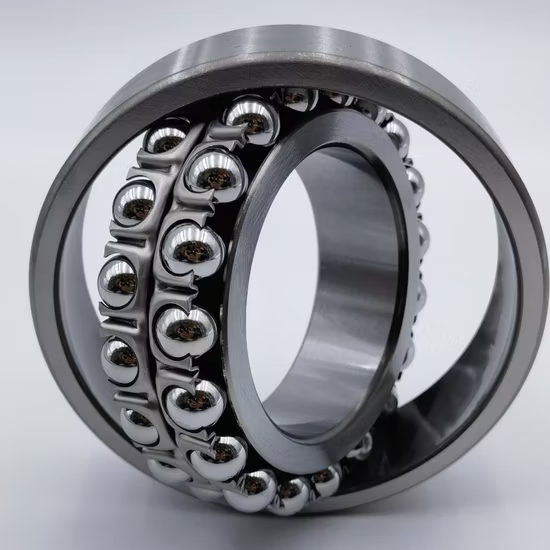
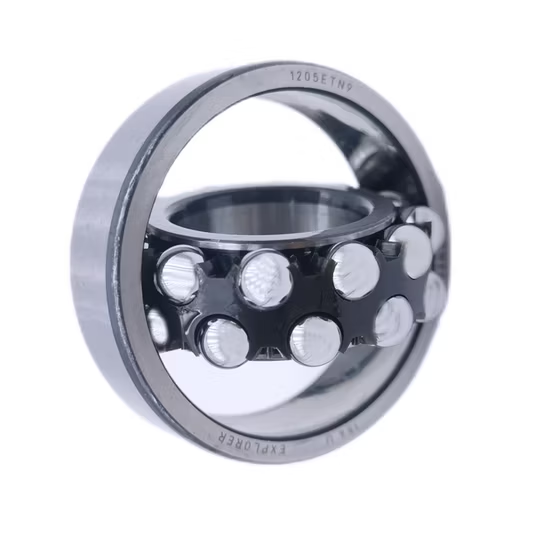
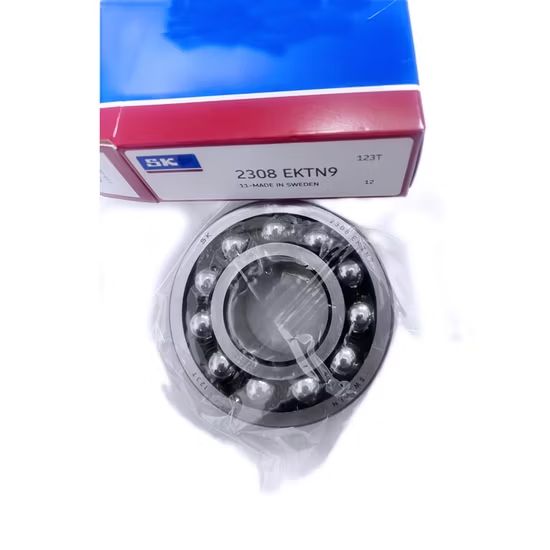
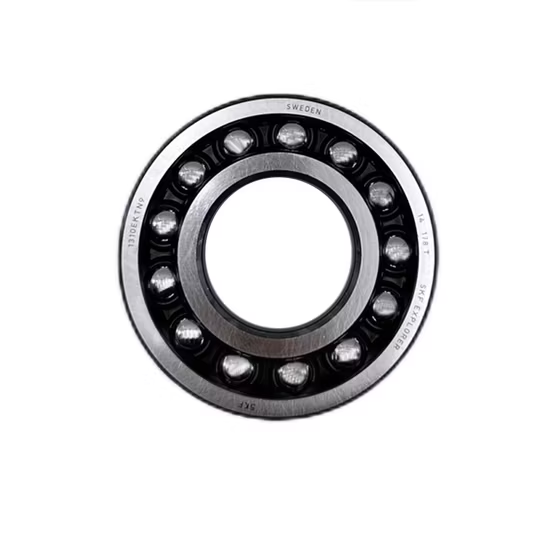
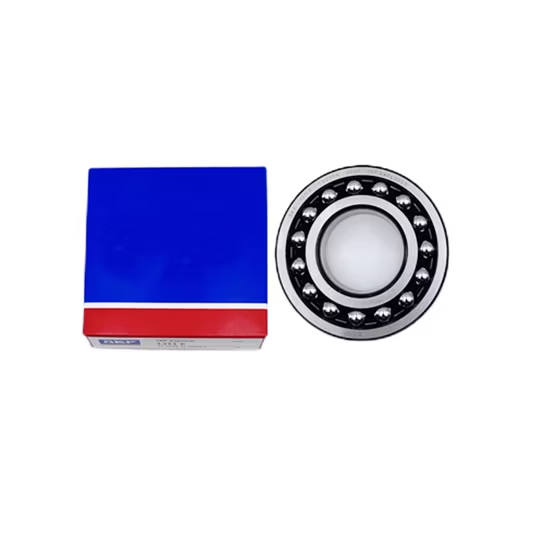

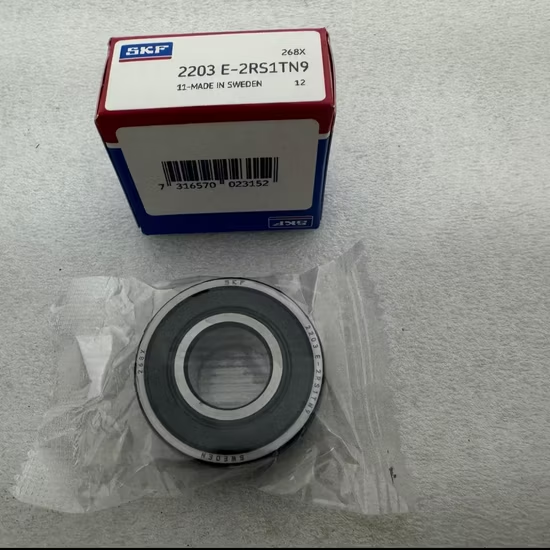
1210etn9 Self-Aligning Ball Bearing — optimized internal design increases radial load capacity for agricultural and material handling applications.
Unified Multi-Brand Sourcing — Consolidate mixed-brand orders into a single shipment with matched batch documentation for your entire 1210etn9 self-aligning ball bearing requirement.
| Parameter | Value |
|---|---|
| Designation | 1210etn9 |
| Bearing Type | Self-Aligning Ball Bearing |
| Bearing Style | Open, Rubber Seals, Iron Seals |
| Internal Design | Optimized (E) |
| Cage Material | Glass fiber reinforced polyamide (TN9) |
| Origin | Germany, Japan, Sweden, Malaysia, China |
| HS Code | 848210 |
| Industry | Typical Applications |
|---|---|
| Agricultural Machinery | Harvester threshing cylinders, tractor PTO shaft supports |
| Material Handling | Conveyor belt return idlers, bucket elevator tail pulleys |
| Textile Machines | Yarn guide rollers, spinning frame drafting zones |
| General MRO | Fan shaft supports, light-duty pump drives |
Matching the cage suffix to the operational speed prevents catastrophic structural failure.
I once inspected a site in Dubai where a batch of similar self-aligning bearings failed prematurely. The procurement team matched the base number but overlooked the cage suffix, installing standard stamped steel cages in a high-speed application. The metal cages fractured under centrifugal stress, causing immediate unplanned downtime. When sourcing a 1210etn9 self-aligning ball bearing, ignoring the TN9 polyamide designation and accepting a generic brass or steel alternative leads to severe vibration and eventual cage disintegration . Cross-referencing requires strict alignment of the internal design and cage material, not just the basic dimensions.
The 1210etn9 self-aligning ball bearing is engineered for applications where shaft deflection or housing misalignment is unavoidable. The optimized internal geometry (E) increases the radial load capacity, making it suitable for heavy-duty agricultural and material handling equipment. As an authorized distributor, I ensure that every cross-reference we provide accounts for the specific misalignment angle and operational speed of your machinery. This prevents the outer ring from binding in the housing when the shaft flexes under load.
In dusty environments like textile mills or outdoor conveyors, contamination is the primary enemy of bearing longevity. While the open variant requires robust external sealing and frequent relubrication, the rubber-sealed and iron-sealed options provide built-in protection against particulate ingress. However, sealed variants introduce contact friction, which generates internal heat . Selecting the correct seal type involves balancing the need for contamination exclusion against the thermal limits of the polyamide cage and the lubricant.
The "E" suffix indicates an optimized internal design with larger or more numerous rolling elements, directly enhancing the radial load rating compared to standard basic designs. The "TN9" suffix specifies a glass fiber reinforced polyamide cage. This material is noticeably lighter than brass, reducing centrifugal forces at higher rotational speeds. The polyamide cage also offers superior sliding properties and emergency running characteristics, though it is constrained by the thermal limits of the polymer matrix. Understanding these suffixes is critical when evaluating cross-references like 1210EM, where the "M" denotes a machined brass cage suited for entirely different vibration and temperature profiles.
Accepting a substitute bearing that matches the bore and outside diameter but lacks the TN9 cage or E internal design often results in premature failure. The machinery might run initially, but the incorrect cage material will degrade under specific vibrational frequencies, leading to catastrophic damage to the shaft and housing. According to ISO 281 standards, the calculated rating life drops significantly when operational conditions deviate from the specific bearing design parameters . This voids equipment warranties and inflates maintenance budgets through repeated, unnecessary replacements.
Our procurement process guarantees that the 1210etn9 self-aligning ball bearing you receive matches the exact suffix requirements of your application. We verify the glass fiber reinforced polyamide cage and optimized internal design against the manufacturer's original specifications, eliminating the risk of receiving a visually similar but functionally inferior substitute. Our cross-brand interchange expertise ensures that if we supply an equivalent from another authorized brand, the clearance, cage material, and internal geometry are strictly aligned. Every shipment includes full batch traceability, allowing your maintenance team to verify the origin and authenticity of the components.
To ensure the 1210etn9 self-aligning ball bearing is the optimal choice for your specific machinery, please provide the exact radial and axial loads, operational speeds, and ambient temperatures. If you are replacing an existing component, share the OEM equipment number or the exact designation printed on the old bearing, including all suffixes. This data allows our engineering team to perform a rigorous cross-reference check and verify the L10 life calculation, ensuring you receive a component that perfectly matches your mechanical and environmental requirements.
Q: Why must cross-references match the TN9 suffix exactly?
A: The TN9 suffix specifies a glass fiber reinforced polyamide cage, which is significantly lighter than brass and designed for higher speeds. Substituting a brass-caged equivalent like 1210EM alters the centrifugal forces and lubrication requirements, potentially causing thermal binding or cage failure in high-speed applications. Exact suffix matching ensures the dynamic performance remains intact.
Q: How does the E suffix affect the load capacity?
A: The E suffix denotes an optimized internal design, typically featuring larger or more numerous rolling elements. This structural enhancement increases the radial load rating compared to standard basic designs. When cross-referencing, verifying the E suffix is crucial to ensure the replacement bearing can withstand the specific radial forces of your agricultural or material handling equipment.
Q: How can I verify the authenticity of the polyamide cage?
A: Every genuine bearing we supply features batch traceability and a unique QR code. By scanning this code with the manufacturer's official application, you can verify the exact production details, including the confirmation of the TN9 glass fiber reinforced polyamide cage and the optimized internal geometry, protecting your operation from counterfeit components with inferior materials.
Q: What are the installation considerations for the self-aligning feature?
A: While the outer ring can accommodate angular misalignment, the shaft and housing seating must be machined to precise tolerances. Excessive tight fits on the outer ring will restrict the self-aligning function, transferring bending moments directly to the polyamide cage. Proper mounting ensures the inner ring and ball assembly can freely pivot within the spherical outer raceway.
Q: Which seal type is best for dusty conveyor environments?
A: For highly contaminated environments like bucket elevators, rubber-sealed variants provide superior exclusion of fine particulate matter compared to iron shields. However, rubber seals generate more friction and heat. The selection must balance the need for contamination protection against the operational speed to ensure the internal temperature does not exceed the limits of the TN9 polyamide cage.
Our 5-step process ensures every order is engineered, validated, and supported for optimal performance.
Technical needs assessment
Custom specifications
Free samples for $50k+
Pre-shipment inspection
On-site & predictive
Our certified engineers respond within 24 hours with detailed technical specifications, pricing, and lead time information.