01
Consultation
Technical needs assessment

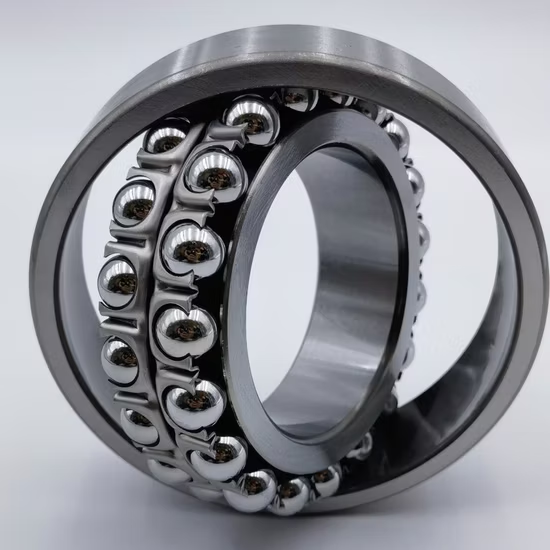
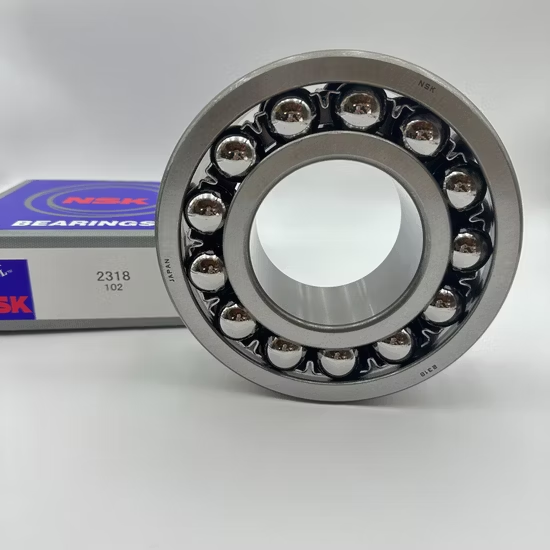
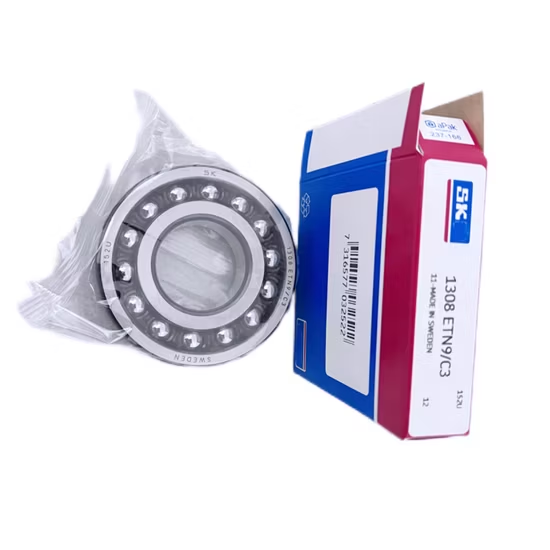
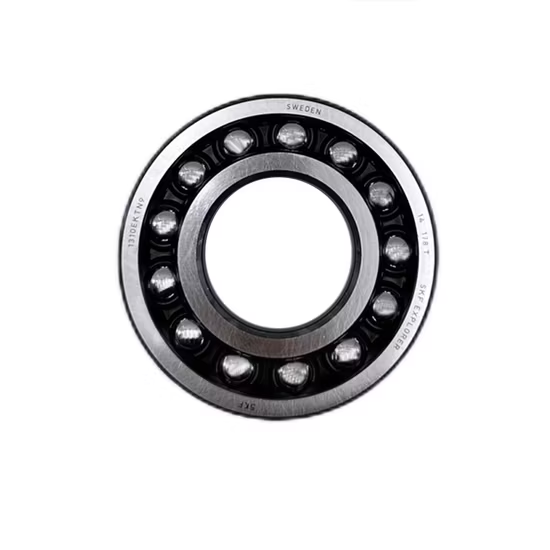

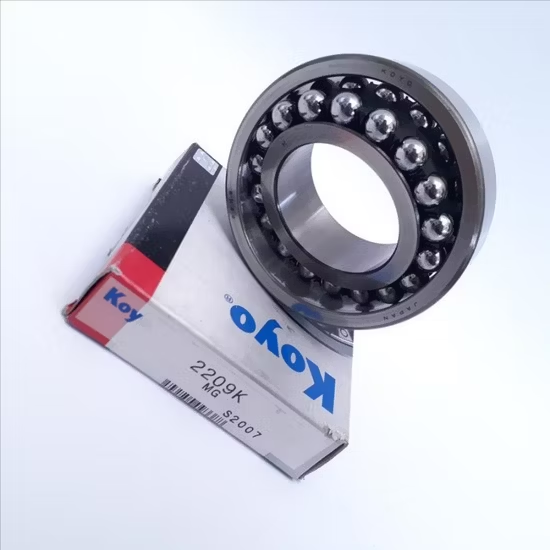
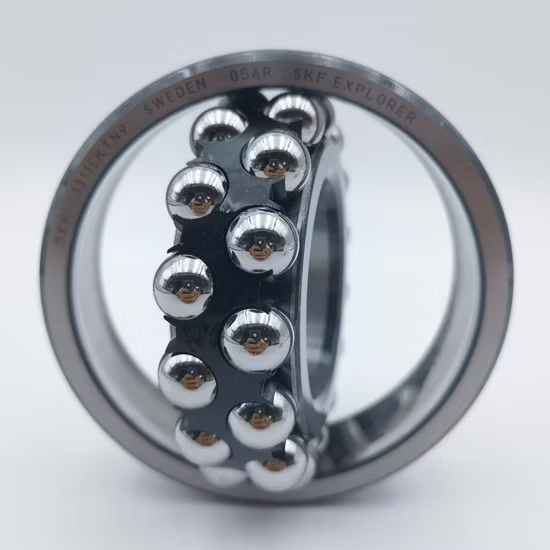
1210ektn9 Self-Aligning Ball Bearing integrates a 1:12 tapered bore for secure adapter sleeve mounting and a fiberglass-reinforced polyamide cage to ensure smooth, low-noise operation across electric motors and gearboxes.
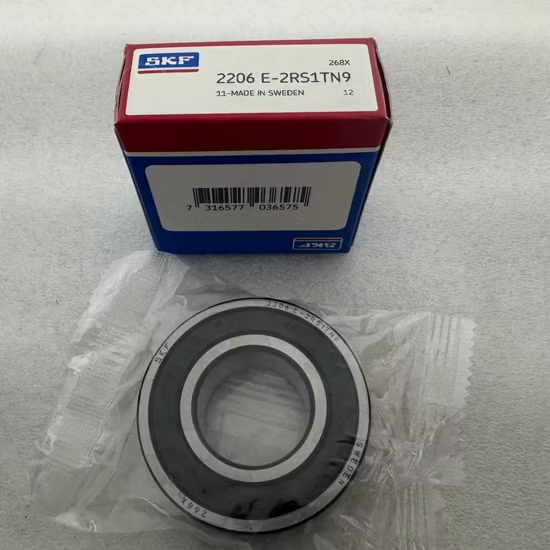
Original Batch Traceability — Every 1210ektn9 unit ships with manufacturer lot records linking directly to the production facility.
| Parameter | Value |
|---|---|
| Designation | 1210ektn9 |
| Bearing Type | Self-Aligning Ball Bearing |
| Bore Type | Tapered 1:12 (k suffix) |
| Cage Material | Fiberglass-reinforced polyamide (tn9 suffix) |
| Bearing Style | Open, Rubber Seals, Iron Seals (available options) |
| Origin | Germany / Japan / Sweden / Malaysia / China |
| HS Code | 848210 |
Note: The 'e' suffix remains an unverified designation requiring manufacturer catalog confirmation.
| Industry | Typical Applications |
|---|---|
| Electric Motors | Rotor shaft support requiring misalignment tolerance |
| Pumps | Impeller shaft mounting where housing deflection occurs |
| Conveyors | Idler roller journals subject to frame flexing |
| Gearboxes | Intermediate shafts experiencing thermal expansion |
| Textile Machines | Spindle drives operating at elevated rotational speeds |
Matching the base number is never enough to prevent field failures.
Procurement teams often source replacements based solely on the primary numeric sequence, overlooking critical suffix variations. In high-temperature environments like textile manufacturing or continuous-duty gearboxes, installing a standard clearance bearing where a C3 equivalent was required leads to rapid thermal binding. Similarly, substituting a brass cage for a polyamide design without reviewing speed limits causes catastrophic cage disintegration. . These cross-reference errors bypass visual inspection but guarantee unplanned downtime once the equipment reaches operating temperature.
Selecting the correct 1210ektn9 self-aligning ball bearing requires aligning the internal geometry with the specific machinery demands. Our engineering review process evaluates the actual radial loads, shaft deflection angles, and thermal gradients before confirming the order. This ensures the selected variant handles the exact misalignment and speed parameters of your electric motors or conveyor systems without premature wear.
Shafts in industrial gearboxes and pumps frequently experience deflection and housing misalignment, demanding a bearing that accommodates angular errors without edge-loading the raceways. When operating temperatures rise, standard internal clearances vanish, causing the rolling elements to skid and generate excessive friction heat. Proper lubrication intervals must also account for the cage material, as polyamide designs require different grease compatibility and re-lubrication schedules compared to metallic alternatives. Furthermore, exposure to textile lint or pump moisture dictates whether open, iron-shielded, or rubber-sealed variants provide the optimal balance between contamination exclusion and friction minimization. .
The tapered bore design allows for precise radial internal clearance adjustment during mounting on a withdrawal or adapter sleeve, which is critical for establishing the correct operating preload. The fiberglass-reinforced polyamide cage offers a favorable strength-to-weight ratio, reducing centrifugal forces on the rolling elements and enabling smoother operation at higher rotational speeds. This lightweight cage material also provides excellent sliding properties, minimizing friction heat generation within the bearing envelope. However, the thermal limits of polyamide require careful monitoring to ensure the operating environment does not exceed the material's structural stability threshold.
Relying on incomplete cross-referencing often results in catastrophic damage to the shaft and housing when a mismatched bearing seizes under load. Unplanned downtime in critical pump or motor applications severely disrupts production schedules and inflates maintenance budgets far beyond the initial component savings. Furthermore, installing a bearing with incorrect dimensional tolerances or unsuitable cage materials immediately triggers warranty voidance from the original equipment manufacturer. .
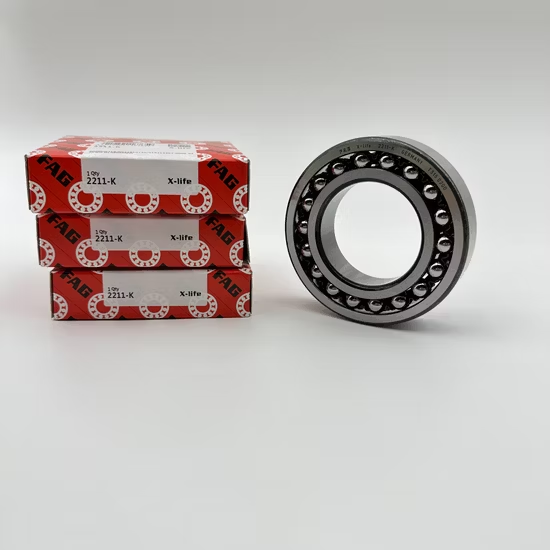
We maintain authorized distribution channels across all major international brands, allowing you to consolidate mixed-brand requirements into a single, fully documented shipment. Our cross-referencing protocol strictly aligns the base designation, internal clearance, and cage material, eliminating the thermal binding risks associated with superficial part number matching. Every 1210ektn9 self-aligning ball bearing we supply includes batch traceability and QR verification, protecting your facility from the soft inner rings and cloned codes typical of counterfeit markets. Additionally, our technical team provides application-based selection reviews to validate load, speed, and temperature compatibility before the purchase order is finalized.
To ensure optimal performance and longevity, please provide your specific radial and axial load profiles, operating speeds, and expected temperature ranges. Sharing the OEM equipment number or existing housing dimensions allows our engineering team to perform a comprehensive cross-reference check and L10 life calculation. This technical validation guarantees the supplied bearing perfectly matches your application's mechanical and thermal demands.
Q: What do the k and tn9 suffixes indicate in the 1210ektn9 designation?
A: The 'k' suffix specifies a 1:12 tapered bore designed for mounting on adapter sleeves, allowing precise internal clearance adjustment during installation. The 'tn9' suffix denotes a fiberglass-reinforced polyamide cage, which reduces weight and friction while enabling higher speed capabilities compared to standard pressed steel cages.
Q: How do you ensure cross-reference accuracy for this specific bearing?
A: Our technical team goes beyond matching the base numeric sequence. We verify that the replacement bearing exactly mirrors the original internal clearance class, cage material, and sealing configuration. This rigorous alignment prevents thermal binding and cage failures that occur when only the primary dimensions are cross-referenced.
Q: What clearance adjustments are required when mounting the tapered bore on a sleeve?
A: When driving the tapered bore onto an adapter sleeve, the inner ring expands, which reduces the radial internal clearance. Installers must measure the clearance reduction or use a calculated drive-up distance to ensure the bearing retains sufficient operating clearance, preventing excessive preload and subsequent overheating.
Q: How does the polyamide cage perform under high-temperature conditions?
A: While fiberglass-reinforced polyamide offers excellent sliding properties and lightweight operation, it has a lower thermal threshold than machined brass cages. If your application involves sustained elevated temperatures or poor heat dissipation, our engineers will review the thermal profile to determine if a metallic cage alternative is necessary.
Q: What is the procedure for verifying the authenticity of the delivered bearings?
A: Each bearing package features a unique QR code linked to the manufacturer's official database. By scanning this code with the brand's official mobile application, procurement and maintenance teams can instantly verify the product's origin, batch number, and authenticity, effectively neutralizing the risk of counterfeit components.
Our 5-step process ensures every order is engineered, validated, and supported for optimal performance.
Technical needs assessment
Custom specifications
Free samples for $50k+
Pre-shipment inspection
On-site & predictive
Our certified engineers respond within 24 hours with detailed technical specifications, pricing, and lead time information.