01
Consultation
Technical needs assessment


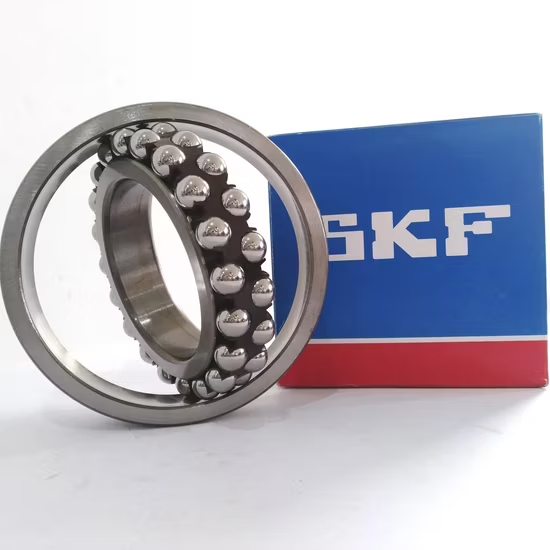
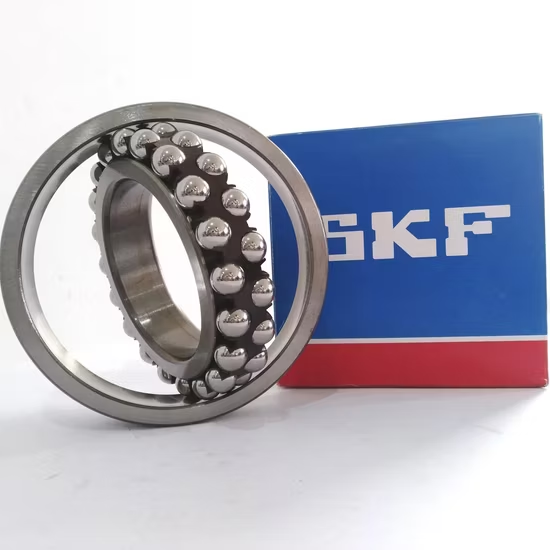


1206/1207/120 Self-Aligning Ball Bearing — featuring a spherical outer ring raceway to accommodate static shaft misalignment.
Verify authenticity instantly via official brand QR apps to guarantee genuine inventory and secure batch traceability.
Traceable Batch Origins — Every 1206/1207/120 shipment includes manufacturer lot documentation for official app verification.
| Parameter | Value |
|---|---|
| Designation | 1206/1207/120 |
| Bearing Type | Self-Aligning Ball Bearing |
| Number of Rows | Single Row, Double Row |
| Cage Material | Brass, Steel, Nylon |
| Bearing Style | Open, Rubber Seals, Iron Seals |
| Origin | Germany, Japan, Sweden, Malaysia, China |
| HS Code | 848210 |
| Industry | Typical Applications |
|---|---|
| Electric Motors | Rotor shaft support accommodating minor housing misalignment |
| Agricultural Machinery | Harvester conveyor drive shafts exposed to heavy dust |
| Textile Machines | High-speed spinning frame rollers requiring low vibration |
| Pumps & Conveyors | Idler pulley shafts subject to dynamic belt tension deflection |
Matching the cage material to the thermal environment prevents catastrophic field failures.
I spent years running field maintenance in Dubai, where I witnessed multiple 1206 self-aligning ball bearings disintegrate simply because a nylon cage was specified for a high-temperature gearbox. The polymer softened under thermal stress, leading to abnormal internal clearance, rolling element skewing, and eventual cage collapse. When evaluating a 1206 1207 self-aligning ball bearing supplier, procurement engineers often focus strictly on the base designation while overlooking these critical internal components. A supplier that merely matches the base number without verifying the cage material, internal clearance, and seal configuration against the actual operating temperature will inadvertently introduce severe reliability risks into your equipment .
Selecting the correct internal configuration requires looking beyond the basic 1206/1207/120 designation. A reliable 1206 1207 self-aligning ball bearing supplier provides application-based selection reviews, ensuring that brass, steel, or nylon cages are matched to your specific speed and temperature boundaries. We verify that the chosen cage material can withstand the centrifugal forces and thermal expansion inherent to your machinery, preventing the premature degradation that plagues poorly specified replacements.
Shaft deflection and housing misalignment are exactly what the spherical outer ring raceway of these bearings is designed to accommodate. However, the operating environment dictates the necessary seal and cage combination. In agricultural or mining conveyors, heavy particulate contamination demands robust iron or rubber seals, which introduce contact friction and generate additional heat. This thermal buildup necessitates a cage material that retains its structural integrity at elevated temperatures, alongside an appropriate internal clearance class to compensate for thermal expansion across the shaft and housing .
Since the base 1206/1207/120 designations lack explicit suffixes in standard procurement lists, specifying the exact internal configuration is mandatory. Nylon cages offer excellent high-speed performance and low noise but have strict thermal limits. Brass cages provide superior durability under high vibration and elevated temperatures, while pressed steel cages offer a balanced solution for general-purpose, moderate-load applications. Furthermore, selecting the correct internal clearance—such as C3 for applications involving thermal expansion or tight interference fits—ensures the bearing does not suffer from thermal binding once the equipment reaches its normal operating temperature.
Installing a bearing where the base number matches but the internal design differs from the OEM requirement leads to severe operational consequences. Utilizing a standard clearance in a high-heat environment causes the internal gap to close completely, resulting in excessive friction, rapid lubricant degradation, and catastrophic seizure. According to ISO 281 frameworks, these improper selections drastically reduce the calculated L10 life, resulting in unplanned downtime, secondary damage to adjacent shaft components, and immediate warranty voidance by the equipment manufacturer .
Sourcing these components requires a partner who prioritizes technical accuracy over simple part-number matching. We maintain authorized distribution channels across major international brands, ensuring your mixed-brand requirements are fulfilled from a single, verified source. Our cross-brand interchange process strictly aligns the base designation, internal clearance, and cage material simultaneously, eliminating the guesswork. Every batch is traceable to the manufacturer, allowing your maintenance team to verify authenticity and material origin before the bearing ever reaches the shop floor.
To ensure the selected configuration perfectly matches your machinery, please provide the specific radial and axial loads, operating speeds, and expected temperature ranges. Supplying the original OEM equipment number allows our engineering team to perform a precise cross-reference check, verifying that the clearance class and cage material align with the factory design. This technical review guarantees that the replacement component will deliver the expected service life under your exact operating conditions.
Q: How can we verify the authenticity of the received bearings?
A: Every shipment includes batch traceability documentation and unique QR codes. Your maintenance team can scan these codes using the official brand applications to instantly verify the manufacturing origin, ensuring the components are genuine and not counterfeit clones with compromised inner ring hardness.
Q: Why is it critical to match clearance and cage material during cross-referencing?
A: Matching only the base 1206/1207/120 designation ignores vital internal geometry. If a standard clearance is used where a C3 is required for thermal expansion, the bearing will bind and overheat. Similarly, using a nylon cage in a high-temperature gearbox will cause the cage to soften and fail prematurely.
Q: What are the selection boundaries between brass, steel, and nylon cages?
A: Nylon cages excel in high-speed, low-noise applications but have strict upper temperature limits. Brass cages offer superior strength for high-vibration and elevated-temperature environments. Pressed steel cages provide a reliable, cost-effective balance for standard industrial gearboxes and conveyors operating under moderate loads.
Q: How do we choose the correct seal type for dusty environments?
A: For heavy contamination like agricultural or mining dust, iron shields or robust rubber contact seals are necessary to block particulate ingress. However, contact seals generate additional friction and heat, meaning the internal clearance and cage material must be adjusted to compensate for the elevated operating temperatures.
Our 5-step process ensures every order is engineered, validated, and supported for optimal performance.
Technical needs assessment
Custom specifications
Free samples for $50k+
Pre-shipment inspection
On-site & predictive
Our certified engineers respond within 24 hours with detailed technical specifications, pricing, and lead time information.


