01
Consultation
Technical needs assessment

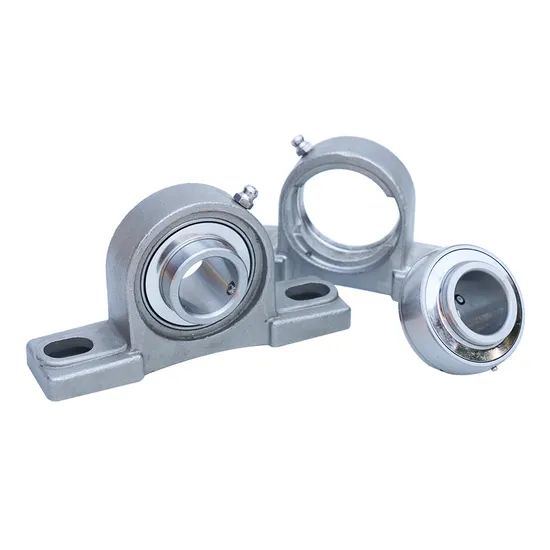
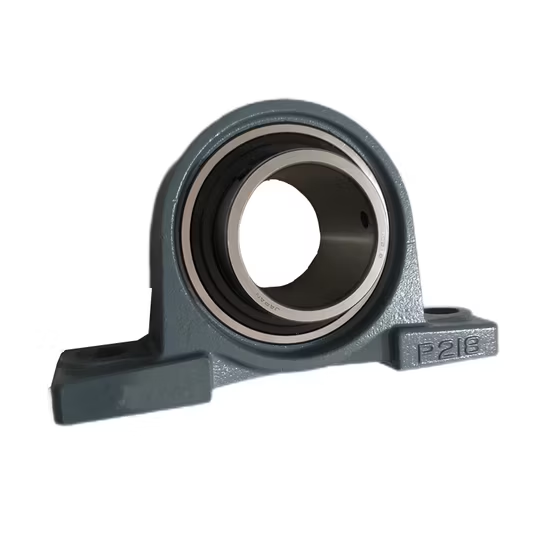
Ucph201-8 Pillow Block Bearing — engineered with a cast iron housing and single-row deep groove raceway for agricultural machinery and conveyor systems.
Traceable Batch Origins — Every Ucph201-8 pillow block bearing ships with manufacturer lot documentation to verify authentic cast iron housing and inner ring metallurgy.
| Parameter | Value |
|---|---|
| Designation | Ucph201-8 |
| Product Type | Pillow Block Bearing |
| Bearing Block Model | P |
| Housing Material | Cast Iron |
| Raceway | Deep Groove Raceway |
| Rows Number | Single |
| Feature Options | Corrosion resistant, high temperature, or high speed variants available |
| Origin | Germany, Japan, Sweden, Malaysia, or China |
| HS Code | 8483200000 |
Note: The UCPH prefix and 201-8 suffix combination is unverified in standard catalogs and requires manufacturer confirmation for exact dimensional cross-referencing.
| Industry | Typical Applications |
|---|---|
| Agricultural Machinery | Harvester drive shafts, tractor PTO supports, and grain auger pivot points |
| Material Handling | Conveyor belt return idlers, bucket elevator tail shafts, and sorting line rollers |
Base designations alone cannot guarantee field survival.
Procurement teams often approve a replacement based purely on the primary numeric sequence, overlooking critical internal variations. When a standard clearance unit is forced into a high-temperature conveyor drive, thermal expansion eliminates the internal gap, leading to rapid seizure . I have seen identical-looking cast iron housings fail within weeks because the internal seal design was optimized for clean oil baths rather than abrasive agricultural dust. Sourcing the correct Ucph201-8 pillow block bearing demands strict alignment of the housing footprint, internal clearance class, and sealing friction limits to match the actual operating environment.
Selecting the right unit goes far beyond matching the bolt hole spacing on the conveyor frame. The internal geometry must accommodate the specific radial loads and misalignment typical in material handling systems. We review the exact application parameters to ensure the chosen Ucph201-8 pillow block bearing delivers the necessary rigidity and contamination exclusion, preventing premature wear in demanding agricultural or industrial setups.
Agricultural and conveyor environments subject bearings to severe radial loads combined with moderate shock and constant particulate exposure. Elevated ambient temperatures near drive motors can degrade standard greases, demanding high-temperature variants with specialized thickener bases. Effective sealing is critical; contact seals provide superior dust exclusion but generate friction heat, while non-contact shields suit higher speeds but allow fine particulate ingress. Proper initial lubrication fill and correct mounting alignment are essential to prevent localized stress on the deep groove raceway .
The cast iron P-block housing provides the necessary structural rigidity to dampen vibrations from heavy conveyor belts or uneven agricultural terrain. Inside, the single-row deep groove raceway efficiently manages primary radial loads while accommodating minor axial shifts during thermal expansion. Depending on the specific operating conditions, buyers can select from corrosion-resistant coatings for washdown areas, high-temperature grease formulations for proximity to heat sources, or optimized cage geometries for high-speed sorting lines. This flexibility ensures the internal components match the exact friction and load profiles of the equipment.
Installing a unit with incorrect internal clearance or inadequate sealing leads directly to unplanned downtime and catastrophic shaft damage. When thermal expansion is not accounted for, the rolling elements skid rather than roll, destroying the raceway and voiding equipment warranties. According to ISO 281 life calculation frameworks, even minor misalignments or contamination ingress drastically reduce the calculated fatigue life . These hidden failures cascade into secondary damage, turning a simple component swap into a major mechanical rebuild.
We eliminate cross-reference errors by verifying not just the base number, but the exact seal friction and housing casting grade required for your machinery. Every batch undergoes strict traceability checks, ensuring the cast iron housing meets original metallurgical standards rather than using brittle recycled alloys. Our technical team reviews your specific load and speed parameters to confirm the internal clearance and grease fill are perfectly matched. This rigorous validation prevents the field failures commonly caused by superficial catalog matching.
To ensure precise selection and cross-reference validation, provide the exact radial and axial loads, operating speeds, and ambient temperature ranges of your equipment. Sharing the OEM equipment number or the physical dimensions of the existing shaft and housing footprint allows our engineering team to verify the interchangeability of the internal components. Detailing the specific environmental contaminants will help us recommend the optimal sealing arrangement and lubrication strategy.
Q: Why must the housing model and internal clearance be aligned simultaneously during cross-referencing?
A: Matching only the base bore diameter ignores the thermal expansion requirements of the specific application. A conveyor operating near a heat source requires wider internal clearance to prevent the rolling elements from binding as the inner ring expands. If the cross-reference overlooks this clearance shift, the bearing will overheat and seize, regardless of whether the cast iron housing physically fits the mounting base.
Q: What are the most common failure modes for pillow blocks in agricultural and conveyor applications?
A: The primary failure modes involve contamination ingress and lubrication breakdown. Fine agricultural dust penetrates inadequate seals, acting as a grinding paste that destroys the deep groove raceway. In conveyors, misalignment during installation causes uneven load distribution, leading to premature fatigue spalling on the inner ring. Both scenarios result in unplanned downtime and secondary shaft damage.
Q: How do cast iron and pressed steel housings differ in heavy-duty applications?
A: Cast iron P-block housings offer superior rigidity and vibration damping, making them essential for heavy radial loads and shock conditions typical in harvesters and bulk conveyors. Pressed steel housings are lighter and suitable for light-duty, high-speed applications with minimal shock. Using a pressed steel housing in a heavy agricultural drive will lead to housing deformation and rapid bearing misalignment.
Q: How should we manage relubrication cycles for sealed pillow block bearings in dusty environments?
A: While many units are pre-lubricated for life, severe dust exposure may require periodic purging if the housing features a grease nipple. Pumping fresh grease forces out contaminated grease from the seal lip, maintaining a clean barrier. However, over-greasing can blow out the seal lips or cause excessive churning heat, so following the manufacturer's volume and interval guidelines is critical.
Our 5-step process ensures every order is engineered, validated, and supported for optimal performance.
Technical needs assessment
Custom specifications
Free samples for $50k+
Pre-shipment inspection
On-site & predictive
Our certified engineers respond within 24 hours with detailed technical specifications, pricing, and lead time information.