01
Consultation
Technical needs assessment



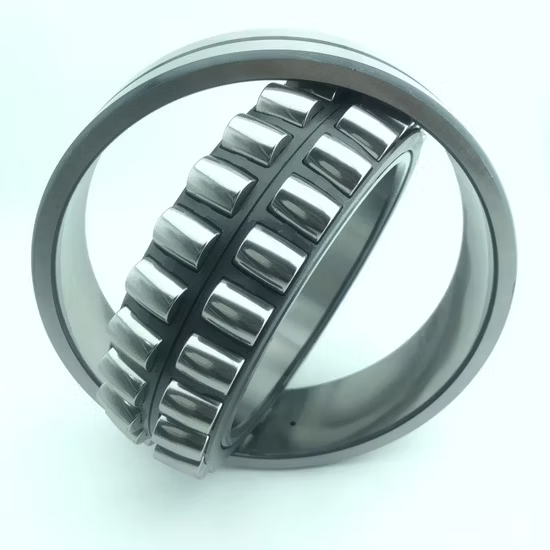
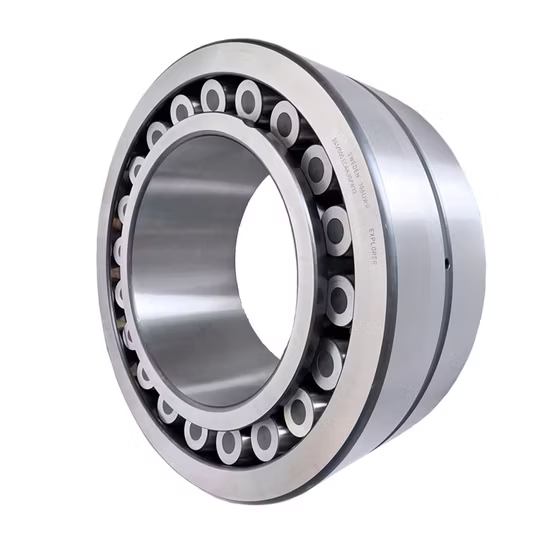
Timken 22218/22219/22220/22222 Spherical Roller Bearing — Cylindrical bore configuration ensures straightforward mounting for heavy-load industrial applications.
Full Brand Authorization — one consolidated shipment covers mixed OEM requirements without juggling multiple vendors.
| Parameter | Value |
|---|---|
| Designation | Timken 22218/22219/22220/22222 |
| Product Type | Spherical Roller Bearing |
| Bore Type | Cylindrical |
| Bearing Type | Spherical Roller (222 Series) |
| Size Series / Bore Codes | 18, 19, 20, 22 |
| Feature | Low Noise, High Speed, Long Service Life |
| Customization | Available |
| Sample | Free Sample |
| Stock | Rich Stocks |
| Industry | Typical Applications |
|---|---|
| Mining and Crushing | Jaw crusher toggle plates, vibrating screen exciter mechanisms |
| Steel and Metallurgy | Continuous caster roll segments, rolling mill gear drives |
| Industrial Gearboxes | Heavy-duty reduction gear output shafts, extruder drives |
| Pulp and Paper | Paper machine dryer cylinder journals, press roll bearings |
Matching the bore diameter is only the first step; ignoring internal geometry guarantees field failure.
Procurement teams often source the Timken 22218/22219/22220/22222 spherical roller bearing by matching the basic designation, only to face severe thermal binding months later. When standard internal clearance is installed in high-temperature crusher environments, the shaft expansion eliminates the operational gap, leading to catastrophic cage failure.
Selecting the correct Timken 22218/22219/22220/22222 spherical roller bearing requires looking past the stamped numbers on the outer ring. Our technical team reviews the specific radial loads, axial thrust components, and ambient heat of your application to ensure the internal geometry matches the operational reality, preventing the premature wear that plagues incorrectly specified replacements.
Equipment in mining and steel processing operates under brutal conditions. Vibrating screens subject the bearing to continuous shock loads and high-frequency oscillations, demanding a cage design that resists fatigue. Meanwhile, dryer cylinders in paper mills introduce steep thermal gradients that alter the internal clearance dynamically. Selecting the appropriate internal geometry and cage material is critical to managing these combined stresses and ensuring adequate lubrication film thickness under heavy radial forces.
The "222" prefix identifies these units as spherical roller bearings, engineered with a self-aligning outer ring raceway that accommodates shaft misalignment and housing deflections. The subsequent numbers—18, 19, 20, and 22—define the specific dimensional series and bore diameter codes, dictating the cross-sectional thickness and load-carrying capacity. Understanding these base codes is essential, as the physical envelope determines the maximum dynamic load rating, while the internal roller profile and cage configuration must be customized to handle the specific speed and vibration characteristics of the target machinery.
Substituting a bearing based solely on outer dimensions while ignoring internal design variations leads to devastating consequences. A mismatch in the cage type or internal clearance class causes unplanned downtime, accelerated lubricant degradation, and eventual seizure. According to failure analysis frameworks, a significant share of premature bearing failures stems directly from these subtle cross-reference errors, resulting in voided warranties and massive secondary damage to surrounding housings and shafts.
Our authorized distribution network guarantees that every Timken 22218/22219/22220/22222 spherical roller bearing originates directly from the manufacturer's production facilities. We address the critical pain point of soft inner rings found in cloned products by providing full batch traceability. Our cross-reference process strictly aligns the base designation with the required internal clearance and cage material, ensuring your heavy-load equipment receives the exact internal geometry needed to survive harsh operational environments without thermal binding.
To ensure optimal performance, provide our engineering team with your specific radial and axial load calculations, operational speeds, and ambient temperature profiles. Sharing the exact OEM equipment number allows us to perform a rigorous cross-reference check, verifying that the internal geometry and clearance class of the selected unit perfectly match your machinery's design parameters and prevent field failures.
Q: Why must internal clearance and cage material be verified alongside the base designation?
A: The base number only defines the physical envelope. In heavy-load applications, standard clearance may close up due to thermal expansion, causing seizure. Matching the correct internal clearance and cage material ensures the bearing survives the specific operational temperatures and vibration levels of your equipment.
Q: How do I verify the authenticity of the received batch?
A: Every unit includes traceability documentation. You can scan the provided QR code using the official brand application to verify the manufacturing origin, batch number, and original specifications, effectively eliminating the risk of installing cloned products with soft inner rings.
Q: What is the difference between cage materials for vibrating screens versus standard gearboxes?
A: Vibrating screens generate high-frequency oscillations and shock loads that quickly fatigue standard stamped steel cages. Machined brass cages are typically required for these applications to withstand the severe inertial forces and maintain roller stability, whereas standard cages suffice for steady-state gearbox operations.
Q: How should large spherical roller bearings be heated during installation?
A: Cylindrical bore units in this size range require controlled induction heating. The temperature must be carefully monitored to expand the inner ring sufficiently for mounting without exceeding the thermal limit that would compromise the heat treatment and structural hardness of the bearing steel.
Our 5-step process ensures every order is engineered, validated, and supported for optimal performance.
Technical needs assessment
Custom specifications
Free samples for $50k+
Pre-shipment inspection
On-site & predictive
Our certified engineers respond within 24 hours with detailed technical specifications, pricing, and lead time information.