01
Consultation
Technical needs assessment

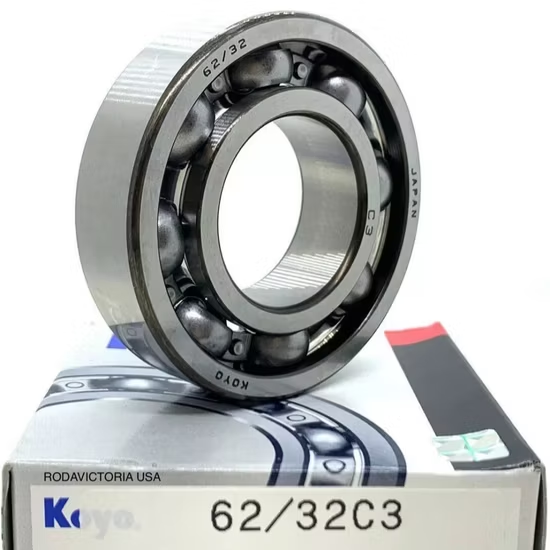
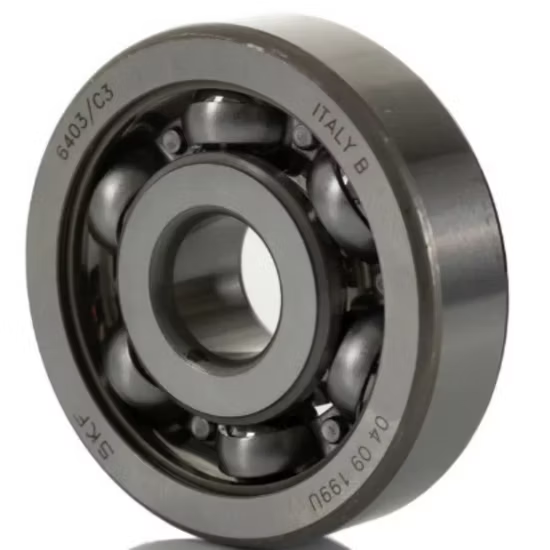
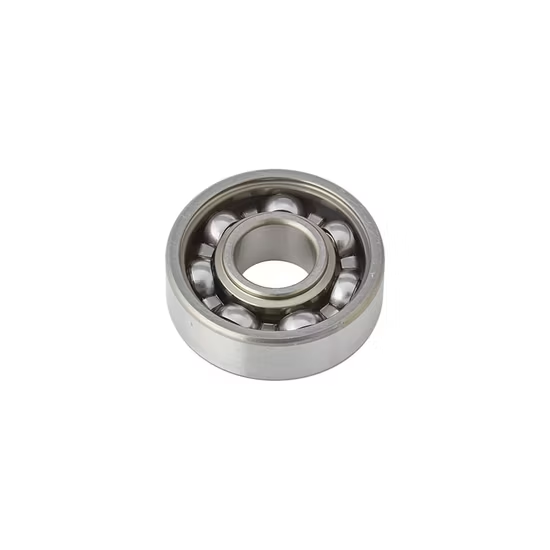
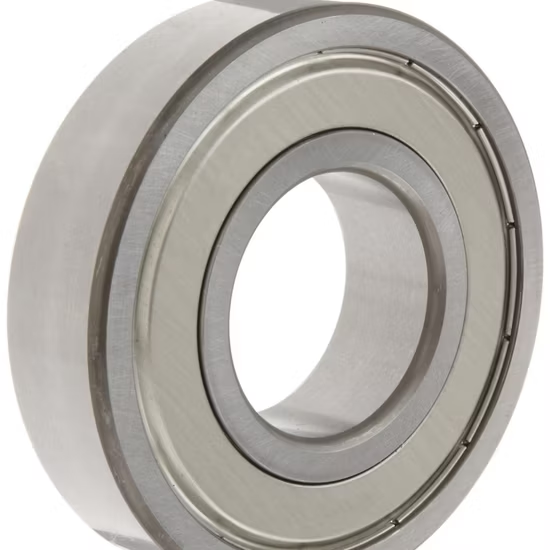
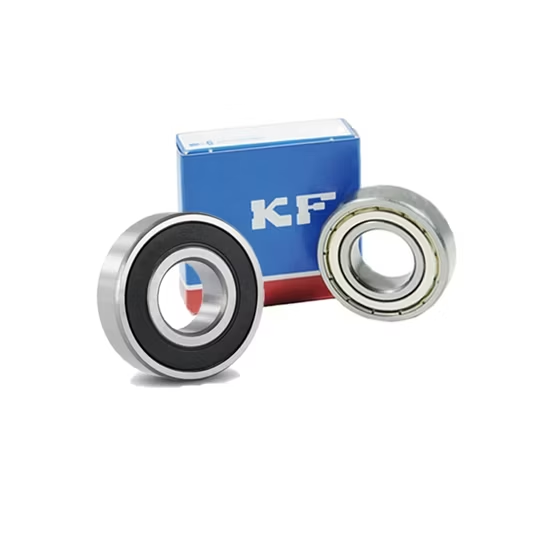
Ss 6206zz Stainless Steel Deep Groove Ball Bearing
Verified via official apps — Every Ss 6206zz batch includes scannable QR codes linking directly to the manufacturer's authenticity database.
| Parameter | Value |
|---|---|
| Designation | Ss 6206zz |
| Bearing Type | Deep Groove Ball Bearing |
| Material | 420/440/304 Stainless Steel options |
| Seal or Shield Type | Open, Rubber Seals, Iron Shields |
| Vibration and Noise Level | Z1V1, Z2V2, Z3V3, Z4V4 |
| Origin | Germany, Japan, Sweden, Malaysia, China |
Note: The 'Ss' prefix and 'zz' suffix are unverified standard designations and require manufacturer catalog confirmation for exact internal geometry.
| Industry | Typical Applications |
|---|---|
| Food Processing | Washdown conveyors, mixing agitators, packaging lines |
| Electric Motors | Corrosion-prone motor shafts, cooling fan assemblies |
| Material Handling | Wet environment roller tracks, automated sorting systems |
Counterfeit rings often pass visual checks but fail under thermal stress.
In the humid industrial zones of the Pearl River Delta, I have seen countless drive chains fail because of compromised stainless bearings. A batch of visually perfect units once suffered rapid seal degradation in high-moisture washdowns, leading to severe transmission noise. Soft inner rings and cloned packaging easily bypass casual checks, causing thermal binding when the equipment actually runs .
Selecting the correct Ss 6206zz stainless steel deep groove ball bearing requires aligning the seal type with the exact contamination level. While iron shields offer low friction for high-speed electric motors, they cannot block pressurized water. We review your specific washdown pressure and chemical exposure to recommend the optimal rubber seal or shield variant, ensuring the internal clearance remains protected.
High-pressure cleaning introduces severe thermal shock and chemical ingress risks. When cold water hits a hot bearing, the resulting pressure differential can draw moisture past inadequate seals, washing out the grease. Furthermore, the thermal expansion characteristics of stainless steel differ from standard bearing steel, meaning a standard clearance might lead to internal preload and catastrophic cage failure during continuous operation .
The Z1V1 through Z4V4 vibration and noise levels dictate the suitability for precision electric motors versus heavy conveyors. Higher grades require stricter geometric tolerances to minimize resonance at elevated speeds. Regarding material, the components are available in 420, 440, or 304 stainless steel variants. Martensitic grades like 420 and 440 provide the necessary raceway hardness for heavy radial loads, while 304 offers superior resistance to specific chemical washdowns but requires careful load management.
Installing a bearing with insufficient raceway hardness in a high-load gearbox leads to premature brinelling and unplanned downtime. If the internal clearance is not matched to the operating temperature, the rolling elements can skid, causing rapid wear and catastrophic damage to the shaft. These failures not only void equipment warranties but also trigger expensive secondary repairs across the entire drive assembly .
We eliminate the risk of soft inner rings by sourcing exclusively through authorized channels, providing full batch traceability for every order. Our cross-reference verification checks the base designation, seal configuration, and internal clearance simultaneously, preventing the common error of matching only the 62xx number. Each shipment includes material test reports confirming the exact stainless steel composition, ensuring your washdown equipment receives genuine corrosion resistance rather than a visual imitation.
To ensure the selected variant matches your operational demands, please provide the radial and axial loads, operating speeds, and specific washdown chemicals involved. Sharing the exact OEM equipment number allows our engineering team to perform a comprehensive cross-reference check. This technical review guarantees the internal clearance and seal configuration are perfectly aligned with your application parameters.
Q: How can we verify the authenticity of the stainless steel material upon delivery?
A: Every batch includes a scannable QR code that links directly to the manufacturer's official application for instant verification. Additionally, we provide comprehensive material test reports that confirm the exact chemical composition of the 420, 440, or 304 stainless steel used, ensuring the rings possess genuine corrosion resistance and structural integrity.
Q: Why is cross-referencing more than just the base 62xx number important?
A: Matching only the base number often overlooks critical internal differences. A proper cross-reference must align the internal clearance, cage material, and exact seal type simultaneously. Failing to verify these suffixes can result in thermal binding or rapid seal degradation when the bearing is exposed to actual operational loads and washdown conditions.
Q: What are the differences between the available stainless steel material options?
A: The 420 and 440 martensitic grades offer higher raceway hardness, making them suitable for applications with heavier radial loads and higher speeds. The 304 austenitic variant provides substantially higher resistance to specific chemical washdowns but requires careful load management due to its lower hardness. Selection depends on balancing load requirements with corrosion exposure.
Q: How do we select the correct vibration and noise level for electric motors?
A: High-speed electric motors require tighter geometric tolerances to minimize resonance and heat generation. The Z3V3 or Z4V4 grades are typically specified for these precision applications to ensure smooth operation. For general material handling conveyors where noise is less critical, standard Z1V1 or Z2V2 grades provide reliable performance without unnecessary cost.
Our 5-step process ensures every order is engineered, validated, and supported for optimal performance.
Technical needs assessment
Custom specifications
Free samples for $50k+
Pre-shipment inspection
On-site & predictive
Our certified engineers respond within 24 hours with detailed technical specifications, pricing, and lead time information.