01
Consultation
Technical needs assessment

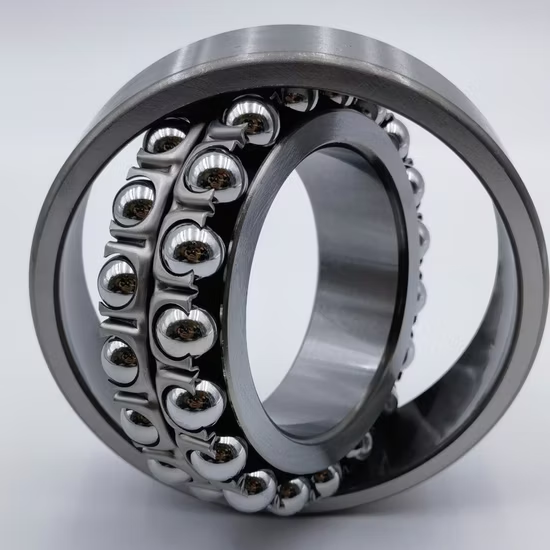
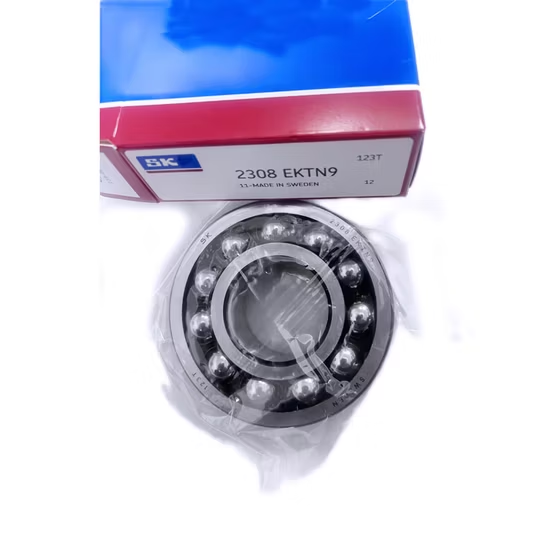
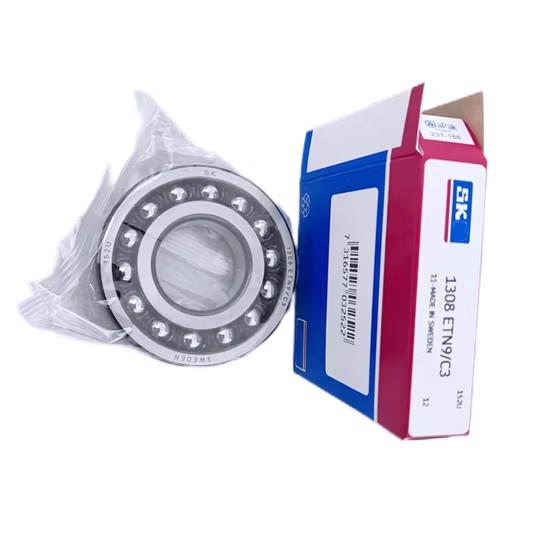


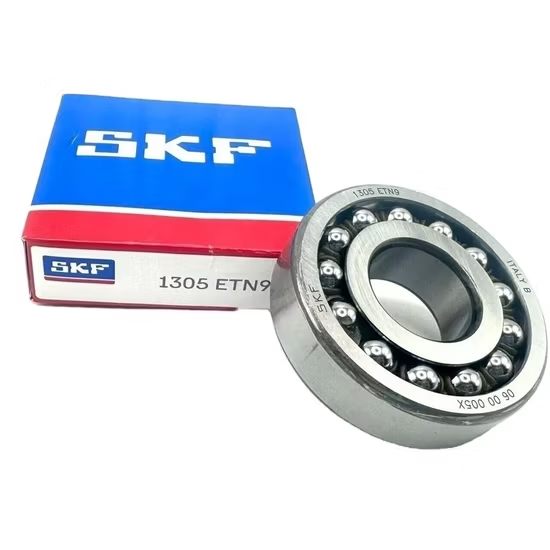
S K F 2309ektn9 Self-Aligning Ball Bearing features a 1:12 tapered bore for precise adapter sleeve mounting and a glass fibre reinforced polyamide cage for high-speed stability. The optimized internal design enhances load capacity in rolling mill gearboxes.
Authorized Multi-Brand Coverage — Source the SKF 2309EKTN9 alongside mixed OEM requirements in a single consolidated shipment, eliminating multi-vendor coordination delays.
| Parameter | Value |
|---|---|
| Designation | SKF 2309EKTN9 |
| Product Type | Self-Aligning Ball Bearing |
| Bearing Style | Open, Rubber Seals, Iron Seals |
| Bore Type | Tapered Bore (1:12 taper) |
| Cage Material | Glass Fibre Reinforced Polyamide (TN9) |
| Internal Design | Optimized (E suffix) |
| Origin | Germany / Japan / Sweden / Malaysia / China |
| HS Code | 848210 |
| Industry | Typical Applications |
|---|---|
| Steel & Metallurgy | Rolling mill gearbox seats, continuous caster guide rolls |
| Construction | Heavy earthmoving equipment articulation joints, vibratory compactors |
| General Industrial | Industrial gearboxes, material handling conveyors, heavy-duty pumps |
The polyamide cage design prevents catastrophic thermal binding under heavy shock loads.
When servicing rolling mill gearboxes in the Middle East, I have inspected gear housings where standard brass or steel cages shattered within weeks. The extreme shock loads and elevated temperatures cause traditional cages to wear rapidly, leading to misaligned rolling elements and sudden seizure. The SKF 2309EKTN9 self-aligning ball bearing addresses this specific failure mode through its specialized cage geometry and material, maintaining stability when the gearbox experiences severe torsional vibrations .
The glass fibre reinforced polyamide cage in this SKF 2309EKTN9 self-aligning ball bearing is specifically engineered for environments where vibration and shock loads are constant. Unlike machined brass cages that can suffer from fatigue cracking under high-frequency oscillation, this composite material absorbs micro-shocks and operates with a lower friction coefficient. This ensures the bearing maintains its kinematic stability inside the rolling mill gearbox seat, reducing the heat generated by cage-to-rolling-element contact.
Gearbox environments subject bearings to fluctuating thermal profiles and heavy radial loads combined with moderate axial forces. As the housing expands and contracts, internal clearance shifts dramatically. If the initial clearance is not matched to the operating temperature, the bearing will preload itself and overheat. Furthermore, the open or seal variants require precise external lubrication intervals; inadequate oil flow or grease degradation in high-heat zones rapidly accelerates raceway spalling .
The "E" suffix indicates an optimized internal design with larger and more rolling elements, directly increasing the dynamic load rating for heavy gearbox applications. The "k" suffix designates a 1:12 tapered bore, which is mandatory for achieving the correct interference fit on adapter sleeves within the gearbox shaft assembly. Finally, "TN9" confirms the glass fibre reinforced polyamide cage, providing high-speed stability and reduced friction compared to standard steel cages, ensuring reliable operation under continuous rotational stress.
Installing a standard clearance or incorrect cage variant in a rolling mill application inevitably leads to unplanned downtime. A mismatched cage material will fail to withstand the specific vibration frequencies of the mill, resulting in premature cage fracture. Similarly, ignoring the tapered bore requirement and forcing a cylindrical bore equivalent onto an adapter sleeve compromises the shaft grip, causing fretting corrosion and catastrophic shaft damage that voids equipment warranties .
We supply the exact SKF 2309EKTN9 self-aligning ball bearing configuration required for your gearboxes, backed by verifiable manufacturer documentation. Cross-referencing errors frequently occur when suppliers match the base number but overlook the TN9 cage or the 1:12 tapered bore, sending parts that fail during commissioning. Our technical review ensures the clearance, cage material, and bore type align perfectly with your OEM equipment specifications before the order is processed.
To ensure the selected bearing survives your specific rolling mill or construction equipment environment, provide your radial and axial load profiles, operating speeds, and steady-state temperatures. This data allows our engineering team to verify the L10 life calculation and confirm the internal clearance class. If you are replacing an existing part, share the OEM equipment number so we can perform a comprehensive cross-reference check.
Q: How do I verify the authenticity of the SKF 2309EKTN9 self-aligning ball bearing?
A: Authenticity is verified by scanning the QR code on the packaging using the official manufacturer app. This confirms the batch number, production facility, and exact suffix configuration, effectively ruling out counterfeit products that feature soft inner rings and cloned labels which frequently cause premature failures in heavy gearboxes.
Q: What are the cross-reference pitfalls when matching the k and TN9 suffixes?
A: The most common error is matching the base 2309 number while ignoring the 1:12 tapered bore (k) and the polyamide cage (TN9). Substituting a cylindrical bore or a brass cage alters the mounting procedure and thermal performance, leading to improper shaft interference or cage fatigue under the high-vibration conditions typical of rolling mill gearboxes.
Q: Why choose the TN9 polyamide cage over a machined brass cage for this application?
A: The TN9 glass fibre reinforced polyamide cage offers superior performance in high-vibration environments due to its lower mass and inherent damping properties. It reduces friction and operates quietly at higher speeds, making it highly suitable for gearbox seats where shock loads and rapid acceleration are constant operational factors.
Q: What is the correct mounting procedure for the 1:12 tapered bore?
A: Mounting requires an adapter sleeve and a lock nut. The bearing must be driven onto the tapered seat until the correct residual internal clearance is achieved, measured either by feeler gauges or by calculating the lock nut rotation angle. Under-tightening causes shaft fretting, while over-tightening eliminates clearance and causes thermal seizure.
Q: How does the optimized internal design (E suffix) affect load capacity?
A: The E suffix denotes an optimized internal geometry featuring larger rolling elements and an increased number of balls. This design modification significantly enhances the dynamic load-carrying capacity and extends the fatigue life of the bearing, which is critical for sustaining the heavy radial loads present in rolling mill and construction machinery gearboxes.
Our 5-step process ensures every order is engineered, validated, and supported for optimal performance.
Technical needs assessment
Custom specifications
Free samples for $50k+
Pre-shipment inspection
On-site & predictive
Our certified engineers respond within 24 hours with detailed technical specifications, pricing, and lead time information.