01
Consultation
Technical needs assessment



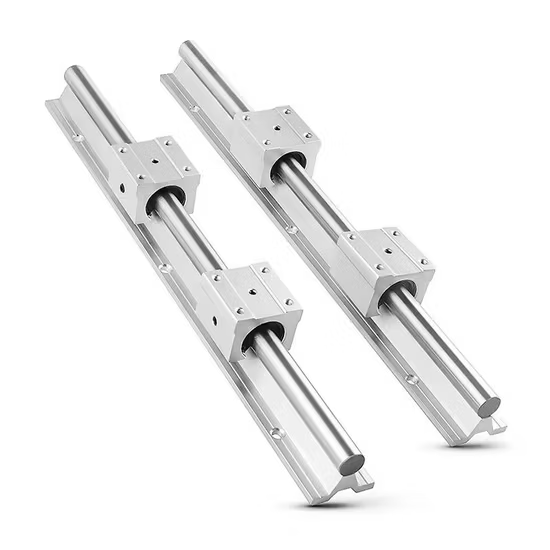
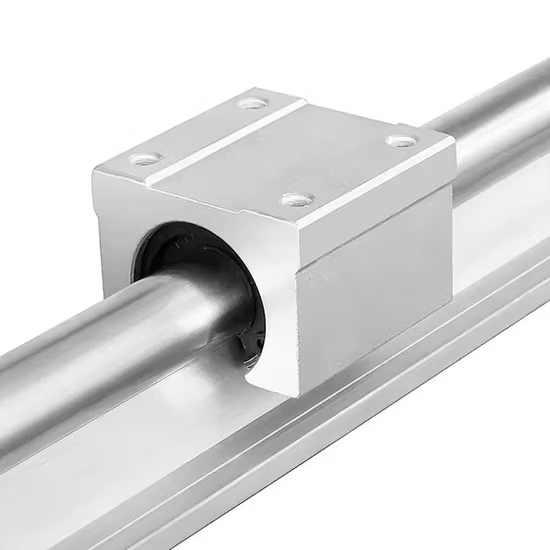

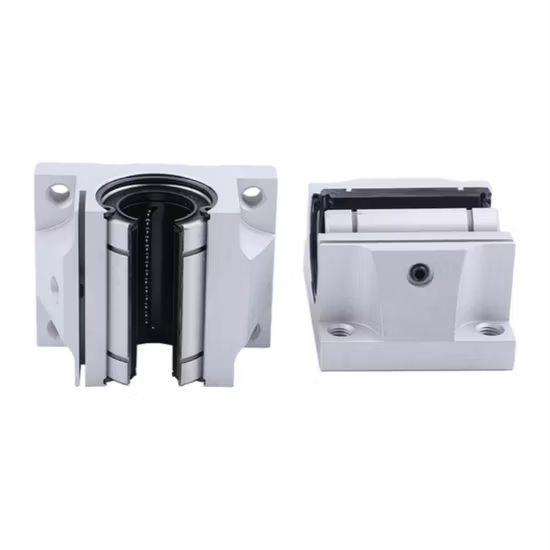
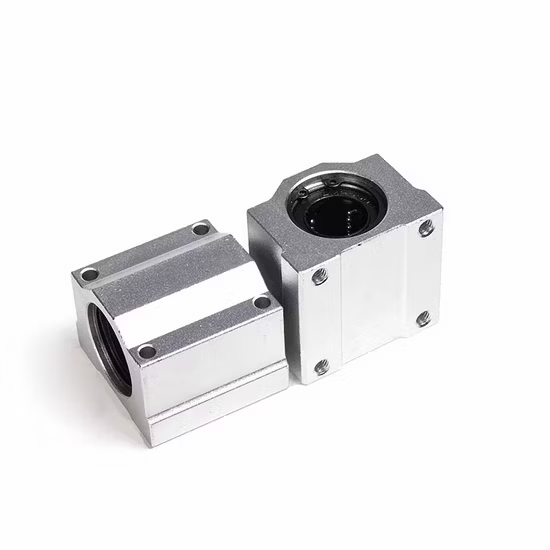
SBR12 SBR16 SBR20 SBR25 Linear Guide Slider Block Bearing — polished construction offering high corrosion resistance for CNC and automation applications.
Each shipment includes a comprehensive documentation package with material test reports and dimensional inspection records for full verification.
Cross-reference dimension alignment — We verify base size, aluminum housing hardness, and slider mating tolerances to prevent off-center loading in linear motion systems.
| Parameter | Value |
|---|---|
| Designation | SBR12 SBR16 SBR20 SBR25 |
| Product Type | Linear Guide Slider Block Bearing |
| Material Options | Aluminium or Stainless Steel variants |
| Precision Class | P0, P6, P5, P4, P2 |
| Surface Treatment | Polished |
| Profile Type | Hollow Profile |
| Operational Features | High Speed, Low Noise |
| Corrosion Resistance | High Corrosion Resistance |
| Length Configuration | Custom Length |
| Certification | CE, RoHS, ISO 9001 |
| Industry | Typical Applications |
|---|---|
| CNC Machining | Tool changer linear axes and spindle positioning carriages |
| Industrial Automation | High-speed pick-and-place robotic arm gantries |
| Medical Equipment | Precision linear stages for CT and MRI imaging scanners |
| Electronics Manufacturing | Automated optical inspection linear positioning tracks |
Matching the outer profile is useless if the internal aluminum rigidity collapses under dynamic cutting forces.
Procurement teams frequently source linear components by matching the basic block size, only to face catastrophic accuracy loss months later. I have seen CNC workshops replace entire gantry assemblies because a non-standard SBR16 block suffered from insufficient housing rigidity, leading to severe off-center loading and slider wobble. When the aluminum hardness and mating tolerances are ignored, the linear motion degrades rapidly, rendering the machine incapable of holding tight machining tolerances . Sourcing the correct SBR12 SBR16 SBR20 SBR25 linear guide slider block bearing requires looking far beyond the stamped designation on the side of the block.
Selecting the right SBR12 SBR16 SBR20 SBR25 linear guide slider block bearing demands a strict review of the aluminum alloy hardness against the specific cutting forces of the machine. Our engineering team cross-references the housing material grade and slider mating tolerances to ensure the block will not deflect under heavy radial loads, maintaining smooth linear motion without premature wear.
High-speed routing generates significant friction heat, which directly impacts the internal clearance and dimensional stability of the slider. Choosing between P0 and P2 precision classes dictates how well the block maintains positioning accuracy as temperatures fluctuate. Proper selection prevents thermal binding, ensuring the hollow profile design dissipates heat effectively while maintaining low noise during continuous automated cycles .
The 12, 16, 20, and 25 designations generally indicate the compatible shaft diameter or block size series, though exact dimensions require manufacturer catalog confirmation as these are unverified suffixes. Depending on the operating environment, the blocks are available in aluminium or stainless steel variants. The polished surface treatment and high corrosion resistance make the stainless options ideal for food processing or medical environments, while the standard aluminium variants offer a lighter solution for high-speed automation.
Installing a block with incorrect mating tolerances leads to uneven load distribution across the rolling elements, causing localized stress and premature fatigue. According to failure analysis frameworks like ISO 15243, this surface distress quickly escalates into catastrophic slider seizure. The resulting unplanned downtime and scrapped workpieces far exceed the initial savings of purchasing a cheaper, non-verified linear component .
We do not just ship the requested base number; we verify the aluminum hardness and internal geometry to ensure exact OEM alignment. Our batch traceability guarantees that every block originates from authorized channels, eliminating the risk of soft inner rings or cloned QR codes. By reviewing the application parameters, we ensure the precision class and material variant perfectly match your thermal and load requirements. This comprehensive cross-reference prevents the devastating slider wobble that destroys CNC machining accuracy.
Provide your machine's radial and axial load profiles, maximum traverse speeds, and operating temperature ranges so our team can validate the L10 life and precision class selection. Supplying the specific OEM equipment number allows us to perform a comprehensive cross-reference check, ensuring the housing rigidity and material variant perfectly match your automation requirements.
Q: How do I verify the exact material and precision class for these slider blocks?
A: We provide a comprehensive material test report confirming the specific aluminum hardness or stainless grade, alongside a dimensional inspection report validating the P-class tolerance. Every shipment includes batch traceability and official app QR codes, allowing you to independently verify the authenticity and exact specifications of the linear components before installation.
Q: What cross-reference factors matter beyond the basic 12, 16, 20, or 25 size?
A: Base size matching is insufficient; we verify the aluminum housing hardness, slider mating tolerances, and internal geometry. A block might fit the shaft but fail under load if the housing rigidity is inadequate. Our technical review ensures the precision class, material variant, and profile type perfectly align with your specific CNC or automation requirements.
Q: How do different precision ratings impact CNC machine positioning accuracy?
A: Higher precision classes like P4 or P2 feature much tighter dimensional tolerances, which are critical for maintaining exact tool positioning during high-speed CNC machining. Using a lower P0 grade in a precision spindle application can cause micro-vibrations and thermal binding, ultimately degrading the surface finish of the machined parts and causing premature linear system failure.
Q: How should I handle custom length requirements for specialized automation equipment?
A: Share your exact mounting space constraints, load distribution needs, and operational speeds with our engineering team. We will review the application parameters to determine the optimal custom length configuration, ensuring the extended or modified block maintains structural rigidity and even load distribution without compromising the high-speed, low-noise performance of the linear axis.
Our 5-step process ensures every order is engineered, validated, and supported for optimal performance.
Technical needs assessment
Custom specifications
Free samples for $50k+
Pre-shipment inspection
On-site & predictive
Our certified engineers respond within 24 hours with detailed technical specifications, pricing, and lead time information.