01
Consultation
Technical needs assessment
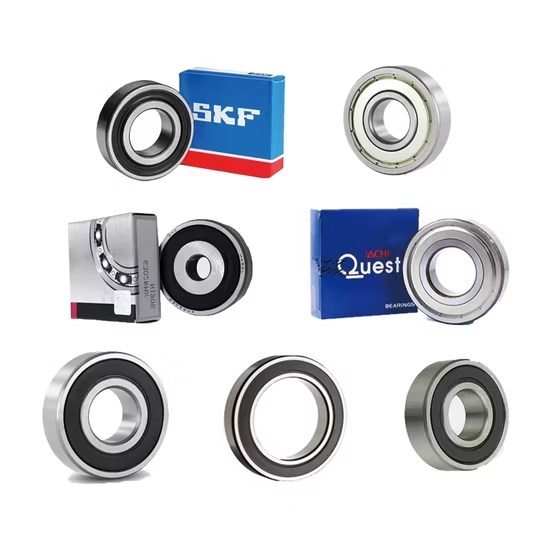
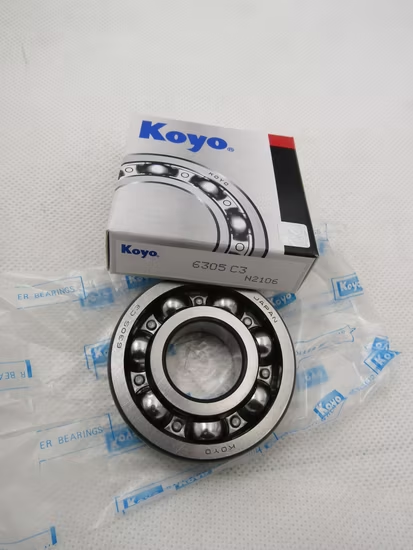
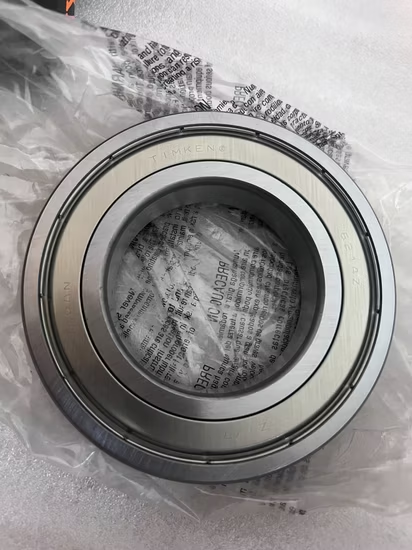


S6000 S6001 S6002 S6003 S6200 S6201 Stainless Steel Deep Groove Ball Bearings — engineered with stainless steel construction for exceptional corrosion resistance in washdown and humid environments.
Traceable Batch Origins — Every S6000 series stainless steel deep groove ball bearing ships with manufacturer lot documentation to verify material authenticity and prevent soft inner ring counterfeits.
| Parameter | Value |
|---|---|
| Designation | S6000 S6001 S6002 S6003 S6200 S6201 |
| Product Type | Stainless Steel Deep Groove Ball Bearing |
| Bearing Style | Open, Rubber Seals, Iron Seals |
| Material | Stainless Steel |
| Quality Level | Z1V1, Z2V2, Z3V3, Z4V4* |
| Origin | Germany / Japan / Sweden / Malaysia / China |
| HS Code | 848210 |
*Note: Z1V1 through Z4V4 denote noise and vibration grades per domestic standards; verify exact acoustic limits against the specific manufacturer catalog.
| Industry | Typical Applications |
|---|---|
| Food & Beverage | Conveyor guide rollers in washdown zones, bottling line rotary fillers |
| Pharmaceutical | Tablet press cam followers, cleanroom packaging actuators |
| Chemical Processing | Agitator shaft supports, corrosive fluid pump impellers |
| Marine & Offshore | Deck winch sheaves, saltwater exposure pivot joints |
Standard carbon steel bearings corrode rapidly under high-pressure caustic cleaning, but the real danger lies in counterfeit stainless alternatives that seize under load. A S6000 series stainless steel deep groove ball bearing must possess through-hardened martensitic or austenitic rings to survive chemical exposure. We frequently inspect failed units from food processing lines where the outer ring appeared stainless, but the inner ring was merely chrome-plated carbon steel. Once the plating chips, rust expands and locks the cage . Sourcing verified materials prevents these catastrophic line stoppages.
Selecting the correct enclosure is critical when deploying a S6000 series stainless steel deep groove ball bearing in wet environments. Our engineering team reviews the exact washdown pressure and chemical concentration to recommend either non-contact iron shields for low-friction needs or heavy-contact rubber seals for maximum fluid exclusion. This application-specific matching ensures the internal grease is not washed out during daily sanitation cycles.
Washdown environments subject components to severe thermal cycling and aggressive reagents. Hot water rinses followed by cold ambient air cause rapid dimensional shifts, making internal clearance selection vital to avoid thermal binding. High-pressure spray forces water past inadequate seals, diluting lubricants and accelerating wear . Furthermore, caustic cleaning agents can degrade standard seal elastomers, requiring specialized compound verification to maintain sealing integrity over prolonged operational periods.
The "S" prefix confirms the use of stainless steel, providing essential resistance to oxidation and mild chemical attack. Beyond the base material, the Z1V1 through Z4V4 classifications dictate the acoustic and vibrational performance of the bearing. While open styles facilitate easy relubrication in accessible areas, rubber-sealed variants are mandatory for enclosed food processing machinery where grease contamination is strictly prohibited. Iron shields offer a middle ground, providing physical debris protection with minimal rotational friction. Understanding these suffix combinations ensures the selected unit aligns perfectly with both the mechanical load and the sanitary requirements of the facility.
Installing a counterfeit bearing with a soft inner ring leads to rapid raceway spalling and eventual cage collapse. This unplanned downtime halts the entire production line, resulting in severe financial losses and potential product contamination. According to failure analysis frameworks, material deficiencies are a primary driver of premature fatigue . Procuring fully documented components eliminates the risk of voiding equipment warranties due to unauthorized or substandard spare parts.
We maintain authorized distribution channels across all major international brands, allowing you to consolidate mixed-brand requirements into a single, traceable order. Cross-referencing is executed by aligning internal clearances and seal materials, not just matching the base designation. For stainless applications, we specifically verify that the metallurgical composition matches the demanding washdown environment, preventing the common error of supplying standard steel with a superficial coating. Every shipment includes batch traceability to the manufacturer, backed by QR verification through official brand applications to guarantee authenticity.
To ensure optimal performance, please provide your specific radial and axial load profiles, operating speeds, and the exact chemical agents used in your washdown cycles. Sharing the OEM equipment number allows our technical team to perform a precise cross-reference review, verifying that the internal clearance and seal materials match the original design intent. This data enables us to conduct a comprehensive L10 life calculation and recommend the most reliable configuration for your machinery.
Q: How do stainless steel bearings differ from carbon steel in load capacity?
A: Stainless steel typically exhibits a lower dynamic load rating compared to standard high-carbon chrome steel due to differences in metallurgical hardness. When replacing carbon steel with stainless variants for washdown environments, engineers must recalculate the L10 life to ensure the reduced load capacity still meets the operational demands of the specific machinery without causing premature fatigue.
Q: Which seal type is best for high-pressure daily washdowns?
A: For high-pressure caustic washdowns, rubber-sealed variants are strongly recommended over iron shields. The elastomer lips maintain continuous contact with the inner ring, effectively blocking pressurized water and aggressive cleaning chemicals from penetrating the bearing cavity and washing out the factory-applied lubricant, which is critical for preventing internal corrosion.
Q: How can I identify counterfeit stainless bearings with soft inner rings?
A: Counterfeit units often use standard carbon steel with a thin chrome or nickel plating that passes casual visual inspection. The only definitive method to identify these soft inner rings is by requesting a material test report from the supplier and verifying the batch traceability through the manufacturer's official QR application to confirm the metallurgical composition matches genuine stainless specifications.
Q: What do the Z1V1 to Z4V4 suffixes indicate for motor applications?
A: These designations represent domestic quality classifications for noise and vibration levels, with Z4V4 indicating the strictest tolerances. In electric motor or precision spindle applications where acoustic emissions and rotational smoothness are critical, selecting a higher Z/V grade ensures the bearing operates quietly and minimizes vibrational transfer to the surrounding equipment structure.
Our 5-step process ensures every order is engineered, validated, and supported for optimal performance.
Technical needs assessment
Custom specifications
Free samples for $50k+
Pre-shipment inspection
On-site & predictive
Our certified engineers respond within 24 hours with detailed technical specifications, pricing, and lead time information.