01
Consultation
Technical needs assessment


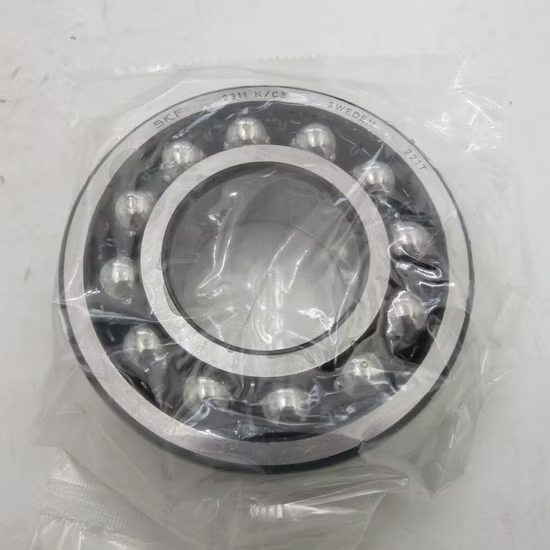


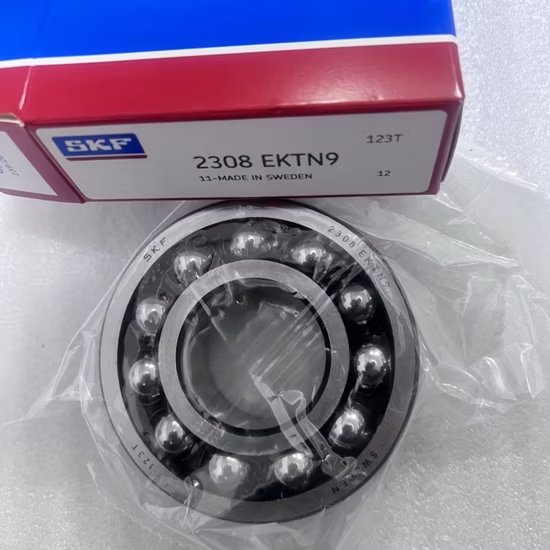
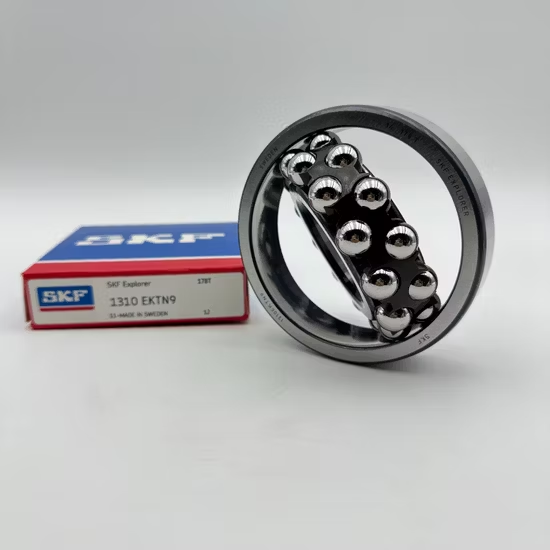
Self-Aligning Ball Bearing for Misaligned Shaft Applications — P6 precision rated with versatile open, rubber, or iron seal configurations.
Multi-Brand Authorized Coverage — Consolidate SKF, FAG, and NSK self-aligning ball bearing requirements into a single purchase order with unified batch traceability.
| Parameter | Value |
|---|---|
| Product Type | Self-Aligning Ball Bearing |
| Precision Class | P6 |
| Seal or Shield Type | Open, Rubber Seals, Iron Seals |
| Material Options | Standard bearing steel, stainless steel variants |
| Origin | Germany, Japan, Sweden, Malaysia, China |
| Certification | ISO 9001, Certificate of Conformity |
| Industry | Typical Applications |
|---|---|
| Textile Manufacturing | Yarn guide rollers and tensioning mechanisms |
| Agricultural Machinery | Harrow disc gangs and seed drill metering shafts |
| Material Handling | Conveyor belt return idlers and transfer chute pulleys |
| Electric Motors | Small fractional horsepower motor shafts with housing misalignment |
When sourcing from a self-aligning ball bearing supplier, matching the basic dimensions while ignoring internal row configuration leads to rapid thermal binding.
A single row ball bearing physically lacks the sphered outer ring raceway required for self-alignment.
Procurement engineers often receive quotations where the base designation matches the 15x20mm envelope, but the supplied unit is a standard deep groove or single row variant. Under shaft deflection, this structural mismatch forces the rolling elements against the raceway edges. The resulting friction generates excessive heat, destroying the cage and seizing the shaft long before the calculated L10 life is reached . P6 precision cannot compensate for a fundamentally incorrect internal geometry.
Selecting the correct self-aligning ball bearing supplier involves verifying that the internal design actually permits angular misalignment. True self-aligning capability requires a double row configuration with a sphered outer ring raceway, allowing the inner ring and ball assembly to swivel relative to the outer ring. We review your housing tolerances and shaft deflection data to ensure the supplied unit accommodates the actual misalignment angle, preventing edge loading and premature fatigue.
Agricultural and material handling environments introduce severe particulate contamination, demanding robust sealing solutions. Rubber seals provide excellent exclusion of dust and moisture but introduce higher contact friction, which limits maximum rotational speed. Iron shields offer lower friction for higher-speed electric motor applications but provide less protection against fine particulate ingress. Selecting the appropriate seal type requires balancing the operating speed against the severity of the environmental contamination .
The specified P6 precision class ensures tighter dimensional and running accuracy compared to standard P0 grades, which is critical for minimizing vibration in high-speed electric motors. While standard bearing steel handles typical industrial loads, stainless steel variants are available for applications involving high moisture or corrosive agricultural chemicals. The choice between open, rubber-sealed, or iron-shielded configurations must align with the specific maintenance schedule and relubrication capabilities of the equipment.
Installing a single row bearing in an application requiring self-alignment guarantees unplanned downtime and catastrophic damage to adjacent housing components. The localized stress concentrations caused by severe misalignment exceed the material's fatigue limit, leading to spalling and cage fracture. This premature failure not only voids equipment warranties but also forces emergency maintenance interventions. Relying on ISO 281 life calculations becomes meaningless when the fundamental structural requirements of the application are ignored .
Our technical team intercepts cross-reference errors by checking the internal row configuration, not just the outer dimensions. We confirm that the P6 precision rating is backed by actual manufacturer inspection reports, rather than relying on distributor claims. Every batch is traced back to the original production facility, eliminating the risk of counterfeits with soft inner rings that fail under load. We provide exact cross-brand interchange options that maintain the required clearance and seal arrangements for your specific misalignment parameters.
To ensure the selected unit matches your operational demands, provide the specific equipment model, available installation space, and expected shaft deflection angles. Detail the radial and axial loads, operating speeds, and ambient temperature ranges so our engineering team can calculate the required dynamic load rating. Specify the environmental conditions, such as dust or moisture exposure, to determine the optimal seal type and material variant for your machinery.
Q: How do I determine the exact bearing designation for my misaligned shaft?
A: Provide the shaft deflection angle, radial and axial loads, and operating speed. Our engineering team uses these parameters to calculate the required dynamic load rating and select the appropriate internal geometry, ensuring the unit can accommodate the misalignment without edge loading.
Q: Why did my previous single row bearing fail in a self-aligning application?
A: Single row ball bearings lack the sphered outer ring raceway necessary for self-alignment. When subjected to shaft deflection, they experience severe edge loading and thermal binding. A true self-aligning unit requires a double row configuration to allow the inner ring to swivel.
Q: Which seal type is best for dusty agricultural environments?
A: Rubber seals provide superior exclusion of fine dust and moisture, protecting the internal components. However, they generate higher friction than iron shields. We evaluate your specific operating speed to ensure the rubber seal variant can handle the thermal output without degrading.
Q: How does P6 precision benefit electric motor applications?
A: P6 precision guarantees tighter dimensional and running accuracy than standard grades. This reduces vibration and noise during high-speed rotation, which is critical for maintaining the operational stability and extending the service life of fractional horsepower electric motors.
Q: Can you cross-reference this to other major brands?
A: Yes, we provide cross-reference alignment that checks the internal design, seal arrangements, and clearance class, not just the basic dimensions. This ensures the alternative brand unit performs identically in your specific misaligned shaft application.
Our 5-step process ensures every order is engineered, validated, and supported for optimal performance.
Technical needs assessment
Custom specifications
Free samples for $50k+
Pre-shipment inspection
On-site & predictive
Our certified engineers respond within 24 hours with detailed technical specifications, pricing, and lead time information.