01
Consultation
Technical needs assessment

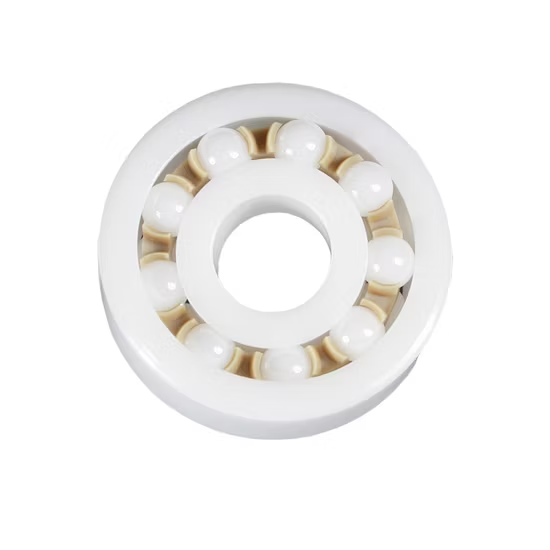
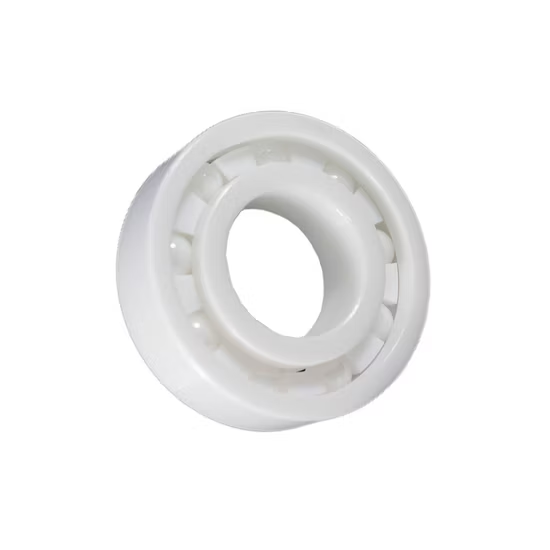
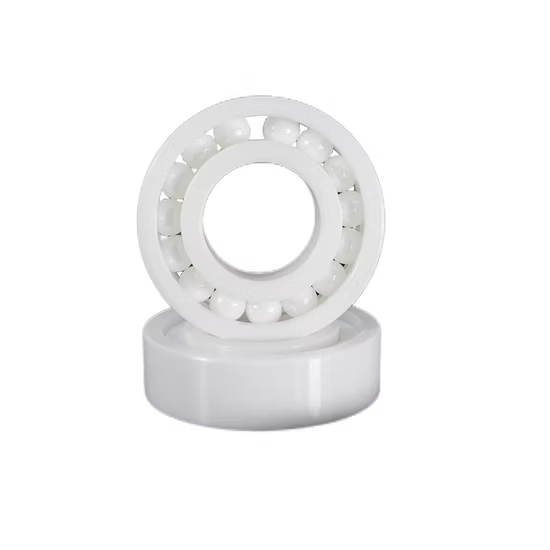
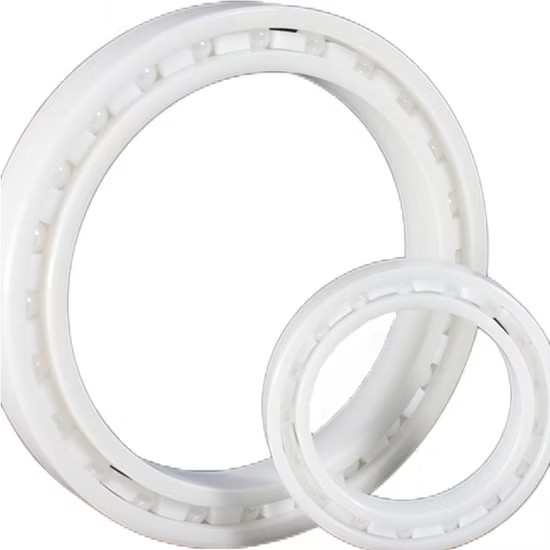

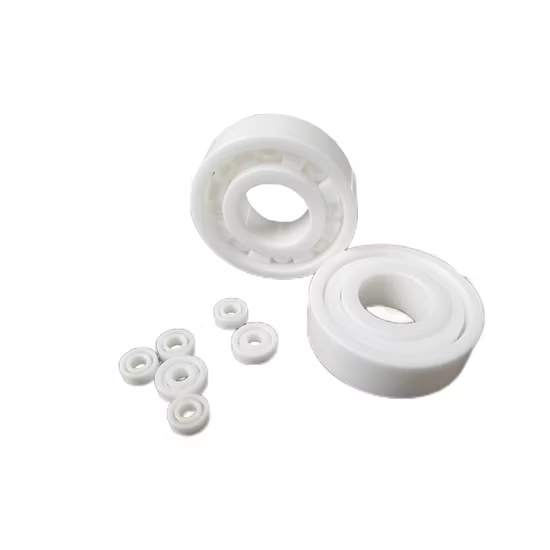
6306CE 6307CE 6308CE Zirconia Ceramic Deep Groove Ball Bearings P4
Full Brand Authorization — One consolidated shipment delivers these mixed-brand precision ceramics without coordinating multiple vendors.
| Parameter | Value |
|---|---|
| Designation | 6306CE 6307CE 6308CE |
| Bearing Type | Deep Groove Ball Bearing |
| Material | Zirconia Ceramic |
| Precision Class | P4 |
| Seal or Shield Type | Open, Rubber Seals, Iron Seals |
| Quality Level | Z1V1, Z2V2, Z3V3, Z4V4 |
| Origin | Germany, Japan, Sweden, Malaysia, China |
Note: The "CE" suffix is an unverified manufacturer designation likely indicating ceramic construction; always confirm exact material specs via official catalogs.
| Industry | Typical Applications |
|---|---|
| Chemical Processing | Pump shafts and agitators exposed to corrosive fluids |
| Semiconductor Manufacturing | Cleanroom conveyor rollers requiring non-magnetic properties |
| Food and Beverage | Washdown environments demanding electrical insulation |
| Precision Machining | High-speed spindle supports needing thermal stability |
Zirconia ceramics maintain dimensional stability when steel races would thermally bind.
In Chilean copper processing plants, I have documented countless cases where standard steel bearings seized during rapid temperature fluctuations. When a 6306CE 6307CE 6308CE zirconia ceramic deep groove ball bearing operates in high-heat zones, the ceramic material exhibits considerably less thermal expansion than chrome steel. This prevents the internal clearance from closing up, avoiding the catastrophic cage failures that halt production lines .
Selecting the right seal configuration is just as critical as the ceramic material itself. While the zirconia components resist chemical degradation, the sealing interface dictates the bearing's survival in washdown or dusty conditions. We review your specific contamination risks to recommend the optimal open, rubber-sealed, or iron-shielded variant, ensuring the 6306CE 6307CE 6308CE zirconia ceramic deep groove ball bearing performs reliably without premature ingress failure.
High-speed precision equipment generates significant internal friction heat, which degrades standard lubricants and softens steel races. Zirconia naturally resists these elevated temperatures while providing complete electrical insulation, preventing arcing damage in electric motor applications. Furthermore, the lower density of ceramic rolling elements reduces centrifugal forces on the cage at high RPMs, allowing the bearing to sustain higher limiting speeds with noticeably lower vibration signatures .
The P4 precision class guarantees exceptionally tight dimensional and running accuracy, which is non-negotiable for machine tool spindles where micron-level deviations cause visible chatter marks on finished parts. Unlike standard P0 grades that tolerate broader runout, P4 ensures the zirconia balls track perfectly within the raceway. The ceramic construction also eliminates the risk of magnetic particle attraction, keeping the internal geometry clean in sensitive manufacturing environments.
Procuring a bearing based solely on the basic 63xx number while ignoring the P4 precision and ceramic requirements leads to disastrous field results. Installing a standard steel equivalent in an electrically charged or highly corrosive environment results in rapid pitting and unplanned downtime. According to failure analysis frameworks, using incorrect materials or precision grades accounts for a significant share of premature bearing failures, ultimately voiding equipment warranties and inflating maintenance budgets .
We do not just ship boxes; we engineer the supply chain to prevent cross-reference errors. While other suppliers might swap a P4 ceramic for a P0 steel bearing because the base number matches, our technical team verifies the exact clearance, cage material, and precision suffixes. For the 6306CE 6307CE 6308CE zirconia ceramic deep groove ball bearing, we ensure the cross-reference aligns perfectly with your OEM requirements, eliminating the thermal binding and vibration issues that plague粗放 matching.
To ensure the selected bearing meets your exact operational demands, please provide the radial and axial loads, operating speeds, and ambient temperature ranges. If you are replacing an existing component, sharing the OEM equipment number allows our engineering team to perform a precise cross-reference check. This technical review guarantees the ceramic material and P4 precision class are correctly matched to your application, securing optimal L10 life and performance.
Q: How does zirconia ceramic compare to silicon nitride for deep groove ball bearings?
A: Zirconia offers superior fracture toughness and resistance to thermal shock, making it ideal for environments with rapid temperature changes. While silicon nitride is often preferred for ultra-high-speed applications due to its lower density, zirconia provides excellent corrosion resistance and electrical insulation for heavy-duty chemical and food processing equipment.
Q: How can I verify the authenticity of the P4 ceramic bearings I receive?
A: We provide full batch traceability and QR codes that can be scanned using the manufacturer's official application. This verification confirms the material composition and P4 precision grade, protecting your operation from counterfeit bearings that feature soft inner rings and cloned visual markers.
Q: What clearance class is recommended for high-temperature electric motor applications?
A: In high-heat environments, a C3 or C4 internal clearance is typically required to accommodate the thermal expansion of the shaft and housing. Our technical team reviews your specific temperature gradients to recommend the exact clearance, ensuring the bearing does not thermally bind during continuous operation.
Q: How does P4 precision affect the performance of ceramic bearings in machine tool spindles?
A: P4 precision ensures exceptionally tight dimensional and running accuracy, which minimizes vibration and prevents chatter marks on machined surfaces. This high level of precision is critical for maintaining the strict tolerances required in high-speed spindle applications, directly improving the surface finish of the final product.
Q: What mounting precautions are required for zirconia ceramic bearings to prevent damage?
A: Zirconia is highly hard but can be brittle under sharp impact. Mounting should be done using clean gloves and appropriate tools, avoiding direct hammering on the ceramic rings. If heating is required for interference fits, the thermal conductivity differences between ceramic and steel must be carefully managed to prevent thermal shock.
Our 5-step process ensures every order is engineered, validated, and supported for optimal performance.
Technical needs assessment
Custom specifications
Free samples for $50k+
Pre-shipment inspection
On-site & predictive
Our certified engineers respond within 24 hours with detailed technical specifications, pricing, and lead time information.