01
Consultation
Technical needs assessment

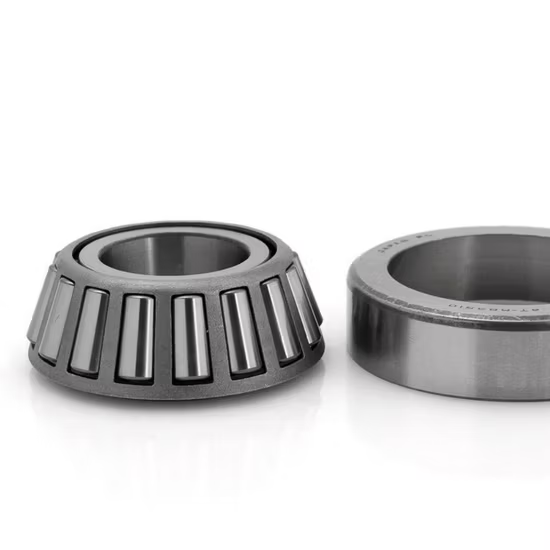
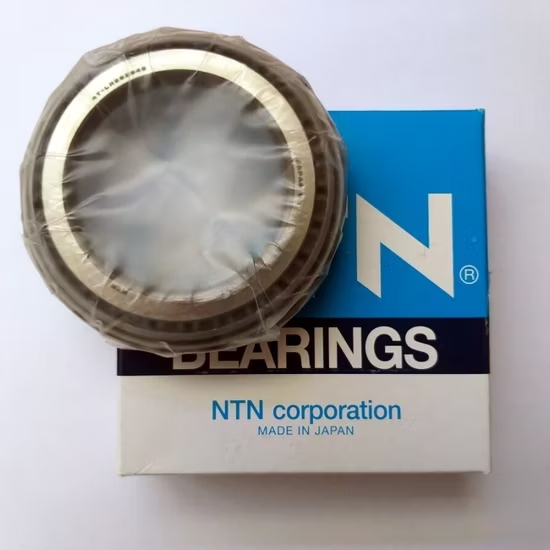
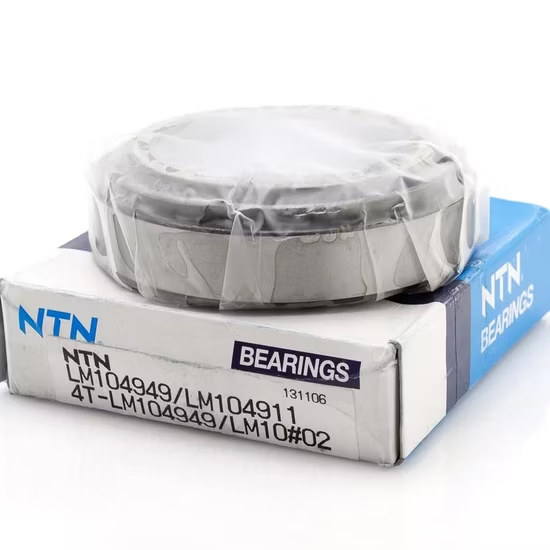
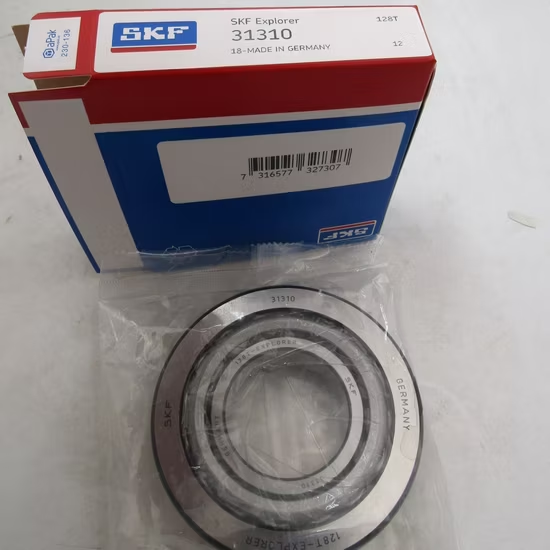
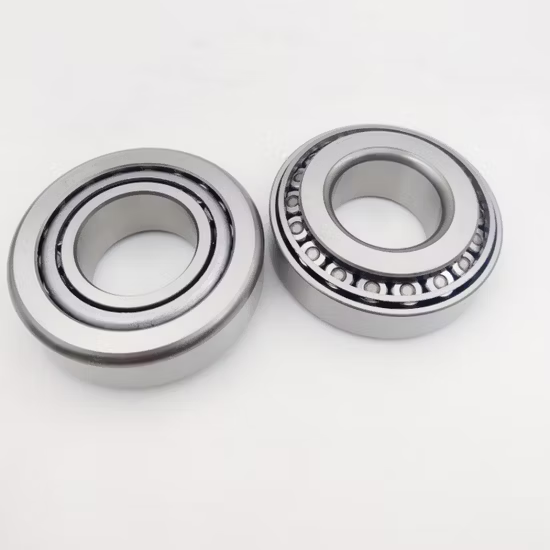
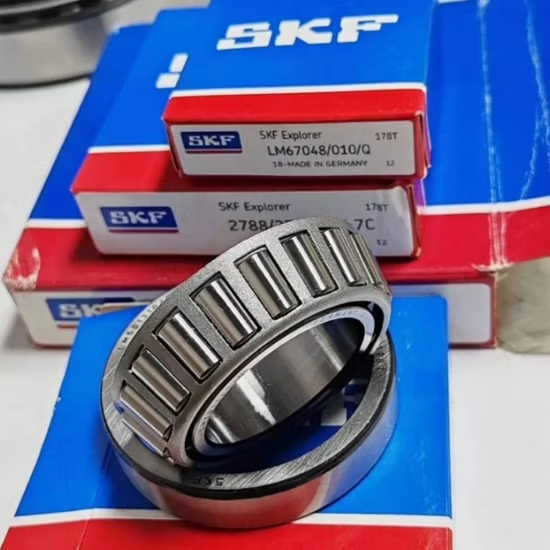
LM603049/12 Inch Tapered Roller Bearing utilizes a single-row configuration to manage combined radial and unidirectional axial loads in automotive wheel hubs. Constructed from GCr15 bearing steel, it delivers reliable contact fatigue strength and wear resistance for heavy vehicle repair and industrial gearboxes.
Multi-brand authorized supply — Consolidate your mixed SKF, FAG, and TIMKEN requirements into a single verified shipment, ensuring full batch traceability for every LM603049/12 inch tapered roller bearing.
| Parameter | Value |
|---|---|
| Designation | LM603049/12 |
| Bearing Type | Inch Tapered Roller Bearing |
| Number of Rows | Single Row |
| Precision Class | P4 |
| Material | GCr15 bearing steel |
| Cage Material Options | Nylon, Brass, or Stamped Steel (Iron) |
| Origin Options | Germany, Japan, Sweden, Malaysia, or China |
| HS Code | 8482500090 |
Note: The specific alphanumeric segments within the LM603049/12 inch tapered roller bearing designation are treated as unverified suffixes requiring exact manufacturer catalog confirmation prior to final cross-referencing.
| Industry | Typical Applications |
|---|---|
| Automotive and Heavy Vehicle | Commercial truck wheel hubs, trailer axle spindles, and steering knuckles |
| Industrial Power Transmission | Heavy-duty reduction gearboxes and conveyor drive shafts |
| Material Handling | Forklift mast rollers and overhead crane travel wheels |
| Marine and Offshore | Deck winch drives and propulsion shaft support housings |
Premature wheel end failure usually stems from internal clearance collapse rather than material fatigue.
Based on extensive field troubleshooting across Latin American transport routes, I have seen countless heavy truck axles seize unexpectedly. The root cause is rarely the metallurgical quality of the LM603049/12 inch tapered roller bearing itself; it is almost always a procurement error. When a standard internal clearance is mistakenly substituted for a thermally expanded equivalent, or when a lightweight polymer cage is forced into a high-shock environment, the resulting thermal binding destroys the assembly. These cross-reference mismatches cause catastrophic downtime long before the theoretical fatigue limit is reached .
The single-row inch taper design excels at managing the combined radial and unidirectional axial loads typical in commercial vehicle wheel ends. By supplying the LM603049/12 inch tapered roller bearing with verified P4 precision, we ensure the rolling elements maintain optimal contact stress distribution across the raceways. This geometric accuracy prevents localized edge loading during heavy cornering or braking, directly translating to smoother operation and extended service intervals for fleet maintenance teams.
Heavy vehicle axles endure severe temperature fluctuations and continuous road shock. At sustained highway speeds, friction generates significant heat, demanding an internal clearance that accommodates thermal expansion without losing the necessary preload. Simultaneously, potholes and uneven terrain transmit sharp axial impacts through the hub. Selecting the correct cage material—whether a high-strength brass retainer for shock resistance or a stamped steel variant for cost-effective standard duty—is critical to prevent cage fracture under these dynamic conditions .
Upgrading to P4 precision provides noticeably tighter dimensional tolerances and running accuracy compared to standard grades, which is essential for minimizing vibration in high-speed hub applications. The GCr15 bearing steel offers excellent contact fatigue strength, ensuring the raceways resist spalling under heavy rolling contact. Furthermore, choosing the appropriate cage option allows engineers to balance speed capabilities with shock absorption; brass cages handle heavy vibration well, while nylon variants offer lower friction and quieter operation in controlled environments.
Substituting an apparently similar bearing without verifying the exact internal geometry often leads to catastrophic warranty voidance. A mismatched cup or cone alters the load zone, causing rapid wear and unplanned downtime that far exceeds the initial savings on the component. According to industry failure analysis frameworks, a significant share of premature bearing failures originates from incorrect application selection rather than manufacturing defects .
We eliminate the risk of soft inner rings and cloned QR codes by providing direct authorized access across all major global brands. For the LM603049/12 inch tapered roller bearing, our technical team strictly verifies that the cone and cup component numbers, internal clearance, and cage materials perfectly align with your OEM requirements. We consolidate mixed-brand orders into single shipments, backed by comprehensive batch traceability, ensuring you receive genuine components that withstand the harshest operational demands without the typical multi-week lead times.
To guarantee optimal performance, please provide your specific radial and axial load profiles, operating speeds, and expected temperature ranges. Sharing the exact OEM equipment numbers allows our engineering team to perform a precise cross-reference check, ensuring the internal geometry and cage selection perfectly match your application requirements.
Q: How do I verify the authenticity of the received components?
A: Every genuine unit includes traceable documentation and a unique QR code. Simply scan this code using the manufacturer's official mobile application to instantly verify the production batch, origin, and authenticity of the components, completely eliminating the risk of installing counterfeit parts with compromised metallurgy.
Q: Why must both the cone and cup numbers be verified during cross-referencing?
A: Inch tapered roller bearings consist of separate inner and outer rings. Matching only the base designation while ignoring the specific cup or cone suffixes can result in incorrect contact angles or internal clearances, leading to rapid thermal binding and catastrophic failure under load.
Q: Do the material options refer to seals or cages?
A: The nylon, brass, and iron options refer specifically to the cage materials, not seals. Selecting the correct retainer is crucial; brass handles heavy shock loads in truck axles, while polymer variants reduce friction and noise in lighter, high-speed industrial gearboxes.
Q: How does P4 precision benefit automotive wheel hub applications?
A: P4 precision ensures significantly tighter dimensional tolerances and superior running accuracy. This minimizes vibration and uneven load distribution across the rollers, directly extending the service life of the hub assembly and improving the overall ride quality of heavy commercial vehicles.
Our 5-step process ensures every order is engineered, validated, and supported for optimal performance.
Technical needs assessment
Custom specifications
Free samples for $50k+
Pre-shipment inspection
On-site & predictive
Our certified engineers respond within 24 hours with detailed technical specifications, pricing, and lead time information.