01
Consultation
Technical needs assessment

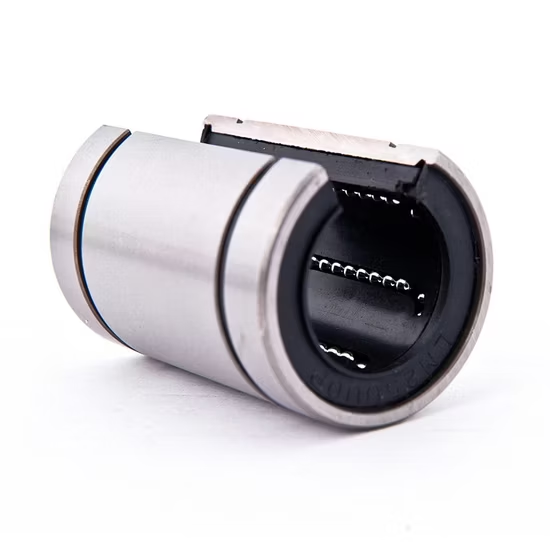


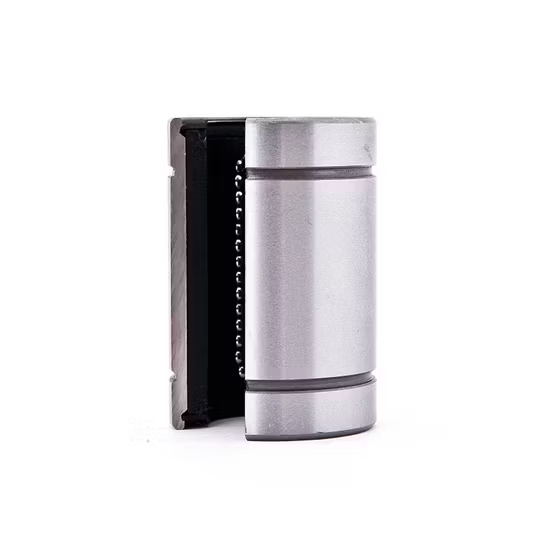
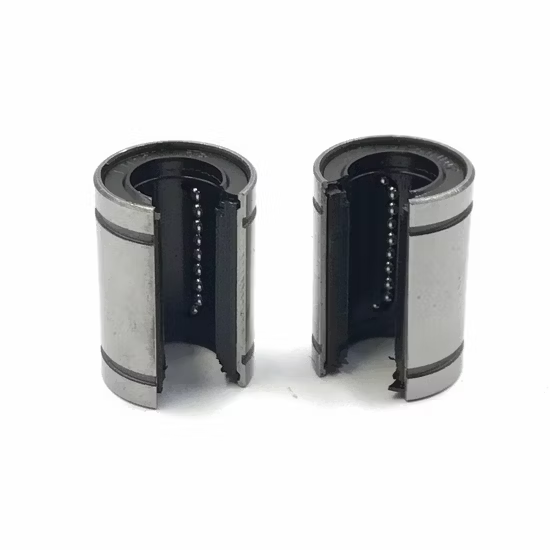
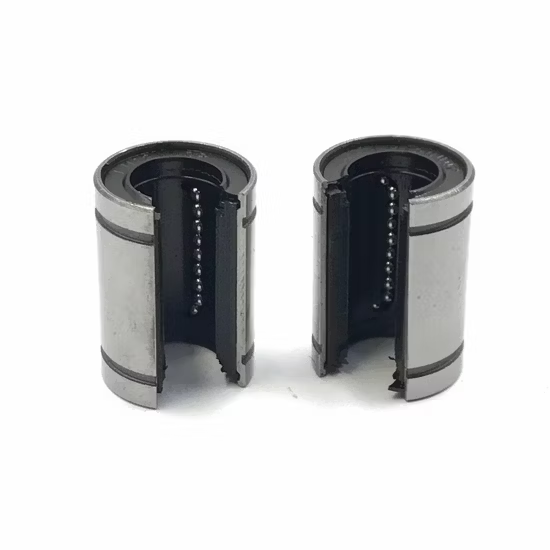
Lm6-Aj Open Type Linear Bearing — open shape design enables adjustable clearance within the housing for fine-tuned linear motion control.
Cross-reference verification covers shape, cage material, and precision class alignment to prevent field binding or premature cage failure.
Verified via official apps — Every Lm6-Aj open type linear bearing shipped includes batch traceability scannable through the manufacturer's official authentication application.
| Parameter | Value |
|---|---|
| Designation | Lm6-Aj |
| Bearing Type | Linear Bearing |
| Shape | Open |
| Flange Shape | Circular |
| Series | LM |
| Material Options | Bearing steel, stainless steel variants |
| Cage Material | Nylon |
| Precision Rating | P0, P6, P5, P4, P2 |
| Feature | High speed, low noise |
| Origin | Multiple global manufacturing hubs |
Note: The 'Aj' suffix is an unverified designation requiring manufacturer catalog confirmation, as standard open-type linear bearings typically use 'OP'.
| Industry | Typical Applications |
|---|---|
| Automation & Robotics | Multi-axis cartesian robot gantries, pick-and-place linear actuators |
| Machine Tools | CNC router spindle traverse axes, precision grinding machine worktables |
| Semiconductor Manufacturing | Wafer transfer mechanism guide rails, cleanroom assembly linear stages |
| Material Handling | Automated storage and retrieval system shuttle tracks, conveyor diverters |
Matching the basic designation while ignoring housing tolerances causes premature binding in high-speed traverse axes.
Procurement teams often source replacements based solely on the inner diameter and basic series, assuming dimensional interchangeability guarantees functional success. In automated gantries and precision grinding tables, this oversight leads to catastrophic rail binding or nylon cage fragmentation within weeks of installation. The reality of linear motion is that microscopic deviations in rail parallelism or housing bore geometry demand specific clearance adjustments that standard closed bearings cannot accommodate . When an open-style bearing is forced into a misaligned housing without the ability to adjust the wrap-around clearance, the resulting edge loading destroys the rolling elements and scars the shaft. Sourcing the correct configurable design is the only way to prevent unplanned downtime on critical CNC machinery.
The primary advantage of this configurable design lies in its ability to compensate for inevitable machining imperfections in the support housing. By utilizing an open profile, the bearing can be pressed into a slotted housing where a clamping screw actively adjusts the internal clearance against the shaft. This mechanical tuning neutralizes the effects of rail parallelism deviations that would otherwise induce severe internal stress. Our technical team reviews the housing clamping mechanism and shaft deflection characteristics to ensure the selected precision class actually functions as intended in the assembled state.
High-speed traverse axes generate substantial friction heat, which alters the internal geometry and demands careful clearance management. If the housing clamping force is excessive, thermal expansion of the shaft leaves no room for the bearing to glide, resulting in immediate seizure. Conversely, insufficient clamping allows the bearing to rotate within the housing, causing severe fretting corrosion. Lubrication presents another hurdle; while nylon cages reduce weight and noise, they require consistent relubrication intervals to prevent dry running in high-cycle applications . Contaminant ingress from coolant or metallic dust further complicates the environment, making external wiper seals on the carriage mandatory to protect the rolling contact zones.
The open shape is not merely a manufacturing shortcut; it is a critical engineering feature designed for adjustable preload in precision linear stages. When paired with a slotted pillow block, the housing can be tightened to eliminate play, achieving the rigidity required for heavy cutting loads on machine tool spindles. The nylon cage construction significantly reduces moving mass, allowing for rapid acceleration and deceleration without generating excessive acoustic noise. Material selection plays a vital role here; components are available in bearing steel or stainless steel variants to address specific environmental demands. Furthermore, the wide range of precision ratings allows engineers to balance cost against the strict geometric tolerances required for semiconductor wafer transfer mechanisms, ensuring the straightness error remains within acceptable micrometers over the full stroke length.
Installing a closed bearing in a housing that requires clearance adjustment inevitably leads to premature failure and voided equipment warranties. The resulting edge loading accelerates fatigue spalling on the shaft and the bearing raceway, turning a minor maintenance task into a complete axis rebuild. Beyond the direct replacement costs, the unplanned downtime on a multi-axis CNC router or an automated assembly line disrupts the entire production schedule . Utilizing the correct adjustable profile prevents these compounding losses by ensuring the linear guide operates within its designed kinematic envelope.
The market is saturated with cloned linear bearings featuring soft inner rings that pass casual visual inspections but fail under dynamic loads. We mitigate this risk by providing authorized multi-brand coverage, ensuring every batch is fully traceable to the original manufacturer's production facilities. Cross-referencing is not just about matching the bore size; our engineers verify the exact cage material, shape, and precision suffixes to prevent thermal binding in your specific application. We reject the practice of substituting standard closed bearings when an adjustable profile is specified, protecting your equipment from the devastating effects of internal misalignment and premature cage fracture.
To ensure the selected linear guide meets your exact kinematic requirements, please provide the maximum radial and axial loads, traverse speed, and operating temperature range. Sharing the specific OEM equipment number or the detailed housing drawing allows our engineering team to verify the clamping mechanism and confirm the necessary precision class. This technical review guarantees that the adjustable clearance and material options are perfectly aligned with your application's environmental and dynamic demands.
Q: How does the open-type design affect housing tolerance requirements?
A: The open profile requires a specifically machined slotted housing with a clamping mechanism. This design allows the housing to compress slightly around the bearing, adjusting the internal clearance to compensate for shaft deflection or rail parallelism errors, which is impossible with standard closed linear bearings.
Q: What are the cross-reference pitfalls when matching linear bearings?
A: The most common error is matching the inner diameter and basic series while ignoring the shape and precision suffixes. Substituting a closed bearing for an adjustable open type, or ignoring the specific cage material requirements for high-speed applications, leads to immediate binding or premature cage failure in the field.
Q: How to verify authenticity and batch traceability for linear bearings?
A: Genuine components feature specific laser-etched markings and batch codes that can be scanned using the manufacturer's official mobile application. We provide comprehensive documentation, including Certificates of Conformity and material test reports, ensuring full traceability from the factory to your assembly line.
Q: What is the difference between standard and high-precision ratings in linear motion?
A: Standard ratings like P0 or P6 are suitable for general material handling where minor geometric deviations are acceptable. High-precision ratings like P4 or P2 enforce extremely tight tolerances on bore diameter and straightness, which are mandatory for machine tool spindles and semiconductor manufacturing to prevent vibration and ensure exact positioning.
Q: How to select the right cage material for linear applications?
A: Nylon cages are preferred for high-speed and low-noise applications due to their low mass and self-lubricating properties, though they have temperature limitations. For environments with elevated thermal loads or aggressive chemical exposure, metallic cages or specific stainless steel variants must be evaluated to maintain structural integrity.
Our 5-step process ensures every order is engineered, validated, and supported for optimal performance.
Technical needs assessment
Custom specifications
Free samples for $50k+
Pre-shipment inspection
On-site & predictive
Our certified engineers respond within 24 hours with detailed technical specifications, pricing, and lead time information.