01
Consultation
Technical needs assessment

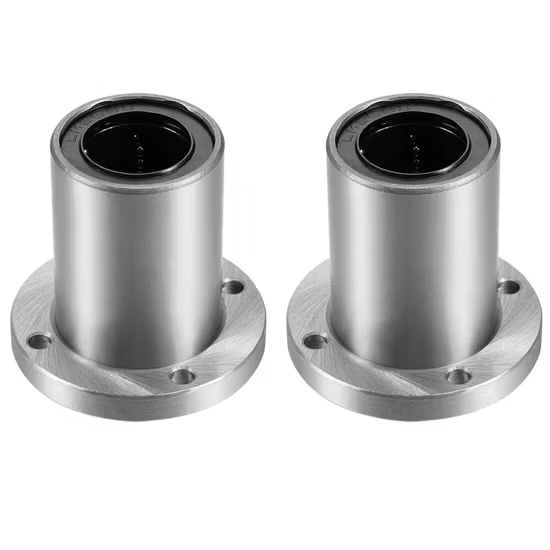
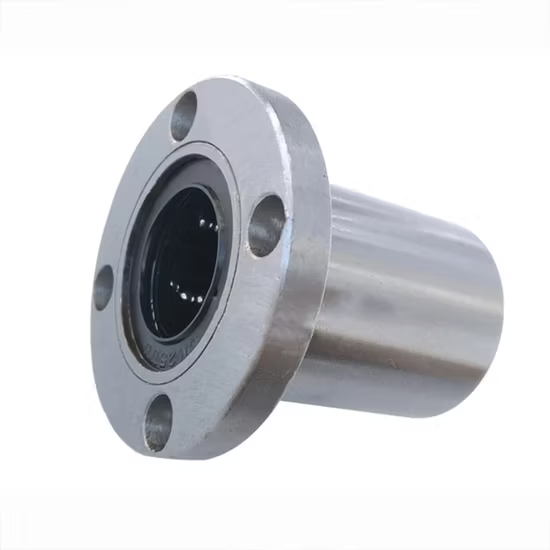

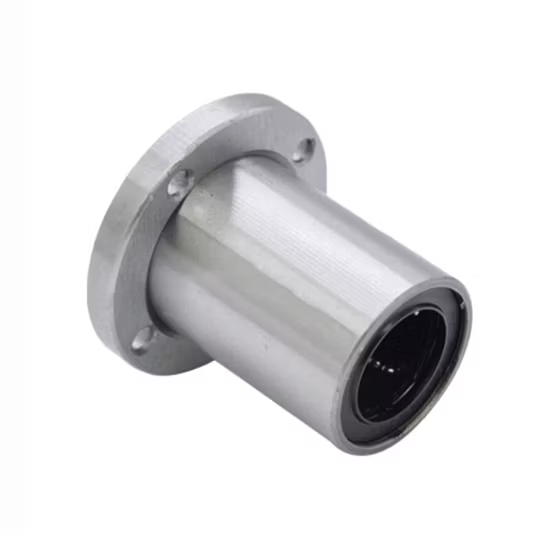
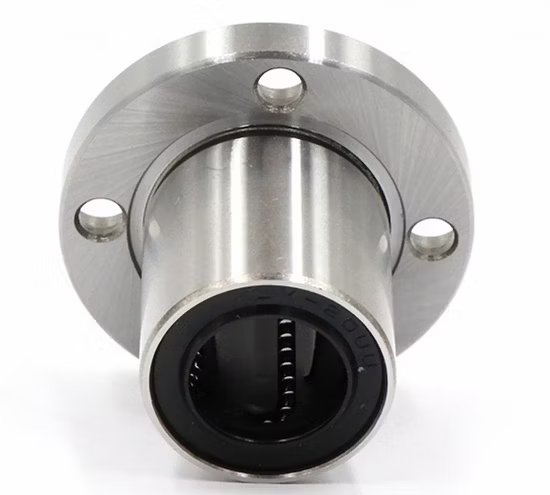
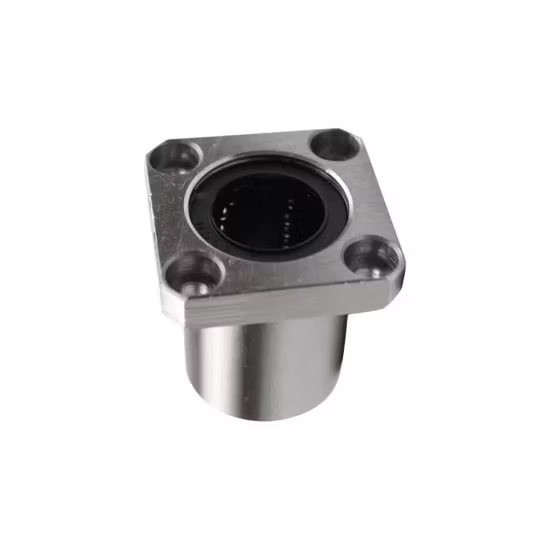
LMF6LUU LMF8LUU LMF10LUU Linear Bearing — circular flange design with bearing steel construction and nylon cages ensures smooth, low-noise operation at high speeds.
Verified via official apps — Scan the QR code on each LMF6LUU, LMF8LUU, and LMF10LUU package using the manufacturer's official application to confirm batch authenticity before installation.
| Parameter | Value |
|---|---|
| Designation | LMF6LUU LMF8LUU LMF10LUU |
| Product Type | Linear Bearing |
| Series | LM |
| Flange Shape | Circular |
| Material | Bearing Steel |
| Cage Material | Nylon Cage |
| Precision Rating | P0, P6, P5, P4, P2 |
| Feature | High Speed, Low Voice |
| Origin | Germany, Japan, Sweden, Malaysia, China |
Note: LMF and LUU are unverified suffixes requiring manufacturer catalog confirmation for exact seal and flange dimensional standards.
| Industry | Typical Applications |
|---|---|
| Automation Equipment | High-speed pick-and-place robotic arms, linear actuators |
| Machine Tools | CNC router gantry slides, precision grinding machine axes |
| Material Handling | Automated guided vehicle steering mechanisms, conveyor diverters |
| 3D Printers | High-frequency extruder carriage guides, Z-axis lead screw supports |
| Packaging Machinery | Form-fill-seal machine cross-seal jaws, carton erecting slides |
Friction from incompatible lubrication destroys nylon cages long before the steel shaft shows wear.
In automated assembly environments, rapid reciprocating motion generates localized heat that breaks down standard grease, causing the nylon cage to soften and eventually fracture. I have seen entire production lines halt because a procurement team sourced visually identical but internally flawed components to save margin. When the internal ball retainer shatters under high-frequency cycling, the carriage jams instantly, triggering catastrophic downtime that far exceeds the initial part cost .
Selecting the right LMF6LUU LMF8LUU LMF10LUU linear bearing requires looking past the outer shell to evaluate how the nylon cage interacts with the rolling elements during rapid directional changes. Our technical review process verifies that the internal ball arrangement and cage pocket geometry are optimized for the specific stroke length and acceleration of your automation equipment, preventing the micro-skidding that leads to premature surface fatigue.
Continuous high-speed reciprocation demands a precise balance between sealing friction and contamination exclusion. While sealed variants protect against airborne particulates in packaging or 3D printing environments, the contact seals generate internal heat that must be managed through compatible lubrication. If the grease viscosity drops at elevated operating temperatures, the nylon cage loses its hydrodynamic film, resulting in direct metal-to-polymer contact and accelerated degradation .
The circular flange design provides a compact, secure mounting footprint directly onto carriage plates, minimizing overhang and deflection under moment loads. Available in precision classes ranging from P0 to P2, these components allow machine builders to match the running accuracy to the specific tolerance stack-up of the application. The bearing steel construction ensures dimensional stability, while the nylon cage reduces moving mass and dampens operational noise, which is critical for maintaining smooth motion in high-speed pick-and-place routines.
Installing components with soft inner rings or cloned traceability codes leads to unpredictable carriage binding and severe shaft scoring. According to ISO 15243 damage classification frameworks, improper material hardness in linear guides manifests as rapid wear and spalling, ultimately voiding equipment warranties and forcing unplanned maintenance. The financial impact of a single jammed slide on a synchronized assembly line easily eclipses the cost of sourcing fully verified, batch-traceable replacements .
Mixed-brand procurement often results in cross-reference errors where the base designation matches, but the internal seal type or flange thickness differs, causing mounting interference. We provide authorized distribution coverage that ensures every LMF6LUU, LMF8LUU, and LMF10LUU unit is matched not just by dimension, but by exact internal geometry and lubrication compatibility. By demanding batch traceability and dimensional inspection reports, we eliminate the risk of installing counterfeit units that pass casual visual checks but fail under operational loads.
To ensure optimal performance and longevity, share your specific radial and axial load profiles, operating speeds, and ambient temperature ranges for a comprehensive L10 life calculation. Providing the original OEM equipment number or detailed carriage dimensional drawings allows our engineering team to perform an exact cross-reference review, confirming that the flange geometry and internal clearance perfectly match your machine tool or automation requirements.
Q: How can I verify the authenticity of these linear bearings before installation?
A: You can verify authenticity by scanning the QR code on the packaging using the manufacturer's official mobile application. This confirms the batch origin and exposes cloned codes often found on counterfeit units. We also provide full batch traceability documentation and Certificates of Conformity with every shipment to guarantee genuine product provenance.
Q: What cross-reference checks are critical for the circular flange and seal variants?
A: Beyond matching the base designation, it is crucial to verify the exact flange thickness, mounting hole spacing, and internal seal geometry. A mismatch in these dimensions can cause mounting interference or alter the preload. We review these specific parameters against your OEM drawings to ensure seamless integration without mechanical binding.
Q: How do I select the correct precision rating for high-speed machine tools?
A: High-speed machine tool applications typically require tighter tolerances to maintain positioning accuracy and minimize vibration. While standard automation might suffice with P6 or P0, precision grinding or CNC routing often demands P5 or P4 ratings. Share your specific positional tolerance requirements so we can recommend the appropriate precision class for your carriage.
Q: What causes nylon cages to fail in high-frequency automation equipment?
A: Nylon cages typically fail due to thermal degradation from friction or chemical breakdown from incompatible lubricants. In high-frequency reciprocating applications, inadequate grease film thickness leads to direct contact between the rolling elements and the cage pockets. Ensuring the factory lubrication matches your operating speed and temperature prevents this premature fracture.
Q: How should I determine the appropriate lubrication for high-speed linear motion?
A: The lubrication must maintain its viscosity at the peak operating temperature generated by the seal friction and high-speed cycling. Using a grease with the wrong base oil viscosity or thickener type will cause it to purge from the carriage or break down. Provide your duty cycle and thermal profile so we can verify the factory grease compatibility or recommend a suitable maintenance regimen.
Our 5-step process ensures every order is engineered, validated, and supported for optimal performance.
Technical needs assessment
Custom specifications
Free samples for $50k+
Pre-shipment inspection
On-site & predictive
Our certified engineers respond within 24 hours with detailed technical specifications, pricing, and lead time information.