01
Consultation
Technical needs assessment


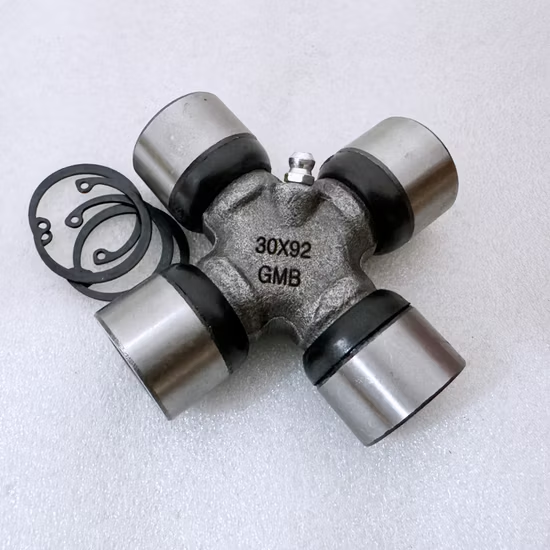
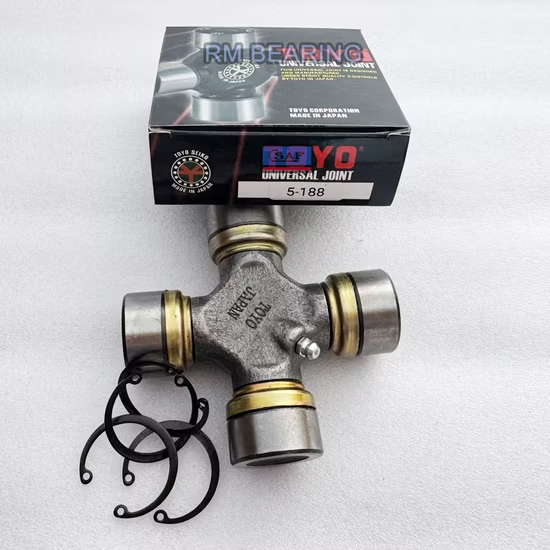
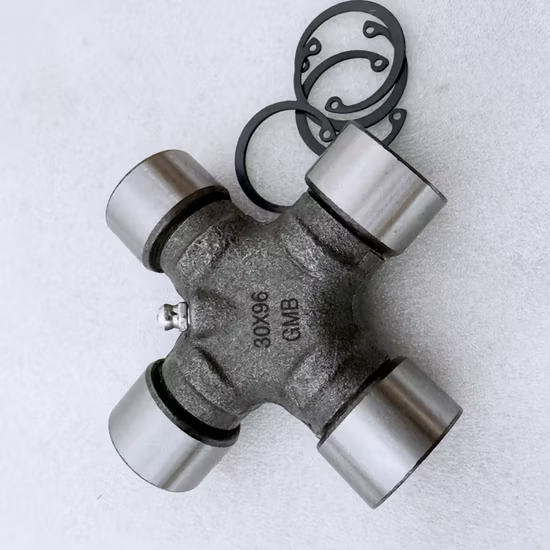
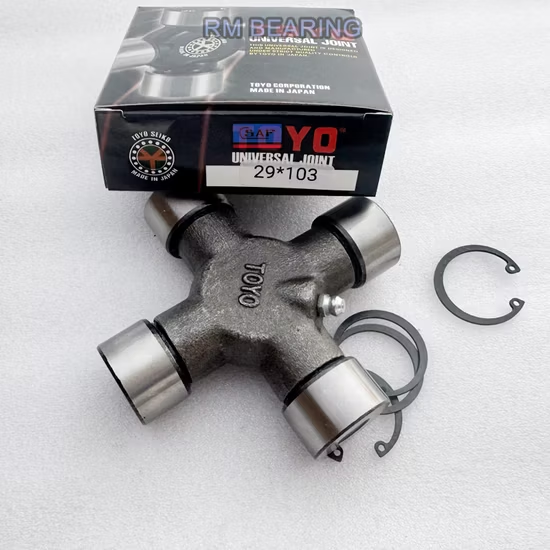
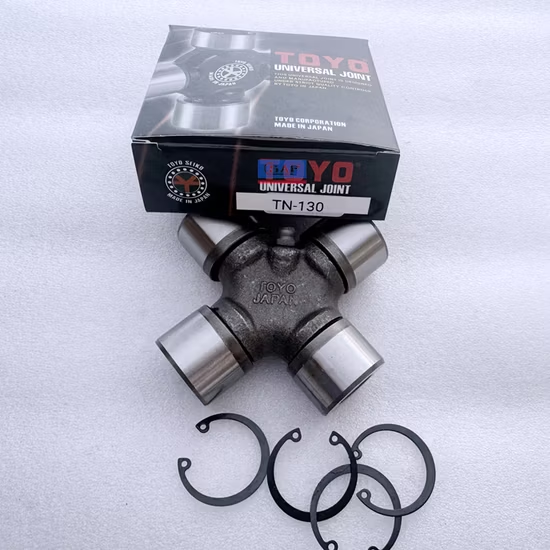
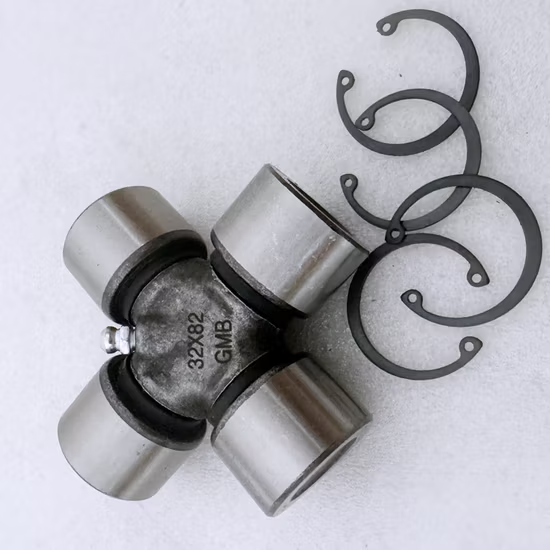
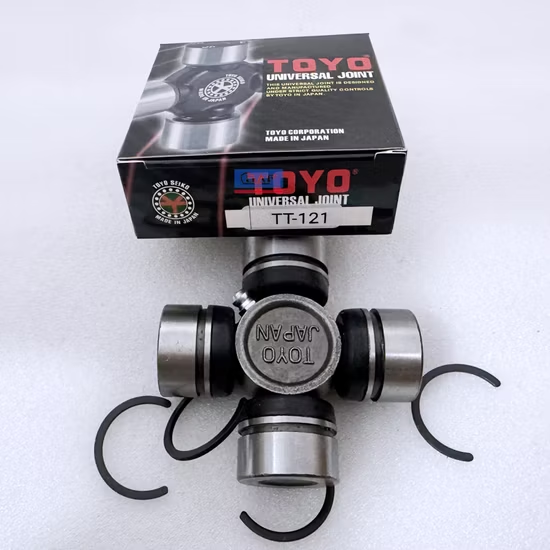
Guis-65 Universal Joint Cross Bearing — cross-referenced to 146142ws and Uj340 for automotive, tractor, and construction machinery driveline applications.
Every order ships with full documentation package including material test reports, dimensional and running accuracy inspection records, and batch traceability for independent verification at receiving.
Traceable Batch Verification — Every Guis-65 shipment supports official manufacturer app scanning to confirm production origin and metallurgical batch records before installation.
| Parameter | Value |
|---|---|
| Designation | Guis-65 |
| Product Type | Universal Joint Cross Bearing |
| Bearing Type | Cross Shaft / Trunnion |
| Structure | Single |
| Material Options | Available in standard bearing steel or stainless steel variants |
| Certification | ISO |
| Customized Support | OEM |
| HS Code | 8483600090 |
Note: The "ws" designation found in cross-reference 146142ws is an unverified suffix requiring specific manufacturer catalog confirmation for exact internal geometry.
| Industry | Typical Applications |
|---|---|
| Automotive & Heavy Vehicles | Driveshaft articulation joints, steering column intermediate shafts |
| Construction & Earthmoving | Articulated hauler pivot points, excavator swing drive linkages |
| Agricultural Machinery | Tractor PTO shaft connections, combine harvester driveline universals |
| Rolling Equipment | Mill roll transfer shafts, continuous caster drive couplings |
Internal geometry mismatches cause catastrophic trunnion snapping long before the steel yields.
In heavy vehicle repair bays across the Middle East, I have repeatedly inspected universal joints where the basic designation matched perfectly, yet the cross shaft shattered under peak torque. The root cause is rarely the outer dimensions; it is the internal needle roller profile and the lubrication groove depth. When a Guis-65 universal joint cross bearing is sourced purely by basic number without verifying the trunnion end-play and internal clearance, the resulting friction generates localized heat. This thermal binding destroys the journal surface, turning a routine maintenance interval into an unplanned drivetrain failure .
Selecting the correct component for a high-torque driveshaft requires looking past the outer diameter. A genuine Guis-65 universal joint cross bearing must accommodate the specific angular misalignment and shock loads inherent to heavy machinery. Our technical review process ensures that the cross-reference to equivalents like Guis65, 146142ws, or Uj340 accounts for the exact needle roller cage material and trunnion seal configuration. This prevents the common error of installing a standard-duty cross in an application that demands heavy-duty impact resistance, ensuring the drivetrain survives the harsh operating environment.
Universal joints in construction and agricultural equipment endure severe combined loading, transitioning rapidly from steady rotational torque to sudden shock loads when engaging hard ground or heavy payloads. These impact forces demand a cross shaft with high core toughness to prevent brittle fracture at the trunnion root. Furthermore, the operating temperature fluctuates significantly as friction builds up inside the bearing caps. If the internal clearance is too tight, thermal expansion eliminates the oil film, leading to metal-to-metal contact. Proper lubrication channel design and seal integrity are critical to keeping abrasive dust out while retaining high-viscosity grease under extreme pressure .
The structural integrity of this component relies heavily on the case-hardening depth of the trunnion journals and the precision of the needle roller sorting. While standard bearing steel provides excellent fatigue strength for typical driveline applications, stainless steel variants are available for environments exposed to corrosive elements, such as marine winches or agricultural chemical spreaders. The internal clearance must be carefully matched to the operating temperature range; a cross shaft running continuously at high speeds requires slightly more internal play to accommodate thermal expansion than one used in slow-speed, high-torque pivot applications. Ensuring the correct seal type—whether lip seals for dust exclusion or O-rings for moisture retention—dictates the service interval and overall reliability of the assembly.
Installing an incorrectly specified cross shaft rarely results in a graceful degradation; it typically ends in sudden mechanical seizure. According to failure analysis frameworks like ISO 15243, inadequate internal clearance or incorrect material hardness leads to severe smearing and eventual trunnion fracture. This catastrophic damage often destroys the mating yokes and flanges, multiplying the repair cost far beyond the price of the bearing itself. The resulting unplanned downtime for a mining hauler or a critical rolling mill can halt an entire production line, voiding equipment warranties and causing massive revenue losses .
Sourcing a Guis-65 universal joint cross bearing from us means receiving a component verified against three critical dimensions, not just the basic outer diameter. We actively check the trunnion diameter, the overall cross width, and the internal lubrication groove alignment to ensure it matches the OEM yoke requirements. Our inventory provides authorized coverage across multiple brands, allowing mixed-brand orders for complex fleet maintenance without compromising traceability. Every batch includes full documentation, and our engineering team reviews the specific load and angular displacement parameters of your application to confirm the selected cross shaft will handle the operational stress without premature fatigue.
To ensure the selected component perfectly matches your equipment, please provide the specific OEM equipment number or the exact dimensions of the existing yoke bore and cross width. Sharing the operational parameters—including maximum torque, continuous RPM, and the typical angular misalignment during operation—allows our engineering team to verify the L10 life and confirm the internal clearance class. If the original part is obsolete, detailing the environmental conditions, such as exposure to abrasive dust or corrosive chemicals, helps us recommend the most suitable material variant and seal configuration for a reliable replacement.
Q: How do I confirm the exact Guis-65 dimensions for my specific driveshaft yoke?
A: Base designations often cover multiple internal variations. To guarantee fitment, measure the trunnion diameter and the overall cross width from tip to tip. Providing the OEM equipment serial number or the original yoke casting number allows us to cross-reference the exact internal geometry and seal configuration required for your specific drivetrain assembly, avoiding costly installation rework.
Q: What internal parameters must align when cross-referencing to 146142ws or Uj340?
A: Beyond the basic outer dimensions, you must verify the trunnion end-play, the needle roller cage material, and the lubrication groove depth. A mismatch in these internal features can cause thermal binding under load or inadequate grease distribution, leading to premature journal wear. Our technical review ensures these hidden parameters align with your operational torque and speed requirements.
Q: How does material selection impact the lifespan of a universal joint cross in harsh environments?
A: Standard bearing steel offers superior fatigue strength for high-torque applications, but it requires robust sealing against moisture. Stainless steel variants provide substantially higher corrosion resistance for agricultural or marine environments, though they may have different load limits. Selecting the right material based on your specific exposure to chemicals, saltwater, or abrasive dust is critical for maximizing service intervals.
Q: What are the most common failure modes for cross bearings in heavy construction machinery?
A: In high-shock environments, the most frequent failures involve trunnion root fatigue, needle roller brinelling, and seal extrusion leading to grease starvation. Misalignment beyond the design angle causes uneven load distribution across the rollers, accelerating wear. Regular purging of old grease and checking for axial play in the bearing caps are essential maintenance steps to prevent catastrophic drivetrain seizures.
Our 5-step process ensures every order is engineered, validated, and supported for optimal performance.
Technical needs assessment
Custom specifications
Free samples for $50k+
Pre-shipment inspection
On-site & predictive
Our certified engineers respond within 24 hours with detailed technical specifications, pricing, and lead time information.