01
Consultation
Technical needs assessment

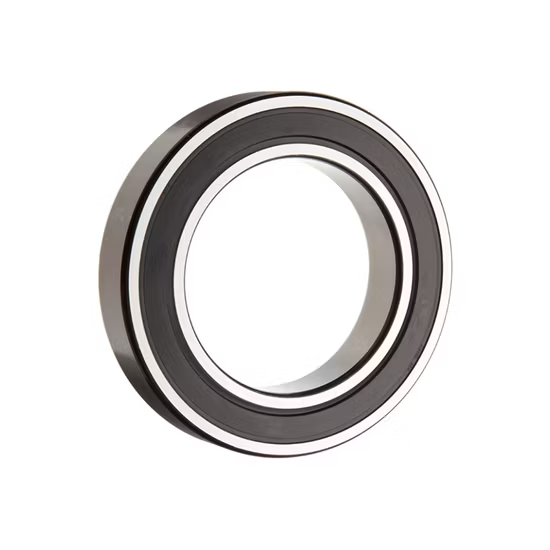


NSK 6902 2RS Deep Groove Ball Bearing — engineered for stable radial load support and high-speed rotational performance in electric motors and industrial gearboxes.
Unified Multi-Brand Sourcing — Consolidate your procurement pipeline by securing the NSK 6902 2RS alongside other international marques through a single authorized channel, guaranteeing unified batch traceability across your entire assembly line.
| Parameter | Value |
|---|---|
| Designation | NSK 6902 2RS |
| Bearing Type | Deep Groove Ball Bearing |
| Seal or Shield Type | Rubber Seals |
| Noise and Vibration Level | Z1V1, Z2V2, Z3V3, Z4V4 |
| Material | Standard bearing steel, with ceramic rolling element variants available |
| Origin | Japan / Germany / Sweden / Malaysia / China |
| Cross Reference | 61902, 6902 |
Note: The "2RS" suffix is used here as a general industry designation for double rubber seals; please verify against the specific NSK catalog nomenclature (such as 2RS1 or 2RSH) for exact seal geometry.
| Industry | Typical Applications |
|---|---|
| Electric Motors | High-speed rotor shafts requiring low-noise Z3V3 or Z4V4 grades |
| Industrial Gearboxes | Secondary shaft support where rubber seals prevent lubricant leakage |
| General MRO | Replacement for standard 61902 cross-references in conveyor drive pulleys |
Matching the exact seal configuration and internal clearance prevents thermal binding in compact motor housings.
Procurement teams often treat the NSK 6902 2RS deep groove ball bearing as a generic commodity, overlooking how a mismatched internal clearance causes catastrophic seizure under thermal expansion. We frequently see cloned QR codes on counterfeit units masking soft inner rings that fail prematurely under continuous radial loads. Sourcing from unauthorized traders often results in base numbers matching while critical internal design parameters diverge from OEM requirements .
Selecting the correct NSK 6902 2RS deep groove ball bearing requires balancing seal friction against operating temperatures to avoid premature grease degradation. Rubber seals provide excellent contamination exclusion for dusty environments, but the contact lip generates localized heat at high RPMs. Our technical review ensures the selected seal variant aligns with your specific speed and thermal limits, preventing the lubricant breakdown that plagues poorly specified replacements.
Electric motors and gearboxes subject deep groove ball bearings to continuous radial loads while generating significant internal heat. If the internal clearance is not specified correctly for the operating temperature, the thermal expansion of the shaft and housing will eliminate the internal play, leading to excessive preload. Proper lubrication selection and seal integrity are equally critical to prevent moisture ingress and maintain the acoustic performance required for household appliances and precision conveyors .
The Z1V1 through Z4V4 noise and vibration classifications dictate the acoustic performance of the bearing, with Z4V4 reserved for ultra-quiet electric motor applications where rotor vibration must be minimized. While standard units utilize high-carbon chrome steel for optimal load capacity, ceramic rolling element variants are available for applications demanding electrical insulation or reduced centrifugal forces at extreme speeds. Understanding these suffix and material distinctions ensures the component survives the specific dynamic forces of your machinery without generating unacceptable acoustic emissions.
Installing a standard clearance unit where a C3 clearance was specified leads to rapid thermal binding, resulting in unplanned downtime and catastrophic damage to the motor shaft. Counterfeit bearings with improperly heat-treated rings exhibit hardness well below specification, accelerating spalling and fatigue failure under normal operating loads. These premature failures void equipment warranties and force maintenance teams into reactive repair cycles, ultimately costing far more than the initial price difference of a genuine, correctly specified component .
We eliminate the risk of soft inner rings by supplying only authorized inventory with verifiable origins, ensuring the NSK 6902 2RS you receive matches the metallurgical standards of the manufacturer's production facilities. Cross-referencing errors are prevented by validating not just the base 61902 designation, but also the exact seal type and noise grade required by your OEM documentation. Our mixed-brand consolidation allows you to source this specific deep groove ball bearing alongside other international marques in a single shipment, streamlining your receiving inspections.
To ensure optimal performance, share your radial and axial load profiles, operating speeds, and thermal environments so our engineering team can validate the L10 life and clearance selection. If you are replacing an existing component, provide the OEM equipment number or the exact cross-reference designation currently in use. This technical data allows us to confirm the precise seal geometry and noise grade required for your specific application, eliminating guesswork from your procurement process.
Q: How do I verify the authenticity of the NSK 6902 2RS using official apps?
A: Genuine units feature specific batch codes and QR markers that link directly to the manufacturer's official verification application. Scanning these codes confirms the production facility, date, and original distribution channel, instantly exposing counterfeit products that rely on cloned packaging. We provide full batch traceability documentation to support this digital authentication process before the components even reach your assembly floor.
Q: Why must internal clearance be matched during cross-referencing?
A: A base number match is insufficient if the internal clearance does not account for the thermal expansion of your specific shaft and housing materials. Installing a standard clearance unit in a high-temperature motor causes thermal binding and seizure, whereas the correct expanded clearance maintains the necessary oil film thickness. We verify these critical suffixes to ensure the cross-referenced part survives your exact operating conditions.
Q: What is the exact meaning of the 2RS suffix compared to 2RS1 or 2RSH?
A: While "2RS" is widely used to denote double rubber seals, specific manufacturer catalogs often use 2RS1 or 2RSH to define the exact contact lip geometry and friction characteristics. This distinction is vital for high-speed electric motors where seal friction generates heat. We cross-check your application parameters against the official nomenclature to supply the precise seal variant required for your RPM and thermal limits.
Q: How do I choose between Z1V1 and Z4V4 quality levels for electric motors?
A: The Z and V groups define the strict limits for acoustic noise and vibration amplitude during rotation. Standard industrial gearboxes typically perform well with Z1V1 or Z2V2, while precision electric motors and household appliances demand Z3V3 or Z4V4 to prevent audible hum and rotor vibration. Selecting the correct grade ensures the bearing meets the acoustic specifications of your final assembled product.
Q: What are the recommended mounting practices for rubber-sealed deep groove ball bearings?
A: Rubber-sealed units are pre-lubricated and should not be washed or heated beyond the thermal limit of the seal elastomer. When pressing the bearing onto a shaft, apply force exclusively to the inner ring to prevent transferring the load through the rolling elements and damaging the raceways. Induction heating is preferred for larger batches, provided the temperature is strictly controlled to preserve the factory grease and seal integrity.
Our 5-step process ensures every order is engineered, validated, and supported for optimal performance.
Technical needs assessment
Custom specifications
Free samples for $50k+
Pre-shipment inspection
On-site & predictive
Our certified engineers respond within 24 hours with detailed technical specifications, pricing, and lead time information.