01
Consultation
Technical needs assessment


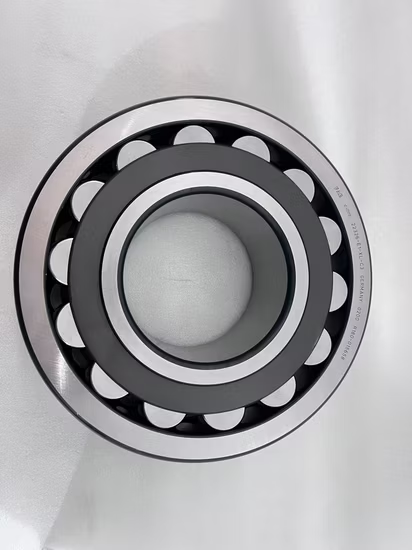
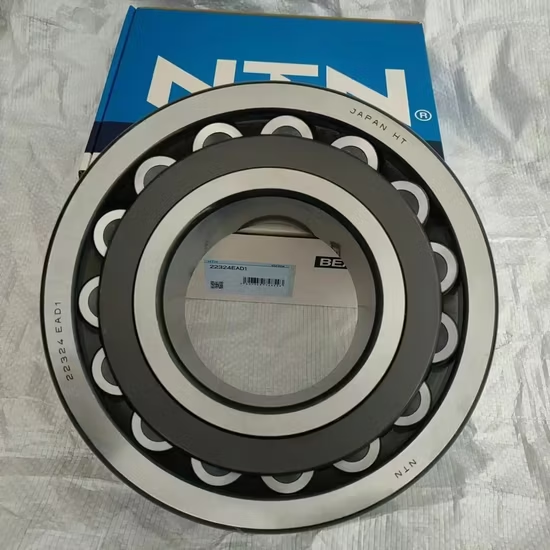
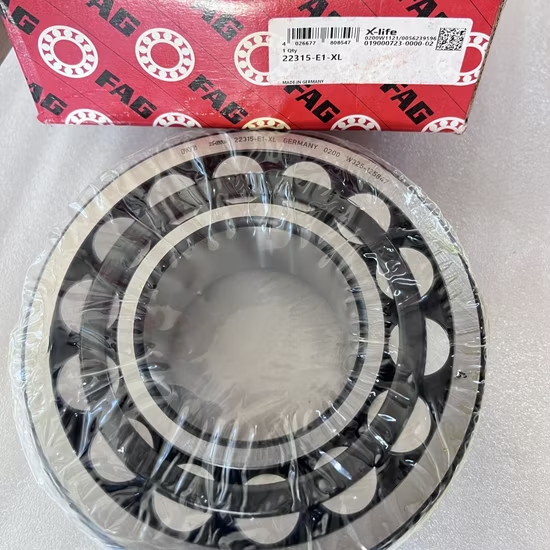
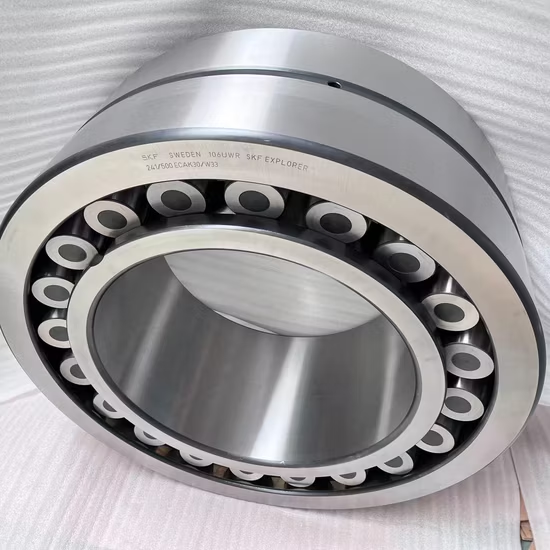
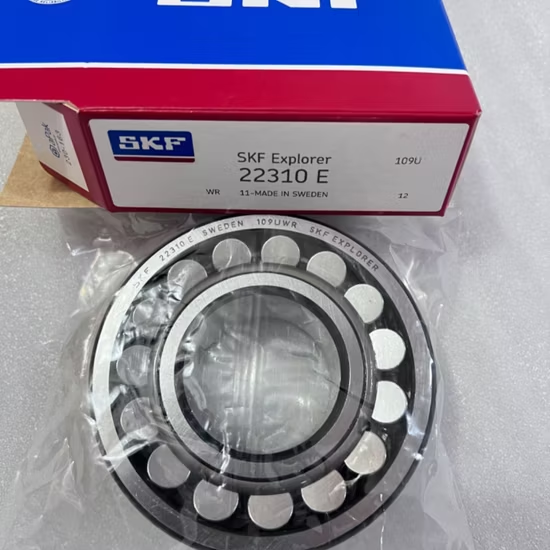
22218cc Spherical Roller Bearing — engineered for heavy-duty construction machinery, vibrating screens, and crushers to handle high radial and moderate axial loads.
Official App QR Verification — Scan the manufacturer's unique code on every 22218cc batch to confirm metallurgical authenticity before installation.
| Parameter | Value |
|---|---|
| Designation | 22218cc |
| Bearing Type | Spherical Roller Bearing |
| Origin | Germany/Japan/Sweden/Malaysia/China |
| HS Code | 8482500090 |
| Feature | Low Noise, High Speed, Long Service Life |
| Customization | Available |
The "cc" suffix is an unverified suffix — requires manufacturer catalog confirmation (Note: commonly denotes pressed steel cage in spherical roller bearings, but strictly unverified per provided suffix lookup table constraints).
| Industry | Typical Applications |
|---|---|
| Construction Machinery | Excavator slewing platforms and bulldozer track tensioners |
| Mining and Crushing | Jaw crusher eccentric shafts and vibrating screen exciters |
| Steel and Metallurgy | Continuous casting machine roll segments and roller tables |
Matching only the base designation while ignoring internal cage and clearance suffixes leads to rapid thermal binding under heavy shock loads.
I have witnessed numerous spherical roller bearings seize completely on African mining sites simply because the internal clearance was mismatched for the operating temperature. During early field service calls, a jaw crusher main shaft overheated and halted production; teardowns revealed that standard clearance could not accommodate the thermal expansion generated by continuous impact crushing. Procurement teams often approve cross-references that align perfectly on the base number but overlook critical internal geometry, resulting in catastrophic cage failure when the equipment reaches operating temperature . Sourcing a genuine 22218cc spherical roller bearing requires verifying that the cage material and internal design strictly match the original equipment manufacturer's thermal and load specifications.
Selecting the correct internal geometry prevents premature fatigue in high-vibration environments. Our technical review process evaluates the specific radial loads, shock frequencies, and ambient temperatures of your construction machinery to ensure the selected bearing configuration handles the operational stress. By cross-referencing the exact suffix requirements rather than just the base number, we eliminate the risk of installing an under-specified component into a critical load path.
Crushing and screening equipment subjects rotating elements to severe combined loads and intense vibration. The internal clearance must accommodate significant thermal expansion as the shaft heats up during continuous operation, preventing the rolling elements from binding against the raceways. Furthermore, the cage design must withstand high acceleration forces without fracturing, while the lubrication regime must resist contamination from abrasive dust . Misalignment caused by structural deflection in heavy chassis frames also demands a bearing geometry that can self-adjust without generating excessive internal friction.
The internal design of a spherical roller bearing dictates its ability to distribute heavy radial loads while accommodating axial displacement and angular misalignment. The cage material plays a pivotal role in guiding the rolling elements; pressed steel cages offer high strength and are typically suited for high-load, moderate-speed applications, while machined brass cages provide superior durability under severe vibration and shock loads. Internal clearance classes determine the operational play between the rollers and raceways, ensuring that thermal expansion during heavy crushing operations does not eliminate the necessary lubrication film thickness. Selecting the appropriate precision class and internal geometry ensures the bearing maintains structural integrity when subjected to the repetitive impact forces characteristic of construction and mining machinery.
Installing a bearing with an incorrect internal clearance or cage design inevitably triggers unplanned downtime and cascading mechanical damage. When a component seizes due to thermal binding, the resulting torque spike can fracture the main shaft or destroy the adjacent gear train, voiding equipment warranties and halting entire production lines. The financial impact extends far beyond the replacement part cost, encompassing lost revenue, emergency freight charges, and extensive labor for teardown and reassembly .
We maintain authorized distribution channels across all major international bearing brands, allowing you to consolidate mixed-brand requirements into a single, fully traceable shipment. Our cross-reference protocol strictly verifies the base designation alongside the clearance, cage material, and precision suffixes, preventing the common error of supplying a dimensionally correct but internally incompatible part. Every batch is backed by manufacturer traceability, and our application-based selection review ensures the chosen configuration aligns with your specific load, speed, and temperature parameters. This rigorous validation process protects your equipment from the devastating consequences of soft inner rings and cloned identification markers.
To ensure optimal performance and longevity, please provide your specific operational parameters, including radial and axial load profiles, rotational speeds, and expected operating temperatures. Sharing the original equipment manufacturer's part number or detailed equipment schematics allows our engineering team to conduct a precise cross-reference review and L10 life calculation. This technical validation ensures the selected configuration perfectly matches the mechanical and environmental demands of your application.
Q: How can I verify the authenticity of the bearing before installation?
A: Every genuine unit features a unique identification marker that can be scanned using the manufacturer's official mobile application. This digital verification confirms the batch origin, metallurgical specifications, and production date, effectively filtering out counterfeits with cloned visual markers or soft inner rings that fail under heavy operational loads.
Q: Why is it critical to match the exact suffix during cross-referencing?
A: Matching only the base number often overlooks crucial internal design variations, such as cage material or clearance class. Installing a standard clearance component in a high-temperature crusher application causes thermal binding, while using a pressed steel cage in a high-vibration screen leads to rapid fatigue failure and unplanned downtime.
Q: What causes premature failure in vibrating screens and crushers?
A: The primary failure modes include cage fracture due to high acceleration forces, raceway spalling from contaminated lubrication, and thermal seizure caused by insufficient internal clearance. Proper selection of the cage design and clearance class, combined with effective sealing solutions, is essential to withstand the severe shock loads and abrasive environments typical of these applications.
Q: How do I select the correct internal design for my construction machinery?
A: The selection depends on evaluating the specific radial and axial loads, operating temperatures, and vibration levels of your equipment. Our technical team reviews these parameters alongside the OEM specifications to recommend the optimal cage material, clearance class, and precision grade, ensuring the component delivers maximum service life under your exact operating conditions.
Q: What documentation is provided for international procurement and customs?
A: We supply a comprehensive documentation package that includes a Certificate of Conformity, material test reports, dimensional inspection records, and country-of-origin certificates. This complete traceability suite ensures smooth customs clearance and provides your maintenance team with the verified quality data required for critical equipment asset management.
Our 5-step process ensures every order is engineered, validated, and supported for optimal performance.
Technical needs assessment
Custom specifications
Free samples for $50k+
Pre-shipment inspection
On-site & predictive
Our certified engineers respond within 24 hours with detailed technical specifications, pricing, and lead time information.