01
Consultation
Technical needs assessment

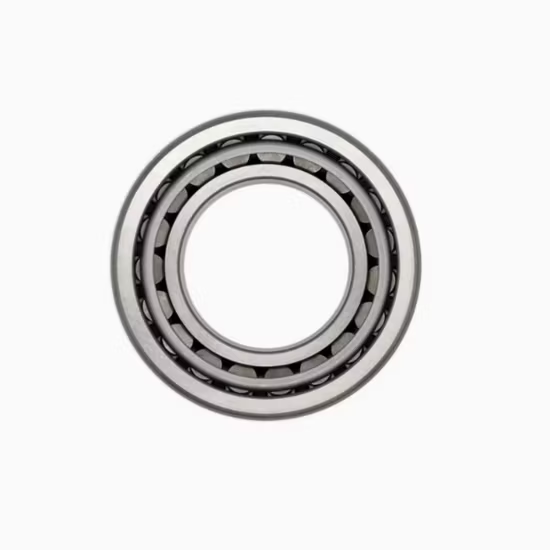
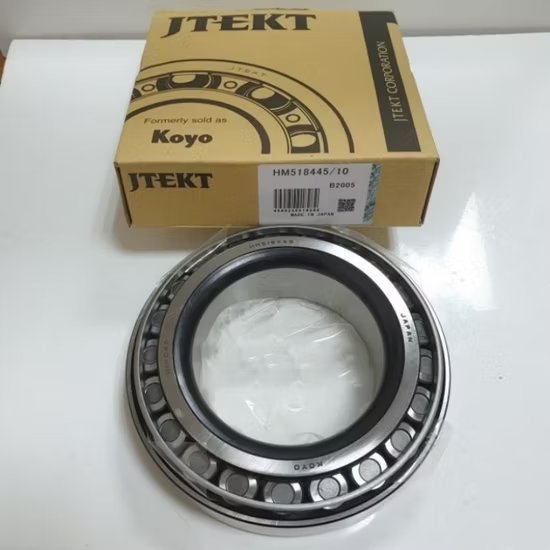



F15047 JLM506849/10 RPD005 Tapered Roller Bearing 55×90×23 mm P4
Traceable QR Verification — Every F15047 JLM506849/10 RPD005 tapered roller bearing we dispatch includes scannable batch codes linked directly to the manufacturer's official authentication application, eliminating the risk of cloned labels.
| Parameter | Value |
|---|---|
| Designation | F15047 JLM506849/10 RPD005 |
| Bearing Type | Tapered Roller Bearing |
| Bore Diameter (d) | 55 mm |
| Outside Diameter (D) | 90 mm |
| Width (T) | 23 mm |
| Precision Class | P4 (ISO 492) |
| Material | High Carbon Chromium Bearing Steel (GCr15) |
| Cage Material | Available in nylon, brass, or pressed steel variants |
| Origin | Sourced from authorized facilities in Germany, Japan, Sweden, Malaysia, or China |
Note: F15047 and RPD005 are unverified suffixes requiring manufacturer catalog confirmation, typically indicating specific automotive hub cross-references or internal design variants.
| Industry | Typical Applications |
|---|---|
| Automotive & Heavy Vehicles | Wheel hub assemblies, steer axle pivots, and heavy-duty drivetrain differentials |
| Industrial Machinery | High-speed machine tool spindles and precision industrial gearbox shafts |
Matching the core designation while ignoring internal suffix variations is the primary cause of premature thermal binding in heavy vehicle hubs.
In the harsh operating environments around Dubai, I have seen too many fleets grounded because a replacement part looked identical on the outside but failed under load. A base number might match, but if the internal geometry or precision class is wrong, the bearing cannot handle the combined radial and axial stresses. We frequently encounter counterfeit units with soft inner rings that pass a casual visual check but spall rapidly under heavy shock loads. When sourcing a F15047 JLM506849/10 RPD005 tapered roller bearing, overlooking the exact cage material or precision suffix turns a routine maintenance task into a catastrophic axle failure .
Procurement engineers often focus solely on the outer dimensions, but the internal contact angle and roller profile dictate survival in demanding drivetrains. The F15047 JLM506849/10 RPD005 tapered roller bearing is engineered to manage the complex load vectors inherent in heavy vehicle wheel hubs. By verifying the exact internal design variant, we ensure the rolling elements distribute stress evenly across the raceway, preventing the localized edge loading that destroys poorly matched alternatives.
Wheel hubs and industrial gearboxes subject components to severe thermal cycling and abrasive dust ingress. Elevated temperatures can degrade standard lubricants and alter the operational clearance, leading to severe thermal binding if the initial clearance class is incorrectly specified. Furthermore, inadequate sealing allows microscopic silica particles to infiltrate the roller paths, acting as a grinding paste that accelerates fatigue. Selecting the appropriate cage material and verifying the seal interface are critical to maintaining lubrication integrity and preventing premature seizure .
The JLM prefix designates a medium-duty metric series optimized for balanced load distribution, while the 506849/10 segment strictly defines the cone and cup mating geometry. Crucially, the P4 precision class indicates compliance with ISO 492 Class 4 tolerances, offering significantly tighter dimensional and running accuracy than standard P0 grades. This enhanced precision minimizes vibration and heat generation at higher rotational speeds, making it indispensable for machine tool spindles and high-performance automotive hubs where runout must be strictly controlled.
Substituting a standard P0 bearing in an application demanding P4 precision leads to excessive vibration, accelerated seal wear, and eventual cage fragmentation. According to ISO 281 frameworks, operating a bearing outside its precise design parameters drastically reduces its calculated fatigue life. The resulting unplanned downtime, secondary damage to adjacent shafts and housings, and emergency freight costs for replacement parts far exceed the initial savings of purchasing an incorrectly specified, cheaper alternative .
Our authorization across major global brands allows us to fulfill mixed-brand requirements in a single shipment without compromising traceability. We do not just match the base number; we cross-verify the clearance, cage material, and precision suffixes to guarantee functional equivalence. Every unit undergoes strict batch tracing, ensuring you receive genuine components with verifiable origins, completely eliminating the risk of installing cloned parts with compromised metallurgy.
To ensure the selected component perfectly aligns with your equipment, provide your specific radial and axial load profiles, operational speeds, and mounting space constraints. Supplying the exact OEM equipment number allows our technical team to perform a comprehensive cross-reference check, verifying that all internal design variants and precision suffixes match your original specifications for optimal L10 life.
Q: Why do bearings with the correct base number still fail in heavy vehicle hubs?
A: Base number matches often ignore critical internal variations like clearance class, cage material, and precision suffixes. Installing a standard clearance bearing in a high-temperature hub causes thermal binding, while incorrect cage materials fail under heavy shock loads, leading to rapid downtime.
Q: What does the P4 precision class mean for this specific application?
A: P4 indicates tighter dimensional and running accuracy per ISO 492 compared to standard P0 grades. This reduces vibration, minimizes heat generation, and ensures smoother operation, which is essential for high-speed machine tool spindles and precision automotive wheel hub assemblies.
Q: How can I verify the authenticity of the received components?
A: We provide full batch traceability and scannable QR codes on every shipment. You can verify the origin and authenticity directly through the manufacturer's official mobile application, ensuring the steel hardness and internal geometry meet genuine factory specifications.
Q: What information is needed to confirm the F15047 and RPD005 suffixes?
A: These suffixes often relate to specific automotive hub cross-references or internal design variants. Providing your exact OEM equipment number and application parameters allows our engineering team to cross-check the manufacturer catalog and confirm the precise internal configuration required.
Our 5-step process ensures every order is engineered, validated, and supported for optimal performance.
Technical needs assessment
Custom specifications
Free samples for $50k+
Pre-shipment inspection
On-site & predictive
Our certified engineers respond within 24 hours with detailed technical specifications, pricing, and lead time information.

